Introduction
The Thrush-like Antpitta (Myrmothera campanisona) is a bird species belonging to the family Grallariidae, native to the tropical rainforests of South America. Known for its elusive behavior and melodious song, this bird has captivated ornithologists and birdwatchers alike. In this comprehensive article, we delve into the various aspects of the Thrush-like Antpitta’s life, including its taxonomy, habitat, behavior, diet, and conservation status.
Taxonomy and Classification
The Thrush-like Antpitta is scientifically classified as Myrmothera campanisona. The genus Myrmothera is part of the family Grallariidae, which comprises antpittas, a group of small to medium-sized passerine birds. The species was first described by French naturalist Louis Jean Pierre Vieillot in 1824. The name “campanisona” is derived from Latin, meaning “bell-like sound,” a nod to the bird’s distinctive song.
Physical Description
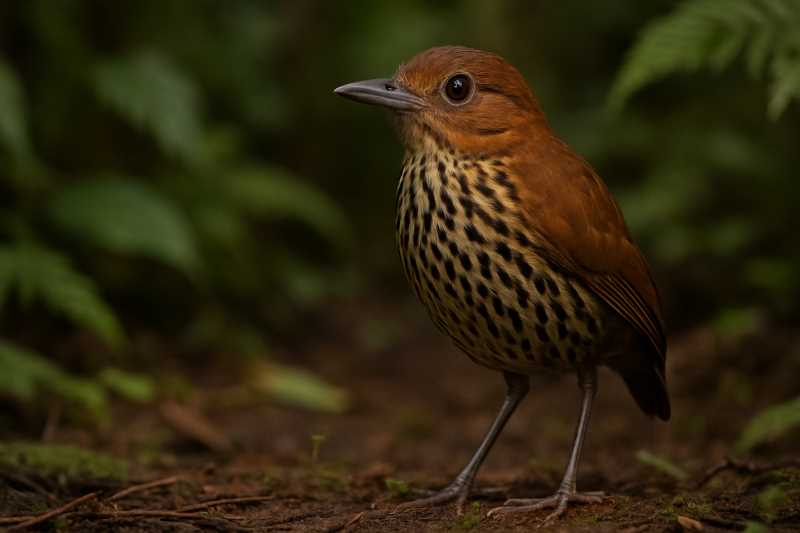
Thrush-like Antpittas are medium-sized birds, measuring about 16 to 18 centimeters in length and weighing approximately 45 to 60 grams. They have a stout body, short tail, and strong legs adapted for terrestrial locomotion. Their plumage is predominantly olive-brown with subtle variations in tone. The underparts are lighter, often with streaks or spots that provide camouflage against the forest floor. The bird’s eyes are large and dark, which aids in foraging under low-light conditions.
Geographic Distribution and Habitat
Myrmothera campanisona is widely distributed across the Amazon Basin, inhabiting countries such as Brazil, Colombia, Ecuador, Peru, and Venezuela. It primarily resides in lowland tropical rainforests but can also be found in secondary forests and forest edges. The species prefers areas with dense understory vegetation, which provides ample cover and foraging opportunities.
Behavior and Ecology
Thrush-like Antpittas are primarily terrestrial, spending much of their time on the forest floor in search of food. They are known for their solitary and secretive nature, often remaining hidden among the dense vegetation. These birds are most active during the early morning and late afternoon, which coincides with peak insect activity.
The species is renowned for its vocalizations, which are an essential aspect of its behavior. The song of the Thrush-like Antpitta is a series of clear, bell-like notes that can be heard echoing through the forest. Males use their songs to establish territories and attract mates, while both sexes may communicate through a variety of calls.
Diet and Foraging
The diet of the Thrush-like Antpitta primarily consists of insects and other small invertebrates. They forage by hopping along the forest floor, using their keen eyesight to detect prey. Their strong legs and feet enable them to scratch through leaf litter and soil in search of hidden insects. Occasionally, they may consume small fruits or seeds, especially when insect prey is scarce.
Reproductive Behavior
Little is known about the breeding habits of the Thrush-like Antpitta, as their secretive nature makes observation difficult. However, it is believed that they build cup-shaped nests close to the ground, often hidden among dense vegetation. The female typically lays two eggs, which are incubated for approximately two weeks. Both parents are involved in feeding and caring for the chicks until they fledge.
Conservation Status
The Thrush-like Antpitta is currently listed as Least Concern by the International Union for Conservation of Nature (IUCN). Despite its relatively stable population, the species faces threats from habitat loss due to deforestation and land conversion for agriculture. Conservation efforts are crucial to ensure the preservation of its natural habitat and to mitigate the impacts of human activities.
Conclusion
The Thrush-like Antpitta (Myrmothera campanisona) is a remarkable bird that inhabits the lush rainforests of South America. Its unique adaptations and enchanting song make it a fascinating subject of study for ornithologists and bird enthusiasts. As we continue to learn more about this elusive species, it is imperative to prioritize the conservation of its habitat to safeguard its future.
References
1. BirdLife International. “Myrmothera campanisona.” IUCN Red List of Threatened Species.
2. Ridgely, R. S., & Tudor, G. (1994). “The Birds of South America: The Suboscine Passerines.” University of Texas Press.
3. Zimmer, K. J., & Isler, M. L. (2003). “Family Formicariidae (Ground Antbirds).” In Handbook of the Birds of the World.
4. del Hoyo, J., Elliott, A., & Christie, D. (Eds.). (2003). “Handbook of the Birds of the World, Vol. 8: Broadbills to Tapaculos.” Lynx Edicions.
Related posts