Understanding the Enigmatic Damara Tern: A Conservation Perspective
The Damara Tern (Sternula balaenarum) is one of the most intriguing and lesser-known seabirds that grace the coastal regions of southern Africa. With its delicate appearance and specialized breeding habits, this species holds a significant place in the biodiversity tapestry of the African continent. As environmental challenges mount globally, understanding and conserving species like the Damara Tern becomes crucial. This article delves into the biology, habitat, threats, and conservation efforts surrounding this enigmatic bird.
Biological Characteristics
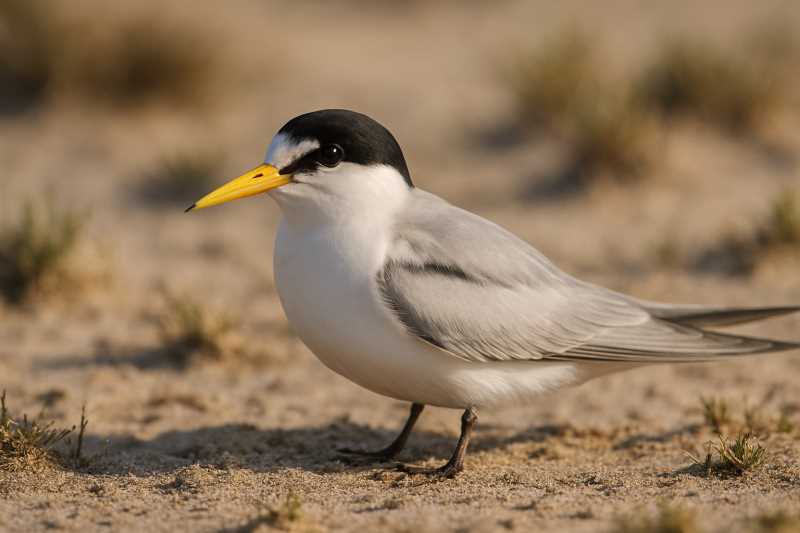
The Damara Tern is a small seabird, measuring approximately 23 to 25 centimeters in length with a wingspan of about 53 to 57 centimeters. It is distinguished by its slender build, white plumage with a subtle gray back, and a distinctive black cap during the breeding season. The bird’s bill and legs are black, complementing its overall elegant appearance.
An interesting aspect of the Damara Tern is its feeding behavior. It primarily feeds on small fish and marine invertebrates, which it skillfully catches by plunge-diving from the air. This feeding strategy is not only efficient but also critical for its survival, particularly during the breeding season when energy demands are high.
Habitat and Distribution
The Damara Tern is endemic to the coastal regions of southern Africa, with its primary breeding sites located along the coasts of Namibia and South Africa. The birds prefer nesting on sparsely vegetated coastal dunes and salt pans, where they lay their eggs in shallow scrapes on the ground. These habitats, while seemingly inhospitable, provide the perfect camouflage against predators.
Outside the breeding season, the Damara Tern migrates northward along the western coast of Africa, reaching as far as Guinea and Ghana. This migration is a testament to the bird’s adaptability and resilience, yet it also exposes it to various ecological pressures along the way.
Threats and Challenges
Despite its adaptability, the Damara Tern faces numerous threats, primarily due to human activities. Habitat destruction, driven by coastal development and recreational activities, poses a significant risk to its breeding sites. Disturbance from humans and domestic animals can lead to nest abandonment, reduced reproductive success, and increased predation rates.
Moreover, climate change presents a looming threat, as rising sea levels and increased storm frequency can lead to habitat loss. Additionally, overfishing and marine pollution can deplete food resources, further stressing the population.
Conservation Efforts
Recognizing the Damara Tern’s vulnerable status, various conservation initiatives have been implemented to protect this species. In Namibia, several breeding sites have been designated as protected areas, restricting human access during the breeding season. These efforts are complemented by community engagement programs that educate local populations about the importance of conserving the Damara Tern and its habitat.
Furthermore, international cooperation is essential, given the bird’s migratory nature. Cross-border conservation strategies are being developed to ensure the protection of migratory corridors and non-breeding habitats. These strategies include habitat restoration, monitoring of population trends, and research into the impacts of climate change on the species.
The Role of Research and Monitoring
Continued research and monitoring are vital for the effective conservation of the Damara Tern. Understanding the bird’s ecology, behavior, and population dynamics can inform targeted conservation actions. Satellite tracking and banding programs have provided valuable insights into the tern’s migratory patterns, helping conservationists to identify critical habitats and potential threats along its migratory route.
Moreover, collaborative research efforts involving local and international institutions are crucial in addressing knowledge gaps. Studies focusing on the impacts of climate change, habitat use, and food availability are particularly important in developing adaptive management strategies.
Conclusion
The Damara Tern is a symbol of the delicate balance between nature and human activity. Its survival depends on our collective ability to mitigate threats and protect essential habitats. Conservation of this species not only contributes to biodiversity but also reflects our commitment to preserving the natural heritage of southern Africa. Through concerted efforts and international cooperation, there is hope that the Damara Tern will continue to grace our shores for generations to come.
Related posts