Introduction
The Makande Squirrel Galago, scientifically named Sciurocheirus makandensis, is a fascinating primate species that captivates zoologists and wildlife enthusiasts alike. This nocturnal species, often referred to as the Makande Bushbaby, belongs to the Galagidae family and is primarily found in the dense forests of Central Africa. As a member of the lesser-known squirrel galagos, this species exhibits unique behaviors and adaptations that make it a subject of significant interest. The Makande Squirrel Galago plays a crucial role in its ecosystem, contributing to the biodiversity of its habitat.
Physical Description
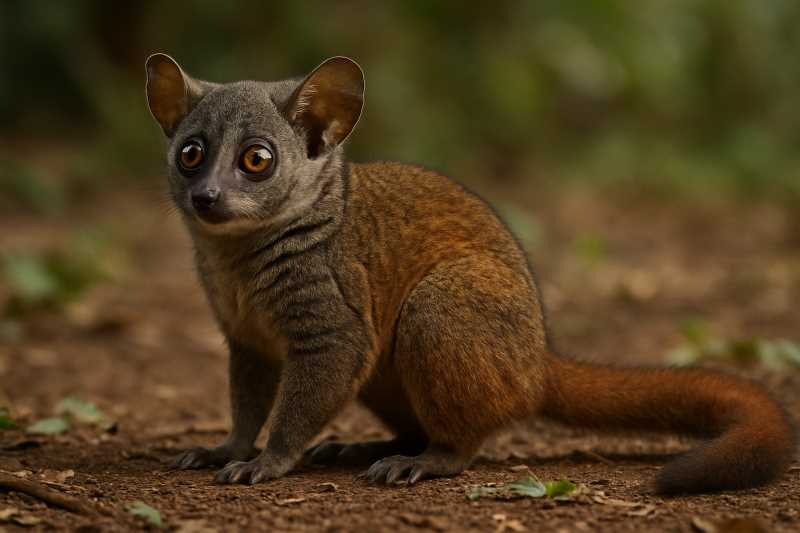
The Makande Squirrel Galago is a small, arboreal primate characterized by its striking physical features. Adults typically weigh between 200 to 300 grams and measure about 25 to 30 centimeters in body length, excluding their distinctive bushy tail, which can add an additional 20 to 25 centimeters. Their fur is dense and soft, predominantly a grayish-brown on the dorsal side, with a lighter, creamy underbelly.
One of the most notable features of the Makande Squirrel Galago is its large, round eyes that are adapted for enhanced night vision, a crucial adaptation for their nocturnal lifestyle. Their ears are also large and mobile, allowing them to detect sounds with precision. The limbs of the Makande Squirrel Galago are adapted for a life in the trees, with strong, grasping digits and a sensitive, tactile pad on their fingertips that aids in climbing and grasping branches.
Range and Habitat
The Makande Squirrel Galago is primarily found in the tropical rainforests of Central Africa, with a known range that includes parts of Cameroon and Gabon. These primates are highly adapted to life in dense, lowland forests, where they navigate through the canopy layer.
Their preferred habitat consists of areas with dense foliage and abundant tree cover, which provides them with ample food resources and protection from predators. The Makande Squirrel Galago is rarely found in disturbed or deforested areas, highlighting the importance of intact forest ecosystems for their survival. Their elusive nature and preference for high, dense canopy levels make them challenging to study in the wild.
Behavior and Diet
The Makande Squirrel Galago is a nocturnal and arboreal species, spending the majority of its life in the trees. They are solitary animals, with individuals typically coming together only for mating purposes. These galagos are known for their remarkable leaping abilities, which they use to travel between trees in search of food and to escape predators.
Their diet is omnivorous, consisting of a variety of foods depending on availability. They feed on insects, small vertebrates, fruits, and tree gum. The ability to digest tree gum is facilitated by their specialized dentition and gut flora, allowing them to exploit this unique food resource.
The social structure of the Makande Squirrel Galago is relatively simple, with individuals maintaining overlapping home ranges. Communication among these primates is primarily vocal, with a repertoire of calls used for mating, territory defense, and alerting others to the presence of predators.
Identification Tips (Field Recognition Cues)
Identifying the Makande Squirrel Galago in the field can be challenging due to their nocturnal habits and arboreal nature. However, several key features can aid in recognition:
- Large Eyes: Their prominent eyes are adapted for night vision, making them one of the most distinctive features.
- Bushy Tail: The long, bushy tail helps in balancing while navigating the treetops.
- Vocalizations: Listen for their characteristic calls at night, which can range from clicks to whistles.
- Agile Movements: Observe their swift and agile movements through the trees, often involving remarkable leaps.
- Fur Color: Look for their grayish-brown fur with a lighter underbelly, which can be discerned with a flashlight at night.
Conservation Status (With Threats and Protections)
The conservation status of the Makande Squirrel Galago is currently classified as Data Deficient by the International Union for Conservation of Nature (IUCN). This classification reflects the lack of comprehensive data on their population size and trends due to their elusive nature and the challenges of conducting field studies in their dense forest habitats.
Several threats, however, are recognized as impacting their survival:
- Habitat Destruction: Deforestation for logging, agriculture, and development is a significant threat, reducing available habitat.
- Hunting: Although not a primary target, they are sometimes hunted for bushmeat.
- Climate Change: Altered weather patterns may affect forest structure and food availability.
Conservation efforts are focused on habitat preservation and conducting further research to better understand their ecology and population dynamics. Protected areas and national parks in Central Africa play a crucial role in providing safe havens for these primates.
Frequently Asked Questions
What is the primary diet of the Makande Squirrel Galago?
The Makande Squirrel Galago has an omnivorous diet, feeding on insects, small vertebrates, fruits, and tree gum. Their ability to digest tree gum is a unique adaptation that supports their survival in dense forests.
How can I identify a Makande Squirrel Galago in the wild?
Identification is possible by noting their large eyes, bushy tail, and distinct vocalizations. Look for their grayish-brown fur and observe their agile, leaping movements in the trees.
What threats do Makande Squirrel Galagos face in their natural habitat?
The primary threats include habitat destruction due to deforestation, hunting for bushmeat, and potential impacts from climate change. Conservation efforts focus on habitat protection and research.
Are Makande Squirrel Galagos social animals?
Makande Squirrel Galagos are primarily solitary, coming together mainly for mating. They maintain overlapping home ranges and communicate through vocalizations.
Where are Makande Squirrel Galagos primarily found?
They are primarily found in the tropical rainforests of Central Africa, including regions of Cameroon and Gabon, where they inhabit dense, lowland forest canopies.
Related posts