The Grey Cuckooshrike: A Fascinating Avian Marvel
The Grey Cuckooshrike, scientifically known as *Ceblepyris caesius*, is a captivating bird species belonging to the Campephagidae family. This avian wonder is renowned for its elegant appearance and intriguing behavior, making it a subject of interest among ornithologists and bird enthusiasts alike. In this article, we delve into the world of the Grey Cuckooshrike, exploring its habitat, physical characteristics, behavior, and conservation status.
Habitat and Distribution
The Grey Cuckooshrike is predominantly found in sub-Saharan Africa, where it inhabits a variety of ecosystems. These birds are typically found in well-wooded savannas, forests, and sometimes in more open areas with scattered trees and bushes. Their range extends from Senegal and Gambia in the west to Ethiopia and Somalia in the east, and as far south as South Africa. This widespread distribution highlights the bird’s adaptability to different environmental conditions.
In terms of altitude, the Grey Cuckooshrike is versatile, residing at sea level in coastal areas and ascending to elevations of up to 2,500 meters in mountainous regions. This adaptability allows the species to exploit various niches across its range, contributing to its relative abundance in suitable habitats.
Physical Characteristics
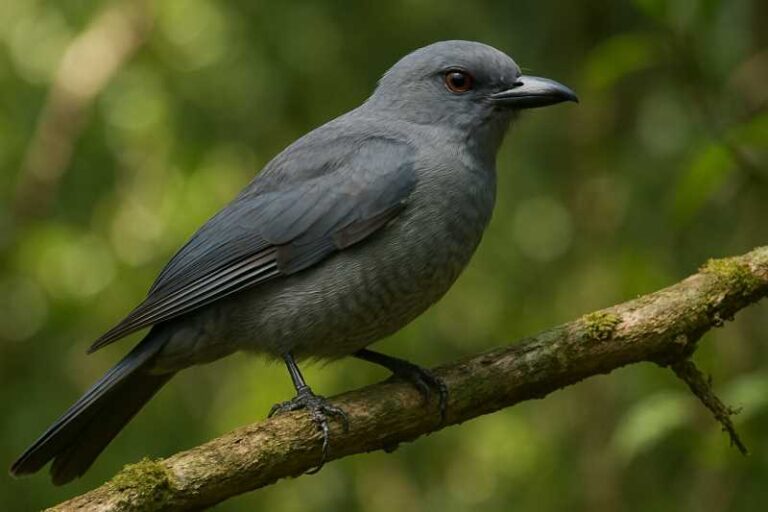
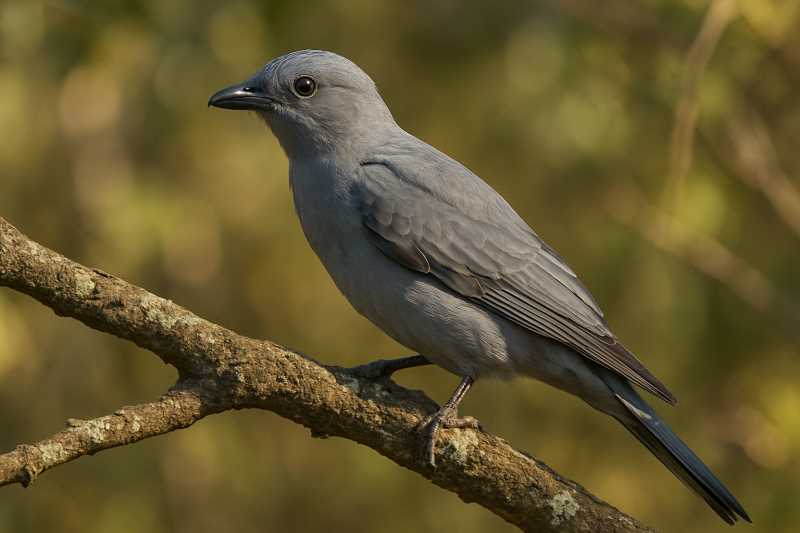
The Grey Cuckooshrike is a medium-sized bird, measuring approximately 24 to 28 centimeters in length. It is easily recognizable by its sleek, streamlined body and predominantly grey plumage, which gives it its name. The bird’s upperparts are a soft, bluish-grey, while the underparts are a lighter grey, often with a subtle brownish tinge.
One of the most distinctive features of the Grey Cuckooshrike is its black face mask, which extends across the eyes and adds a touch of mystery to its appearance. The bird also has a stout, slightly curved bill, well-suited for its insectivorous diet. The wings are long and pointed, enabling agile flight as the bird navigates through the forest canopy.
Males and females are similar in appearance, although females may exhibit slightly duller plumage. Juvenile birds are typically browner and lack the defined black face mask of the adults, gradually acquiring the adult coloration as they mature.
Behavior and Diet
The Grey Cuckooshrike is a highly active and agile bird, often seen flitting through the treetops in search of food. Its diet primarily consists of insects, which it gleans from leaves and branches or catches in mid-air. The bird is also known to consume small fruits and berries, particularly during times when insect prey is less abundant.
These birds are generally observed in pairs or small family groups, although they can also join mixed-species foraging flocks. This social behavior not only enhances their foraging efficiency but also provides added protection against predators.
The call of the Grey Cuckooshrike is a series of melodious whistles and trills, often delivered from a concealed perch. This vocalization plays a crucial role in maintaining pair bonds and coordinating activities within groups.
Breeding and Nesting
Breeding season for the Grey Cuckooshrike varies depending on the region, generally coinciding with the rainy season when food is most plentiful. The birds are monogamous, forming long-term pair bonds. They engage in elaborate courtship displays, including aerial acrobatics and mutual preening, to strengthen their bond.
Nesting involves the construction of a small cup-shaped nest, usually situated high in the fork of a tree. The nest is composed of twigs, grass, and other plant materials, lined with softer substances for comfort. Both parents participate in building the nest, incubating the eggs, and caring for the young.
Typically, a clutch consists of two to three eggs, which are incubated for about two weeks. The chicks are altricial, hatching blind and helpless, requiring intensive parental care. The young fledge after approximately 18 to 21 days but remain dependent on their parents for several weeks as they learn to forage independently.
Conservation Status
Currently, the Grey Cuckooshrike is classified as a species of Least Concern by the International Union for Conservation of Nature (IUCN). This status reflects its broad distribution and stable population trends across much of its range. However, like many bird species, the Grey Cuckooshrike faces threats from habitat loss due to deforestation and agricultural expansion.
Conservation efforts aimed at preserving forest habitats and promoting sustainable land-use practices are crucial for ensuring the long-term survival of this and other forest-dependent species. Continued monitoring of population trends and habitat quality is essential to detect any future declines that may necessitate targeted conservation actions.
Conclusion
The Grey Cuckooshrike stands as a testament to the beauty and diversity of Africa’s avian life. Its sleek appearance, agile behavior, and adaptive nature make it a fascinating subject for study and admiration. As we continue to explore and understand the intricate web of life within our ecosystems, birds like the Grey Cuckooshrike remind us of the importance of conserving our natural world for future generations.
By appreciating and protecting such species, we not only preserve the richness of biodiversity but also maintain the ecological balance that supports life on Earth.
Related posts