Introduction
Abbott’s Booby (Papasula abbotti) is a remarkable seabird that is often overshadowed by its more famous relatives like the Blue-footed Booby or the Northern Gannet. However, this unique species, with its striking appearance and fascinating behavior, deserves attention for its own merits, especially considering its critically endangered status. This article delves into the biology, habitat, threats, and conservation efforts surrounding Abbott’s Booby, offering insights into what makes this bird so special and why it is crucial to ensure its survival.
Taxonomy and Physical Characteristics
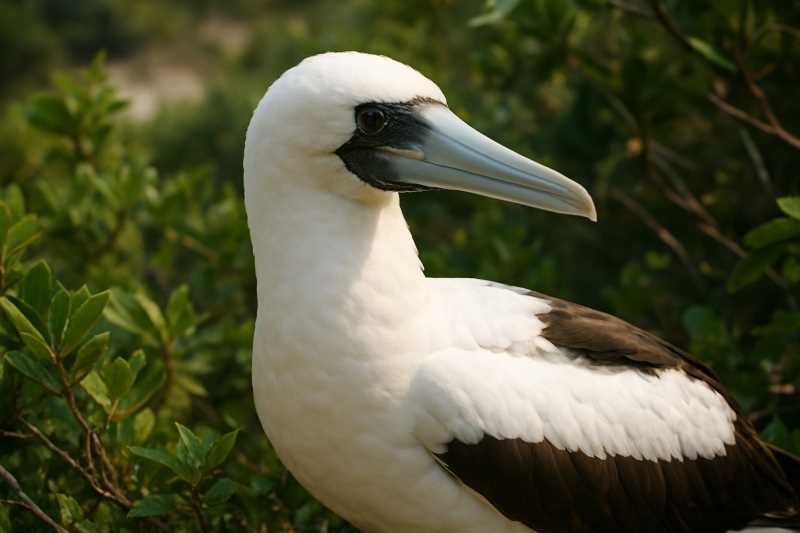
Abbott’s Booby is a large seabird in the family Sulidae, which it shares with other boobies and gannets. Unlike its relatives, Abbott’s Booby is the sole member of its genus, Papasula, highlighting its distinct evolutionary lineage. This bird is characterized by its predominantly white plumage, contrasting with black wings and a black tail. Its long, pointed bill and streamlined body are adaptations for a life spent largely at sea.
Adult Abbott’s Boobies can reach up to 79 centimeters in length, with a wingspan that can extend to approximately 190 centimeters. Males and females exhibit similar plumage, though females are typically slightly larger. Their distinctive appearance is complemented by their unique vocalizations, which are used primarily during courtship and nesting.
Historical Range and Current Habitat
Historically, Abbott’s Booby was more widely distributed across the Indian Ocean, but today, it is confined to a single location: Christmas Island, an Australian territory in the northeast Indian Ocean. The island’s unique ecosystem supports a range of endemic species, with Abbott’s Booby being one of its most iconic.
Abbott’s Boobies nest in the rainforest canopy, a rare trait among seabirds, which typically prefer open cliffs or ground sites. The towering emergent trees of the island provide the necessary height and stability for their nests, which are constructed from twigs and leaves. This unique nesting requirement, however, makes them particularly vulnerable to habitat disturbance.
Life Cycle and Behavior
Abbott’s Booby has a slow reproductive rate, with pairs typically producing one egg every two to three years. Both parents participate in incubation and feeding, a process that can last for up to 18 months, from egg laying to fledging. This extended parental investment is a strategy that balances their low reproductive output with high offspring survival rates.
These seabirds forage over open ocean waters, often traveling hundreds of kilometers from their nesting sites. They primarily feed on fish and squid, diving from significant heights to capture their prey. Abbott’s Booby is also known for its aerial acrobatics, using the wind currents to soar effortlessly above the waves.
Threats and Conservation Challenges
The concentrated population of Abbott’s Booby on Christmas Island makes it particularly vulnerable to a range of threats. Habitat destruction due to phosphate mining was historically a significant issue, reducing available nesting sites. Although mining activities have ceased in many parts of the island, the legacy of habitat alteration remains a concern.
Invasive species, particularly the Yellow Crazy Ant (Anoplolepis gracilipes), pose a significant threat. These ants form supercolonies that can devastate native flora and fauna, including the habitat of Abbott’s Booby. They also directly impact the birds by disrupting nesting sites and preying on chicks.
Climate change adds another layer of complexity to conservation efforts. Rising temperatures and changing weather patterns can alter the availability of prey and impact ocean currents, affecting the foraging success of these seabirds. Additionally, sea-level rise and increased storm frequency pose risks to the low-lying island habitats.
Conservation Efforts
Conservation efforts for Abbott’s Booby focus on habitat protection and restoration, control of invasive species, and monitoring population trends. The establishment of Christmas Island National Park has been a critical step in safeguarding the remaining rainforest habitat. Efforts to control and eradicate invasive species, particularly the Yellow Crazy Ant, are ongoing, involving both chemical and biological control methods.
Research and monitoring programs are essential to understand the population dynamics and ecological requirements of Abbott’s Booby. Satellite tracking and banding studies help researchers track movements and foraging patterns, providing valuable data to inform conservation strategies.
Importance of Global Awareness and Action
Global awareness and cooperation are crucial for the long-term conservation of Abbott’s Booby. As a species that spends much of its life over international waters, it is subject to threats that transcend national boundaries. International agreements and collaborations, such as those facilitated by the Agreement on the Conservation of Albatrosses and Petrels (ACAP), are vital for addressing these challenges.
Public engagement and education efforts are also necessary to raise awareness of the plight of Abbott’s Booby. By highlighting the unique aspects of this species and the urgent need for conservation, it is possible to foster a sense of stewardship and support for ongoing efforts.
Conclusion
Abbott’s Booby is a symbol of both the fragility and resilience of island ecosystems. Its continued survival depends on the commitment of conservationists, researchers, and the global community to address the challenges it faces. By protecting its habitat, managing threats, and fostering international cooperation, there is hope that future generations will continue to witness the grace and beauty of Abbott’s Booby soaring over the Indian Ocean.
Related posts