The Enigmatic Olivaceous Piha: A Comprehensive Overview
Nestled within the lush and dense forests of the Andes, the Olivaceous Piha (Snowornis cryptolophus) remains a captivating subject of study for ornithologists and bird enthusiasts alike. This elusive bird, characterized by its understated beauty and secretive nature, is a testament to the rich biodiversity of South American avifauna. In this article, we explore the various facets of the Olivaceous Piha, from its habitat and behavior to its conservation status and significance in the ecosystem.
Habitat and Distribution
The Olivaceous Piha is predominantly found in the montane forests of the Andes, stretching across several South American countries including Colombia, Ecuador, and Peru. These regions offer the ideal environment for the piha, with their humid conditions and abundant foliage providing ample cover and sustenance. The bird thrives at elevations ranging from 1,000 to 2,400 meters, where the thick canopy and understory vegetation offer protection from predators and a rich supply of insects and fruit.
The fragmented nature of the Andean forests has led to isolated populations of the Olivaceous Piha, contributing to its status as a somewhat rare and localized species. Its preference for undisturbed, primary forests highlights the importance of these habitats in maintaining the ecological balance and supporting diverse wildlife.
Physical Characteristics
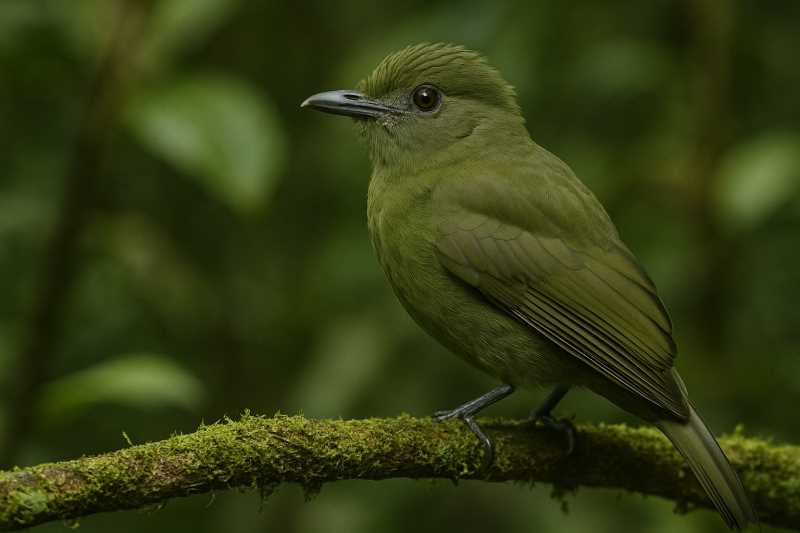
The Olivaceous Piha is a medium-sized bird, measuring approximately 24 to 28 centimeters in length. As its name suggests, it boasts an olivaceous or olive-green plumage that serves as effective camouflage amidst the verdant foliage of its natural habitat. The bird’s feathers exhibit subtle variations in shading, with the upper parts being slightly darker than the underparts.
The piha’s most distinctive feature is its cryptic crest, which, although not always visible, can be raised when the bird is alarmed or displaying. This feature, alongside its unique call—a resonant, flute-like sound that echoes through the forest—makes the Olivaceous Piha a particularly intriguing species for birdwatchers.
Behavior and Diet
Olivaceous Pihas are known for their elusive and solitary nature. Typically, they are observed alone or in pairs, rarely forming larger groups. This behavior is likely an adaptation to their dense forest environment, where stealth and discretion are vital for survival.
The diet of the Olivaceous Piha primarily consists of insects and fruit, making it an omnivorous species. Its foraging behavior is characterized by short flights and quick hops from branch to branch, as it searches for food amidst the foliage. The bird plays a crucial role in its ecosystem, both as a predator of insects and as a seed disperser, aiding in the propagation of various plant species.
Reproduction and Lifespan
The breeding habits of the Olivaceous Piha remain somewhat mysterious, as the bird’s secretive nature makes it challenging to study. However, it is believed that the species follows a monogamous mating system, with pairs forming long-term bonds.
Nesting typically occurs in the dense understory of the forest, where the female constructs a nest using twigs and leaves. The clutch size is usually small, with one to two eggs being laid at a time. The incubation period and fledgling development are still subjects of ongoing research, as direct observations are rare.
Conservation Status and Threats
The International Union for Conservation of Nature (IUCN) currently classifies the Olivaceous Piha as a species of “Least Concern.” However, this status does not imply that the bird faces no threats. Habitat loss due to deforestation poses a significant risk to its population, as the destruction of primary forest regions reduces the available habitat and resources for the species.
Conservation efforts focused on preserving the Andean forests are crucial for the continued survival of the Olivaceous Piha. Initiatives that promote sustainable land use and protect critical habitats are vital in ensuring that this enigmatic bird remains a part of the rich biodiversity of the Andes.
Significance in the Ecosystem
Beyond its intrinsic value, the Olivaceous Piha plays a pivotal role in the ecosystem as both a predator and a seed disperser. By controlling insect populations and facilitating plant reproduction, the piha contributes to the ecological balance and health of its habitat.
Moreover, the presence of the Olivaceous Piha is often an indicator of forest health, as the species thrives in undisturbed environments. Protecting the piha, therefore, aligns with broader conservation goals aimed at preserving entire ecosystems and the myriad species they support.
Conclusion
The Olivaceous Piha, with its subtle beauty and mysterious ways, is a fascinating subject for those interested in avian life and conservation. Understanding and protecting this species is not only about preserving a single bird but also about safeguarding the intricate web of life that depends on the Andean forests. As efforts continue to study and conserve the Olivaceous Piha, it serves as a reminder of the delicate balance of nature and the ongoing need to protect our planet’s biodiversity.
Related posts