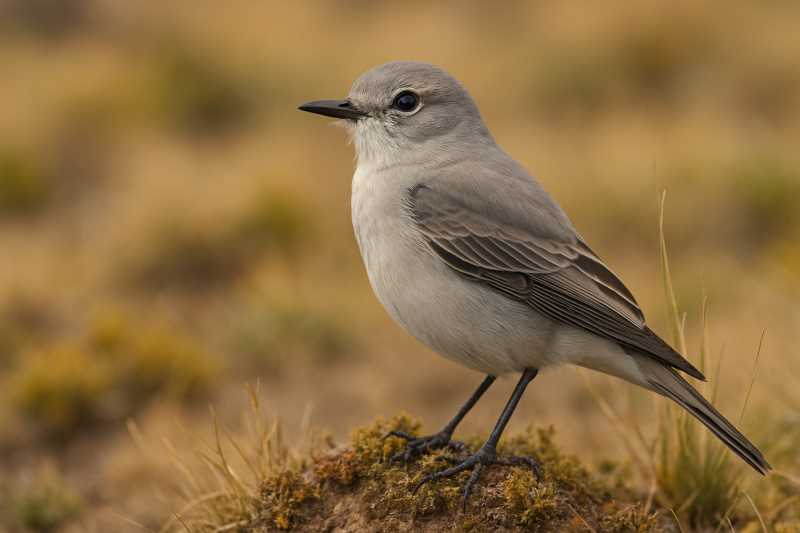
Taczanowski’s Ground Tyrant: A Glimpse into the Life of Muscisaxicola griseus
Nestled among the rugged terrains of the Andes, Taczanowski’s Ground Tyrant (Muscisaxicola griseus) stands as a compelling subject for ornithologists and bird enthusiasts alike. This diminutive passerine, named in honor of the Polish ornithologist Władysław Taczanowski, offers a fascinating glimpse into avian adaptation within the high-altitude ecosystems of South America.
Taxonomy and Identification
Belonging to the Tyrannidae family, Taczanowski’s Ground Tyrant is one of the several species within the Muscisaxicola genus. It is characterized by its modest size, typically measuring around 15 to 16 centimeters in length, with a wingspan that complements its body. The bird boasts a predominantly gray plumage, which serves as an effective camouflage against the rocky landscapes it inhabits. This subtle coloration is punctuated by darker wings and tail feathers, contributing to its distinctive appearance.
Habitat and Distribution
The geographical range of Muscisaxicola griseus is confined to the high-altitude regions of the Andes, primarily spanning across countries such as Peru, Bolivia, and Chile. These birds are well-adapted to the harsh conditions of their environment, often found at elevations ranging from 3,000 to 5,000 meters. The rocky outcrops, barren slopes, and sparse vegetation of the Andean plateau form the ideal backdrop for their existence.
Taczanowski’s Ground Tyrant demonstrates a remarkable ability to thrive in these inhospitable habitats, where temperatures can be extreme, and oxygen levels are significantly lower than at sea level. Their presence in these regions underscores the ecological richness of the Andean ecosystems, which support a myriad of unique species.
Behavior and Ecology
The behavior of Taczanowski’s Ground Tyrant is as intriguing as its habitat. These birds are primarily insectivorous, feeding on a diet that consists of various insects and arthropods. They employ a ‘sit-and-wait’ foraging strategy, often observed perched on rocks or low vegetation, scanning their surroundings for prey. Once spotted, they exhibit agile flight maneuvers to capture their airborne or ground-dwelling targets.
In addition to their foraging habits, these ground tyrants are known for their territorial nature. Males are particularly vigilant during the breeding season, engaging in displays to assert dominance and attract mates. Their vocalizations, while not as melodious as those of other songbirds, serve essential communicative functions, facilitating interactions within the species.
Reproduction and Lifespan
Breeding for the Taczanowski’s Ground Tyrant typically occurs during the austral summer months, from November to February. Nesting sites are often located in crevices or under rocks, providing shelter and protection from the elements and potential predators. The female is primarily responsible for constructing the nest, using materials such as grass, feathers, and other plant matter to create a suitable environment for her eggs.
Clutch sizes are generally small, with the female laying between two to three eggs. Both parents partake in incubating the eggs and feeding the fledglings once they hatch. The life expectancy of these birds in the wild remains somewhat uncertain, though similar species within the genus have been known to live for several years under optimal conditions.
Conservation Status
As of current assessments, Taczanowski’s Ground Tyrant is not considered to be at immediate risk of extinction. The IUCN Red List categorizes it as a species of Least Concern, largely due to its relatively stable population numbers and wide distribution across the Andes. However, conservationists remain vigilant, recognizing that habitat degradation and climate change pose potential threats to high-altitude species.
Human activities, such as mining and agriculture, have the potential to disrupt the delicate balance of these ecosystems. Therefore, ongoing monitoring and conservation efforts are essential to ensure that Taczanowski’s Ground Tyrant, along with other Andean wildlife, continues to thrive in its natural habitat.
Conclusion
Taczanowski’s Ground Tyrant exemplifies the resilience and adaptability of avian life in the face of challenging environmental conditions. Its existence enriches the biodiversity of the Andean regions, offering scientists and nature lovers a unique opportunity to study and appreciate the complexities of high-altitude ecosystems. As we continue to explore and understand these remarkable birds, it becomes increasingly evident that preserving their habitats is crucial not only for their survival but for the health of our planet’s ecological networks.
In summary, Muscisaxicola griseus is more than just a bird of the Andes; it is a symbol of nature’s ingenuity and a reminder of our responsibility to protect the natural world.
Related posts