Understanding the Ochre-backed Woodpecker: A Rare Avian Jewel
The Ochre-backed Woodpecker (Celeus ochraceus) is a striking bird native to South America, specifically found in the dense subtropical and tropical forests of Brazil. Despite being lesser-known compared to some of its more famous relatives, this woodpecker species is a fascinating subject of study for ornithologists and bird enthusiasts alike due to its unique characteristics and behaviors.
Physical Characteristics
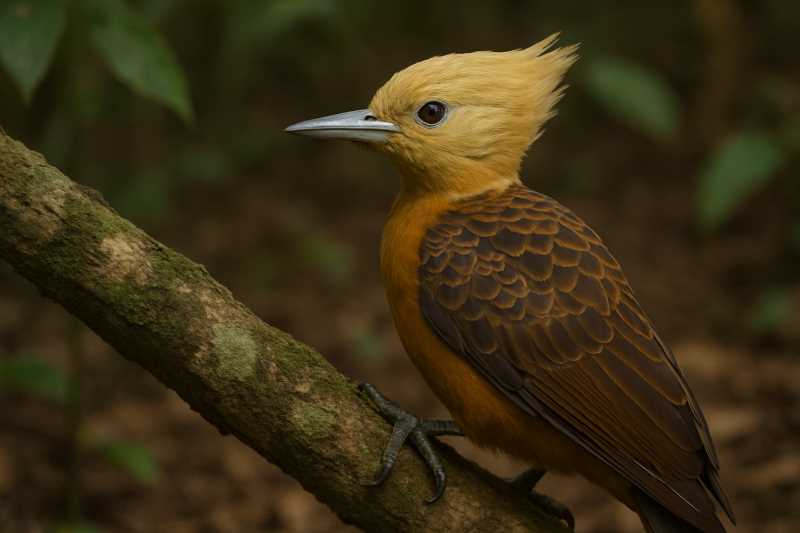
The Ochre-backed Woodpecker is easily recognizable by its distinctive plumage. It boasts an ochre-colored back, which gives the bird its name, along with a contrasting black and white pattern on its wings and tail. The head of the Ochre-backed Woodpecker is adorned with a bright red crown in males, while females display a black crown, making it relatively simple to distinguish between the sexes. Overall, this medium-sized woodpecker measures approximately 26 centimeters in length.
Habitat and Distribution
Celeus ochraceus inhabits the Atlantic Forest biome, a region known for its rich biodiversity but also for its significant threats from human activity. This biome stretches along the Atlantic coast of Brazil, extending into parts of Paraguay and Argentina. The Ochre-backed Woodpecker predominantly resides in the lowland humid forests but can also be found in montane forests and secondary growths, showing some level of adaptability.
Behavior and Diet
Like many woodpecker species, the Ochre-backed Woodpecker exhibits a strong preference for insects, which it expertly extracts from tree bark using its powerful beak. This bird is adept at foraging, often seen scaling tree trunks and branches in search of ants, termites, and other insects. Additionally, it supplements its diet with fruits and seeds, particularly when insect prey is scarce.
The Ochre-backed Woodpecker is known for its distinctive drumming sound, which it uses to communicate and establish territory. This drumming serves multiple purposes, including attracting mates and deterring potential competitors. Moreover, their calls are often loud and varied, consisting of sharp “wick-a-wick” notes that resonate through their forest habitats.
Reproduction and Lifespan
Breeding behaviors of the Ochre-backed Woodpecker are not extensively documented, but like other woodpeckers, they are presumed to be monogamous, forming pairs during the breeding season. Nesting typically occurs in tree cavities, which the birds excavate themselves. A clutch usually consists of two to four eggs, which both parents incubate. The young are altricial, meaning they are born relatively undeveloped and require significant parental care before fledging.
Conservation Status
The Ochre-backed Woodpecker is currently classified as Near Threatened on the IUCN Red List. The primary threat to this species is habitat loss due to deforestation, agricultural expansion, and urbanization. The Atlantic Forest, home to the Ochre-backed Woodpecker, is one of the most endangered biomes in the world, with only a small fraction of its original cover remaining intact.
Conservation efforts are crucial for the survival of Celeus ochraceus and many other species that share its habitat. Protecting large tracts of forest, restoring degraded areas, and implementing sustainable land-use practices are essential strategies for preserving this unique avian species and its ecosystem.
Conclusion
The Ochre-backed Woodpecker is a remarkable bird that plays a vital role in its ecosystem. Despite facing significant threats, it remains a symbol of the rich biodiversity of the Atlantic Forest. Through concerted conservation efforts, there is hope that this species, along with the vibrant habitat it calls home, will continue to thrive for future generations to appreciate and study.
References
– BirdLife International. (2021). *Celeus ochraceus*. The IUCN Red List of Threatened Species 2021.
– Marini, M.Â., & Garcia, F. I. (2005). Bird conservation in Brazil: Challenges and opportunities. *Conservation Biology, 19*(3), 665-671.
– Sick, H. (1993). *Birds in Brazil: A Natural History*. Princeton University Press.
Related posts