Discovering the Madagascar Spinetail: A Swift with Unique Characteristics
The Madagascar Spinetail, scientifically known as **Zoonavena grandidieri**, is a remarkable species of swift that captivates ornithologists and bird enthusiasts alike. Endemic to the island of Madagascar, this avian wonder represents a fascinating aspect of the region’s unique biodiversity. While often overshadowed by more flamboyant bird species, the Madagascar Spinetail holds its own allure with its distinct characteristics and behaviors. This article delves into the ecological significance, physical attributes, and conservation status of this swift, shedding light on why it deserves greater attention in the world of ornithology.
Ecological Significance
The Madagascar Spinetail plays a crucial role in the ecosystems of Madagascar. As an insectivorous bird, it helps control insect populations, thereby maintaining a balance within its habitat. By feeding on flying insects, it contributes to the regulation of species that could otherwise become pests. This ecological role underscores the importance of conserving the Madagascar Spinetail, as its decline could have cascading effects on the island’s ecological health.
The presence of the Madagascar Spinetail also serves as an indicator of environmental health. Its reliance on healthy forest ecosystems for nesting and feeding means that changes in its population can signal shifts in habitat quality. Conservationists often monitor such species to assess the impacts of deforestation and habitat degradation, making the Madagascar Spinetail an essential component of biodiversity assessments in the region.
Physical Characteristics
The Madagascar Spinetail is a small, agile bird, measuring approximately 12 to 13 centimeters in length. Its wings, however, are remarkably long in proportion to its body, spanning around 30 centimeters. This adaptation is crucial for its aerial lifestyle, allowing it to perform swift and precise maneuvers in the pursuit of prey.
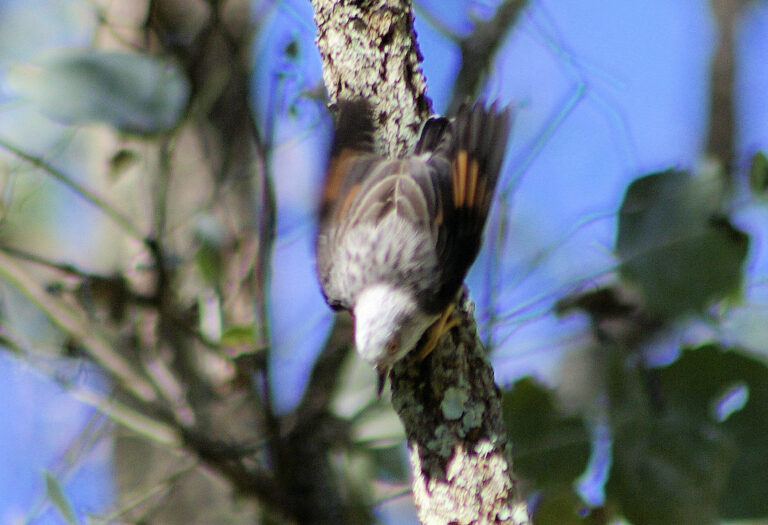
The plumage of the Madagascar Spinetail is predominantly dark brown, with a distinctive white throat and belly that contrasts sharply with the rest of its body. This coloration not only aids in camouflage against predators but also plays a role in thermoregulation. The bird’s tail is short and slightly forked, a characteristic feature of the spinetail family, which assists in steering during flight.
One of the most fascinating aspects of the Madagascar Spinetail is its vocalization. While generally silent during flight, it emits a series of high-pitched calls, particularly during the breeding season. These vocalizations are believed to play a role in mate attraction and territory establishment.
Habitat and Distribution
The Madagascar Spinetail is primarily found in the humid, evergreen forests of eastern Madagascar. These forests provide the perfect environment for nesting and feeding, offering abundant insect prey and suitable nesting sites. The species is also known to inhabit secondary forests and, occasionally, plantations, demonstrating some adaptability to human-altered landscapes.
Despite this adaptability, the Madagascar Spinetail is considered near-threatened due to ongoing deforestation and habitat fragmentation. The conversion of forests to agricultural land, logging, and the expansion of human settlements pose significant threats to its habitat. Conservation efforts are imperative to ensure the survival of this species, focusing on habitat preservation and the promotion of sustainable land-use practices.
Conservation Status and Efforts
The International Union for Conservation of Nature (IUCN) currently lists the Madagascar Spinetail as Near Threatened. The primary challenges facing this species are habitat loss and climate change, both of which could exacerbate the decline in suitable environments for the spinetail.
Conservation organizations are working tirelessly to protect the remaining forest habitats of Madagascar through the establishment of protected areas and the promotion of sustainable forestry practices. These initiatives aim to curb deforestation and promote the restoration of degraded landscapes, thus providing a more secure future for the Madagascar Spinetail and other endemic species.
Additionally, community-based conservation programs are being developed to involve local populations in the preservation of their natural heritage. By providing education and alternative livelihoods, these programs aim to reduce the pressure on natural resources, fostering a more symbiotic relationship between humans and the environment.
Conclusion
The Madagascar Spinetail is a testament to the rich biodiversity of Madagascar, embodying the island’s unique evolutionary history. As a species that relies heavily on the integrity of its forest habitat, it serves as a critical reminder of the importance of conservation efforts. By understanding and appreciating the role of the Madagascar Spinetail within its ecosystem, we can better advocate for the protection and restoration of its natural environment.
In a world where biodiversity is under constant threat, the Madagascar Spinetail stands as a symbol of resilience and the urgent need for conservation. Protecting this species and its habitat is not just about preserving a single bird but about maintaining the intricate web of life that sustains us all. Through concerted global efforts, we can hope to secure a future where the Madagascar Spinetail continues to soar across its native skies, a living testament to the wonders of nature.
Related posts