The Enigmatic Plain Nightjar: An In-Depth Exploration
The world of ornithology is filled with fascinating and often elusive species, and among these, the Plain Nightjar (Caprimulgus inornatus) holds a special place. This bird, which often goes unnoticed due to its cryptic plumage and nocturnal habits, is a remarkable example of adaptation and survival. In this article, we will delve into the life, habitat, and behavior of the Plain Nightjar, bringing to light the intriguing aspects of this understated avian species.
Overview and Taxonomy
The Plain Nightjar belongs to the family Caprimulgidae, which encompasses a variety of nocturnal birds known for their silent, moth-like flight and camouflaged appearance. The scientific name, *Caprimulgus inornatus*, aptly describes its unadorned and plain appearance. The genus name “Caprimulgus” translates to “goat sucker,” a term rooted in ancient folklore suggesting that these birds would suckle from goats—a myth long debunked by ornithologists.
The Plain Nightjar is predominantly found in sub-Saharan Africa, occupying a range of habitats from savannas to open woodlands. Its distribution spans from Senegal in the west to Ethiopia in the east, and down to South Africa. This widespread range highlights the bird’s adaptability to various environmental conditions.
Physical Characteristics
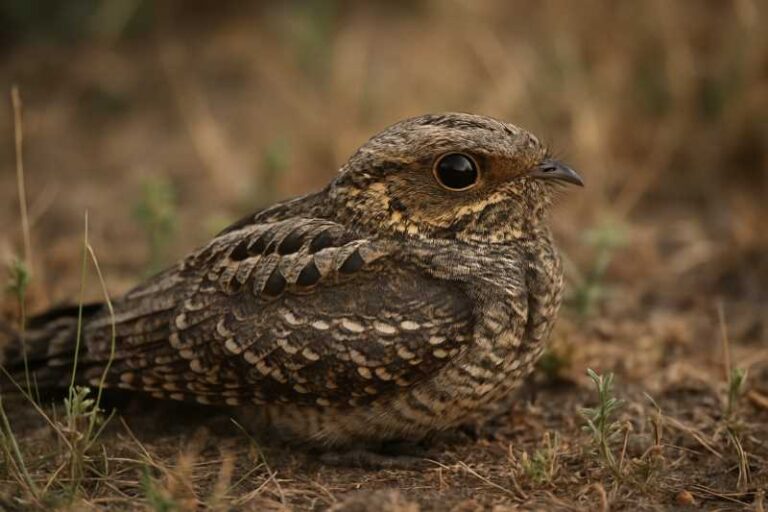
The Plain Nightjar is a medium-sized bird, typically measuring around 23-26 cm in length with a wingspan of approximately 45-55 cm. Its plumage is predominantly gray-brown with intricate patterns that provide excellent camouflage against the forest floor or dry savanna grass. This cryptic coloration is essential for its survival, as it relies heavily on blending into its surroundings to avoid predators.
One of the most distinctive features of the Plain Nightjar is its large, gaping mouth, which is perfectly adapted for its insectivorous diet. The bird’s eyes are large and well-suited for night vision, allowing it to hunt effectively in low-light conditions.
Behavior and Diet
The Plain Nightjar is primarily nocturnal, becoming active at dusk when it begins its hunt for food. Its diet consists mainly of insects, including moths, beetles, and other flying invertebrates. The bird’s hunting technique is both efficient and graceful; it flies silently through the night, using its keen eyesight and acute hearing to locate prey.
During the day, the Plain Nightjar remains motionless on the ground, relying on its camouflage to stay hidden from predators. It often chooses resting spots that match its plumage, such as leaf litter or sandy patches. This behavior is critical for its survival, as it helps the bird avoid detection by both terrestrial and aerial predators.
Breeding and Reproduction
The breeding season of the Plain Nightjar varies depending on its geographical location but generally coincides with the onset of the rainy season, which ensures an abundance of food for the growing chicks. Unlike many bird species, the Plain Nightjar does not build a nest. Instead, it lays its eggs directly on the ground, often in a shallow scrape or depression in the earth.
The female typically lays two eggs, which are cryptically colored to blend in with the surrounding environment. Both parents share the responsibility of incubating the eggs and caring for the chicks once they hatch. The young are precocial, meaning they are relatively mature and mobile shortly after hatching, which increases their chances of survival in the wild.
Conservation Status and Threats
Currently, the Plain Nightjar is classified as “Least Concern” by the International Union for Conservation of Nature (IUCN). This status reflects its wide distribution and stable population numbers. However, like many species, the Plain Nightjar faces threats from habitat loss due to agricultural expansion, deforestation, and human encroachment.
Conservation efforts for the Plain Nightjar are primarily focused on preserving its natural habitat and ensuring that protected areas remain viable for its continued survival. Public awareness and education about the importance of conserving nocturnal and camouflaged species also play a crucial role in the bird’s long-term preservation.
Conclusion
The Plain Nightjar, with its understated elegance and remarkable adaptations, is a testament to the diversity and resilience of avian life. Its ability to remain hidden in plain sight and thrive in various environments makes it a subject of intrigue for ornithologists and bird enthusiasts alike. By understanding and appreciating the life of the Plain Nightjar, we can contribute to the broader efforts of wildlife conservation and the protection of our planet’s incredible biodiversity.
Related posts