Introduction
Bechstein’s Myotis, scientifically known as Myotis bechsteinii, is a fascinating and elusive species of bat that inhabits various regions across Europe. This species is named after the German naturalist Johann Matthäus Bechstein, who made significant contributions to the study of bats. Known for its high-pitched echolocation calls and preference for dense woodlands, Bechstein’s Myotis is considered one of the most forest-dependent bat species in Europe. This article delves deep into the world of Bechstein’s Myotis, providing insights into its physical characteristics, habitat preferences, behaviors, and conservation status.
Physical Description
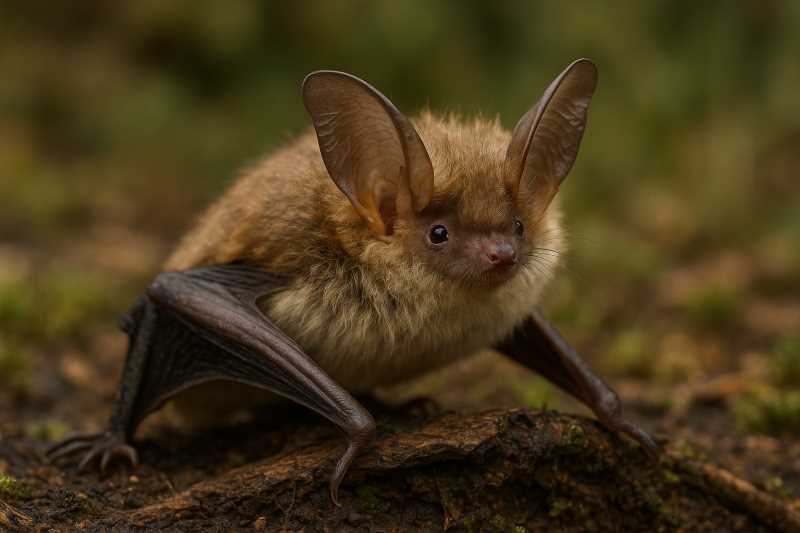
Bechstein’s Myotis is a medium-sized bat with a wingspan ranging from 25 to 30 centimeters and a body length of approximately 4 to 5 centimeters. It typically weighs between 7 and 12 grams. One of its distinguishing features is its long, broad ears, which are usually about 2.5 centimeters in length. These ears are instrumental in its nocturnal hunting activities, allowing it to detect prey through echolocation in densely wooded environments.
The fur of Bechstein’s Myotis is long and silky, with a coloration that varies from grayish-brown to reddish-brown on the back, while its underparts are typically paler. This coloration provides excellent camouflage against the bark of trees, helping it remain undetected by predators during the day when it roosts.
Range and Habitat
Bechstein’s Myotis is predominantly found across Western and Central Europe. Its range extends from southern England through France, Germany, and into Eastern Europe, reaching as far as the Ural Mountains in Russia. The bat’s distribution is patchy, largely influenced by the availability of suitable forest habitats.
This species prefers deciduous woodlands, particularly those dominated by oak and beech trees. It thrives in environments where there is a rich undergrowth and a high density of old trees with cavities suitable for roosting. Bechstein’s Myotis is also known to inhabit mixed forests and, less commonly, coniferous forests. The presence of water bodies within these forests is crucial, as they provide essential feeding grounds.
Behavior and Diet
Bechstein’s Myotis is a highly social species, often found in small colonies ranging from 10 to 30 individuals. These colonies are typically comprised of females and their young, while males tend to roost alone or in small bachelor groups during the breeding season.
This bat is nocturnal, emerging from its roost after sunset to hunt. It is an insectivorous species, feeding primarily on moths, beetles, and other small insects. Bechstein’s Myotis employs a hunting strategy known as "hover gleaning," where it uses its long ears to listen for the sounds of insects moving on leaves or the ground before swooping down to capture them.
The breeding season occurs in late summer, with females giving birth to a single pup in June or July. The young are dependent on their mothers for several weeks before they are capable of foraging on their own.
Identification Tips (Field Recognition Cues)
Identifying Bechstein’s Myotis in the field can be challenging due to its nocturnal habits and preference for dense forests. However, there are several cues that can aid in recognition:
- Echolocation Calls: Bechstein’s Myotis emits echolocation calls that are characterized by a frequency range of 80-100 kHz. These high-pitched calls are best detected using a bat detector.
- Roosting Habits: Look for colonies in woodland areas with old trees. They often use tree cavities, bat boxes, and occasionally buildings as roosts.
- Flight Pattern: This species has a fluttering flight pattern, often close to the ground or around tree canopies as it searches for insects.
- Physical Features: Note the long ears and the color of the fur, which can help distinguish it from other Myotis species.
Conservation Status (with Threats and Protections)
Bechstein’s Myotis is currently listed as Near Threatened on the IUCN Red List. The primary threats to this species include habitat loss due to deforestation, changes in forest management practices, and disturbance of roosting sites.
Efforts to conserve Bechstein’s Myotis focus on protecting and managing forest habitats. This includes the preservation of old-growth forests and the installation of bat boxes to provide additional roosting opportunities. Legal protections under the European Union’s Habitats Directive also play a critical role in safeguarding this species.
Frequently Asked Questions
What is the lifespan of Bechstein’s Myotis?
Bechstein’s Myotis can live up to 21 years in the wild, although most individuals tend to live around 8 to 12 years. Their lifespan is influenced by factors such as predation, habitat quality, and food availability.
How does Bechstein’s Myotis adapt to its environment?
This species adapts to its forest environment through its excellent camouflage and keen echolocation abilities. Its long ears and specialized hunting techniques allow it to thrive in dense woodlands where prey may be hidden among foliage.
What are the main threats to Bechstein’s Myotis?
The main threats include habitat destruction due to logging, agricultural expansion, and urban development. Climate change also poses a risk by altering the availability of prey and suitable roosting sites.
How can I support the conservation of Bechstein’s Myotis?
Supporting local wildlife conservation organizations, advocating for the protection of forest habitats, and participating in citizen science projects can all contribute to the conservation of this species.
Related posts