Introduction
The Papuan Bandicoot (Microperoryctes papuensis) is a remarkable species native to the lush, biodiverse environments of Papua New Guinea. As a member of the Peramelidae family, which includes other bandicoot species, the Papuan Bandicoot is a small marsupial known for its unique adaptations and critical role in its ecosystem. This article delves into various aspects of the Papuan Bandicoot, providing a comprehensive overview of its physical characteristics, habitat, behavior, and the conservation challenges it faces.
Physical Description
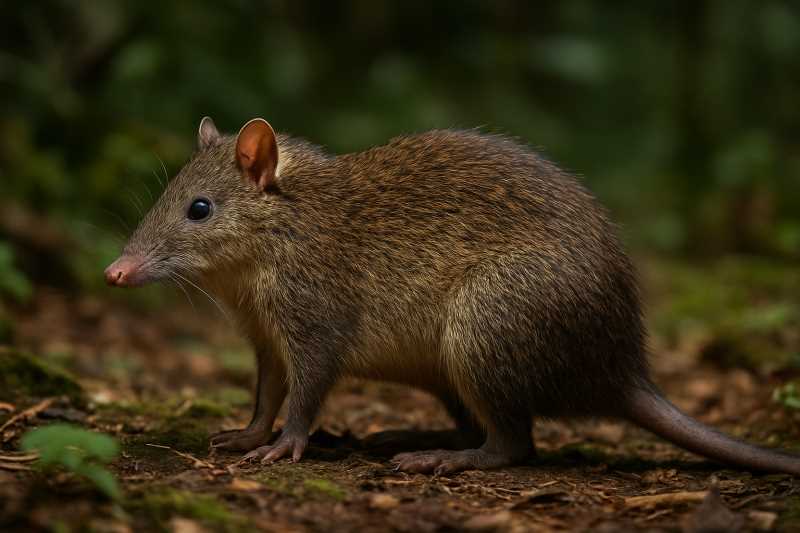
The Papuan Bandicoot is a relatively small marsupial, with adults typically weighing between 200 to 500 grams and measuring about 25 to 35 centimeters in body length, excluding the tail. The species exhibits a distinctive appearance characterized by a pointed snout, small rounded ears, and a tail that is slightly shorter than the body length. The fur of the Papuan Bandicoot is generally coarse and varies in color from a light brown to a darker, more reddish-brown, providing effective camouflage against the forest floor. The underbelly is usually lighter, often a creamy white or pale yellow, which contrasts with the darker upper body.
Range and Habitat
The Papuan Bandicoot is endemic to the island of New Guinea, specifically found within Papua New Guinea’s montane and lowland forests. These bandicoots prefer dense, moist, and covered forest habitats where they can forage and hide from predators. They are primarily terrestrial, but they are also adept climbers, often venturing into low vegetation in search of food. The altitude range for the Papuan Bandicoot varies, with populations thriving from sea level up to higher altitudes in mountainous regions.
Behavior and Diet
Primarily nocturnal, the Papuan Bandicoot is most active during the night when it forages for food. Its diet is omnivorous, consisting of a variety of insects, small vertebrates, fruits, seeds, and other plant materials. The bandicoot uses its keen sense of smell and sharp claws to dig and search for subterranean insects and larvae. This feeding behavior plays a crucial ecological role, as it aids in soil aeration and seed dispersal, contributing to forest health and regeneration.
Socially, the Papuan Bandicoot is relatively solitary, with individuals maintaining territories and only coming together for breeding purposes. Breeding can occur throughout the year, and like other marsupials, the Papuan Bandicoot has a short gestation period, after which tiny, underdeveloped young are born. The young continue to develop in the mother’s pouch, where they nurse and grow until they are capable of independent survival.
Identification Tips (Field Recognition Cues)
Identifying the Papuan Bandicoot in the field requires attention to several key features:
- Size and Shape: Look for a small, rabbit-sized mammal with a long, pointed snout and a relatively short tail.
- Fur Coloration: Note the distinct coloration, with a brown or reddish-brown upper body and lighter underbelly.
- Behavior: Observe nocturnal activity patterns and foraging behavior, such as digging in the forest floor.
- Habitat Preference: Focus on dense forest regions with plenty of ground cover, where these bandicoots are likely to be found.
Conservation Status (With Threats and Protections)
As of the latest assessments, the Papuan Bandicoot is classified as "Least Concern" on the IUCN Red List. However, like many species native to New Guinea, it faces several threats that could impact its population in the future. Habitat destruction due to logging and agricultural expansion poses a significant risk. Additionally, climate change and the introduction of non-native species could further threaten its habitat and food sources.
Conservation efforts are crucial to ensure the survival of the Papuan Bandicoot. Protected areas within Papua New Guinea help safeguard some populations, but continued monitoring and habitat preservation are essential. Efforts to educate local communities on the importance of biodiversity and sustainable land use practices can also contribute to the conservation of this unique marsupial.
Frequently Asked Questions
1. What is the natural habitat of the Papuan Bandicoot? The Papuan Bandicoot thrives in the dense montane and lowland forests of Papua New Guinea. It prefers environments with ample ground cover, which provide food and protection from predators.
2. How can you distinguish the Papuan Bandicoot from other bandicoot species? Key distinguishing features include its size, pointed snout, and coloration. The Papuan Bandicoot also has a specific range limited to New Guinea, which helps in differentiating it from other bandicoots.
3. What threats do Papuan Bandicoots face in their natural environment? The primary threats include habitat destruction from logging and agriculture, climate change effects, and competition or predation from non-native species.
4. Are Papuan Bandicoots important to their ecosystem? Yes, they play a vital role in their ecosystem by aiding in soil aeration and seed dispersal through their foraging activities, which contributes to forest health and regeneration.
5. Is the Papuan Bandicoot a protected species? While not currently endangered, the Papuan Bandicoot benefits from conservation measures within protected areas. Ongoing efforts are needed to maintain its population and habitat.
Related posts