Introduction
The Midas Tamarin, scientifically known as Saguinus midas, is a fascinating primate species belonging to the family Callitrichidae. These small New World monkeys are renowned for their striking golden hands and feet, which lend them their regal name. The Midas Tamarin is a captivating subject of study, not only due to its distinctive appearance but also for its intriguing behaviors and ecological role within its native habitat. This article delves into the physical characteristics, habitat, behavior, and conservation efforts surrounding this remarkable species, providing a comprehensive guide for enthusiasts and researchers alike.
Physical Description
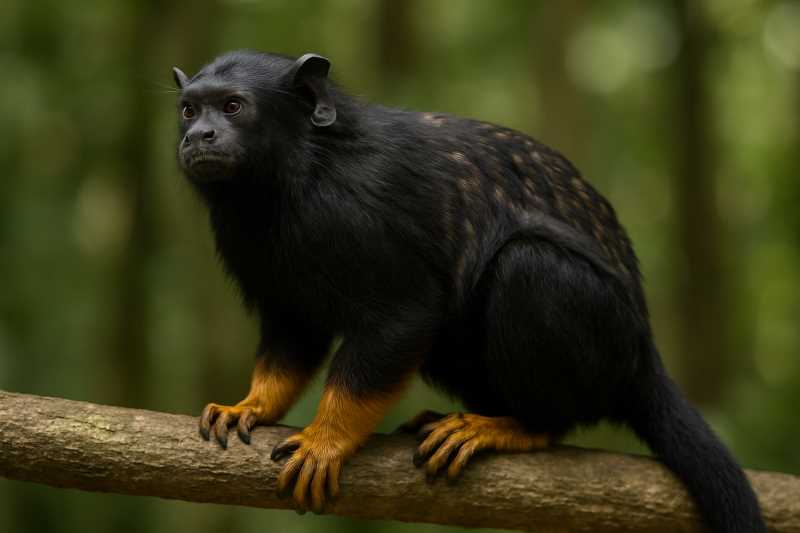
The Midas Tamarin is a diminutive primate, measuring approximately 20 to 28 centimeters (8 to 11 inches) in body length, with a tail that extends an additional 31 to 42 centimeters (12 to 16 inches). Despite its small stature, this species is notable for its striking coloration. The majority of its fur is glossy black, providing a stark contrast to its golden-orange hands and feet, a feature that has inspired its common name. This vivid coloration is thought to play a role in social interactions and communication among individuals.
The face of the Midas Tamarin is bare, with a dark skin tone that accentuates its expressive eyes and sharp, inquisitive features. Unlike some other tamarin species, the Midas Tamarin lacks a mane, giving it a sleek, streamlined appearance. Their sharp claws (tegulae) and prehensile tails are perfectly adapted for life in the trees, aiding in their arboreal lifestyle.
Range and Habitat
The Midas Tamarin is native to the northeastern regions of South America, primarily found in the countries of Brazil, French Guiana, Guyana, and Suriname. These primates inhabit a range of forested environments, including tropical rainforests, secondary forests, and occasionally gallery forests along rivers and streams. They are highly adaptable and can thrive in both primary and disturbed habitats, provided there is sufficient tree cover and food availability.
Their preference for dense, humid forests with a rich diversity of flora makes them an integral part of the ecosystem, playing a crucial role in seed dispersal and maintaining the health of their habitat. The Midas Tamarin’s range is relatively fragmented, leading to isolated populations that can be susceptible to habitat destruction and other anthropogenic pressures.
Behavior and Diet
Midas Tamarins are highly social animals, typically living in groups ranging from 3 to 15 individuals. These groups are often composed of a breeding pair and their offspring, with a complex social structure that involves cooperative breeding and alloparenting (where relatives help care for the young). Communication within groups is rich and varied, involving vocalizations, facial expressions, and body postures.
Their diet is omnivorous, consisting primarily of fruits, insects, and small vertebrates. Midas Tamarins are known for their opportunistic feeding habits, often foraging for food in the forest canopy. They play a vital role in their ecosystem as seed dispersers, aiding in the propagation of various plant species.
Identification Tips (Field Recognition Cues)
Identifying the Midas Tamarin in the wild can be a rewarding experience for wildlife enthusiasts. Key identification tips include:
- Coloration: Look for the striking contrast between their glossy black fur and golden-orange hands and feet.
- Size: Note their small body size (20-28 cm) and long tail (31-42 cm).
- Habitat: Observe their preference for dense, humid forest environments.
- Behavior: Watch for their social behavior, often seen in small family groups.
- Vocalizations: Listen for their distinctive calls, which are used for communication within groups.
Conservation Status (With Threats and Protections)
The Midas Tamarin is currently classified as Least Concern by the International Union for Conservation of Nature (IUCN), indicating that it is not immediately threatened with extinction. However, like many forest-dwelling species, it faces significant threats from habitat destruction, primarily due to logging, agriculture, and human settlement expansion.
Conservation efforts for the Midas Tamarin focus on habitat preservation and the establishment of protected areas. Initiatives to promote sustainable land use and reforestation are crucial in safeguarding the future of this species. Additionally, research and monitoring programs help track population trends and inform conservation strategies.
Frequently Asked Questions
What is the lifespan of a Midas Tamarin?
Midas Tamarins typically live for about 10 to 15 years in the wild. In captivity, with proper care, they may live slightly longer, up to 18 years.
Are Midas Tamarins endangered?
No, the Midas Tamarin is currently classified as Least Concern by the IUCN. However, habitat destruction poses a threat to their populations.
How do Midas Tamarins communicate?
Midas Tamarins communicate using a variety of vocalizations, facial expressions, and body postures. These signals help maintain social bonds and coordinate group activities.
What do Midas Tamarins eat?
Their diet is omnivorous, primarily consisting of fruits, insects, and small vertebrates. They are known for their opportunistic feeding habits.
Where can I see Midas Tamarins in the wild?
Midas Tamarins can be observed in the northeastern regions of South America, particularly in Brazil, French Guiana, Guyana, and Suriname, within dense forest habitats.
Related posts