Introduction
The Guianan Squirrel, scientifically known as Sciurus aestuans, is a captivating species of tree squirrel found in the lush forests of South America. Known for its agility and adaptability, this squirrel has piqued the interest of wildlife enthusiasts and researchers alike. As a member of the Sciuridae family, the Guianan Squirrel shares its lineage with a variety of other tree squirrels, yet it maintains unique characteristics that distinguish it from its relatives.
This article delves into the intriguing world of the Guianan Squirrel, exploring its physical attributes, habitat, behavior, and more. Whether you’re a budding naturalist or an experienced biologist, this comprehensive guide will provide valuable insights into the life of this remarkable mammal.
Physical Description
The Guianan Squirrel is a medium-sized tree squirrel, characterized by its robust body and bushy tail. Adults typically measure between 25 to 35 cm in body length, with the tail adding an additional 20 to 30 cm. The average weight ranges from 300 to 450 grams.
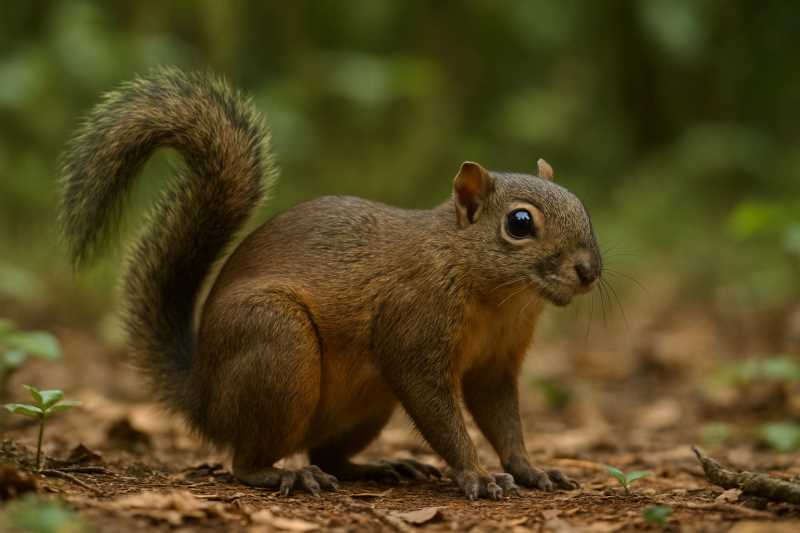
This species exhibits a predominantly reddish-brown fur, which can vary in shade depending on the region and individual. The fur is dense and soft, providing insulation against the elements. The underbelly is often lighter, displaying a white or pale grey hue. One of the most striking features of the Guianan Squirrel is its large, expressive eyes, which are well-adapted for detecting predators and navigating through dense foliage.
Range and Habitat
The Guianan Squirrel is native to the northern regions of South America, including countries such as Guyana, Suriname, French Guiana, Venezuela, and parts of northern Brazil. It thrives in tropical and subtropical rainforests, where it can take advantage of the diverse range of food sources and shelter provided by the dense canopy.
These squirrels are arboreal, spending the majority of their lives in trees. They are particularly fond of primary and secondary forests but can also be found in plantations and urban areas where suitable trees are available. Their adaptability to different environments has been a key factor in their survival and proliferation across their range.
Behavior and Diet
Guianan Squirrels are diurnal creatures, most active during the early morning and late afternoon. They are known for their agility, often seen leaping from branch to branch with incredible precision. Socially, they tend to be solitary, though it’s not uncommon to see them in pairs or small groups during the breeding season.
The diet of the Guianan Squirrel is varied and largely dependent on the availability of food in their habitat. They primarily feed on fruits, nuts, seeds, and flowers. On occasion, they may also consume insects and small vertebrates, making them opportunistic omnivores. This varied diet helps them to adapt to seasonal changes in food availability.
Identification Tips
Recognizing the Guianan Squirrel in the wild can be a rewarding experience. Here are some field recognition cues to help identify this species:
- Fur Coloration: Look for the characteristic reddish-brown fur with a lighter underbelly.
- Tail: A bushy tail that is nearly as long as the body, often held in an upright position.
- Eye Size: Large, dark eyes that stand out against their fur.
- Behavior: Agile movements and acrobatics in the trees can be a clear indication of their presence.
Conservation Status
Currently, the Guianan Squirrel is classified as "Least Concern" by the International Union for Conservation of Nature (IUCN). Despite this, they face several threats that could impact their populations in the future.
Threats
- Habitat Loss: Deforestation and habitat fragmentation due to logging, agriculture, and urbanization are significant threats.
- Hunting: In some areas, they are hunted for bushmeat, though this is not a widespread issue.
Protections
- Protected Areas: Many parts of their range overlap with national parks and reserves, offering some level of protection.
- Conservation Efforts: Ongoing research and conservation programs aim to monitor populations and mitigate threats.
Frequently Asked Questions
What is the lifespan of the Guianan Squirrel? The Guianan Squirrel typically lives for about 7 to 10 years in the wild, though this can vary based on environmental factors and predation.
How does the Guianan Squirrel adapt to seasonal changes? They have a diverse diet that allows them to switch between available food sources throughout the year, ensuring survival even during scarce periods.
Are Guianan Squirrels social animals? Generally, they are solitary, but they may form small groups during breeding seasons or when food is plentiful.
What role do Guianan Squirrels play in their ecosystem? They are important seed dispersers, aiding in the propagation of various plant species within their habitat.
Can Guianan Squirrels be found in urban areas? Yes, they can adapt to urban environments, provided there are trees and green spaces available for shelter and food.
Related posts