Tate’s Sulawesian Shrew Rat: An In-Depth Exploration
Introduction
Tate’s Sulawesian shrew rat, scientifically known as Tateomys rhinogradoides, is a fascinating mammal species endemic to the island of Sulawesi, Indonesia. This elusive creature is a member of the family Muridae, which includes other rodents such as mice and rats. Despite its common name, it is not a true shrew, but rather a unique rat species that has adapted to the diverse ecosystems of Sulawesi. This article aims to shed light on the distinctive characteristics, habitat, and conservation status of this intriguing species.
Physical Description
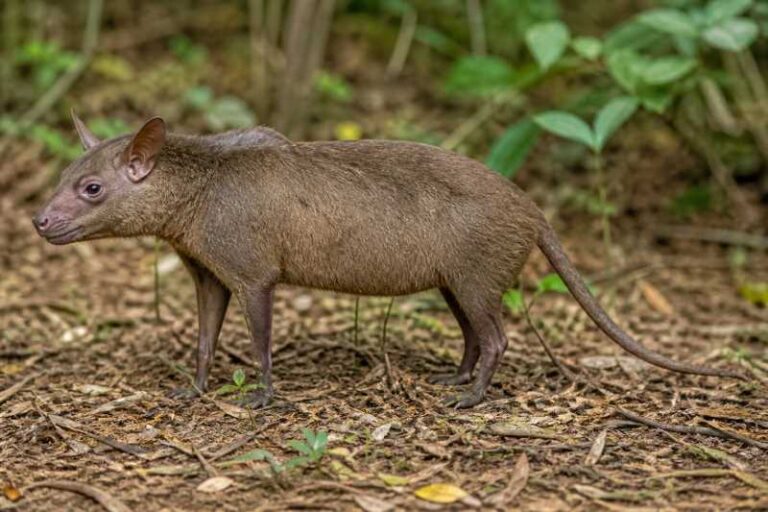
Tate’s Sulawesian shrew rat is a small rodent, typically measuring between 15 to 20 centimeters in body length, with a tail that is slightly shorter than its body. It weighs around 40 to 60 grams, depending on its age and condition. The shrew rat has a pointed snout, reminiscent of true shrews, which aids in its insectivorous diet. Its fur is generally a dark gray or brown, providing effective camouflage against the forest floor. Notably, the shrew rat possesses long, sensitive whiskers that help it navigate and forage in its dense habitat.
The tail of the shrew rat is covered in fine, short hair and is prehensile, aiding in balance and movement through undergrowth. Its limbs are relatively short, with nimble fingers and toes suited for digging and grasping. The eyes are small and beady, suggesting a limited reliance on visual acuity and a greater dependence on tactile and olfactory senses.
Range and Habitat
The geographic range of Tateomys rhinogradoides is restricted to the montane forests of Central Sulawesi. These forests, situated at altitudes ranging from 1,000 to 2,500 meters, provide the cool, moist environment that the shrew rat requires. Sulawesi’s montane forests are characterized by dense vegetation, moss-covered trees, and a rich layer of leaf litter, offering an ideal habitat for the shrew rat to thrive.
This species is primarily found in undisturbed primary forests, although it may occasionally inhabit secondary forests if the conditions are suitable. The shrew rat’s preference for higher altitudes is likely due to reduced competition from other rodents and a greater abundance of its preferred prey.
Behavior and Diet
Tate’s Sulawesian shrew rat is primarily nocturnal, spending its nights foraging for food and its days resting in burrows or hidden among dense foliage. Its diet consists mainly of insects and other small invertebrates, which it locates using its keen sense of smell and sensitive whiskers. The shrew rat is an adept digger, using its forelimbs to unearth prey hidden beneath the leaf litter.
Social behavior in Tateomys rhinogradoides is not well-documented, but it is believed to be a solitary species, with individuals coming together only for mating. The breeding season is thought to coincide with periods of increased insect activity, ensuring a plentiful food supply for the young.
Identification Tips
Identifying Tate’s Sulawesian shrew rat in the field requires attention to several key characteristics:
- Size and Shape: Look for a small rodent with a pointed snout and a body length of 15 to 20 centimeters.
- Fur Color: Note the dark gray or brown fur, which blends seamlessly with the forest floor.
- Tail: Observe the prehensile tail, which is slightly shorter than the body and covered in fine hair.
- Whiskers: The shrew rat’s long whiskers are a distinctive feature, aiding in its identification.
- Habitat: Consider the elevation and forest type; this species is primarily found in montane, primary forests.
Conservation Status
Currently, Tateomys rhinogradoides is classified as "Data Deficient" by the International Union for Conservation of Nature (IUCN), primarily due to the lack of comprehensive studies on its population size and trends. However, it is known that the species faces several threats, including habitat loss due to logging and agricultural expansion.
The montane forests of Sulawesi are increasingly under pressure from human activities, leading to fragmentation and degradation of the shrew rat’s habitat. Conservation efforts are focused on protecting these critical forest areas and promoting sustainable land use practices.
In terms of legal protection, Sulawesi’s national parks and wildlife reserves provide some safeguards for the shrew rat’s habitat. However, increased awareness and targeted conservation initiatives are essential to ensure the long-term survival of this unique species.
Frequently Asked Questions
What is the primary diet of Tate’s Sulawesian shrew rat?
The primary diet of Tate’s Sulawesian shrew rat consists of insects and other small invertebrates. It uses its keen sense of smell and sensitive whiskers to locate prey among the forest floor’s leaf litter.
Where can Tate’s Sulawesian shrew rat be found?
Tateomys rhinogradoides is endemic to the montane forests of Central Sulawesi, Indonesia. It is typically found at altitudes ranging from 1,000 to 2,500 meters in primary forest environments.
How can you identify a Tate’s Sulawesian shrew rat in the wild?
Identification involves noting its small size, pointed snout, dark gray or brown fur, and prehensile tail. The presence of long whiskers and its preference for montane forests are also key indicators.
What threats does the shrew rat face?
The main threats to Tate’s Sulawesian shrew rat include habitat loss due to logging and agricultural activities. Conservation efforts are focused on protecting its montane forest habitat and promoting sustainable practices.
Why is the conservation status of Tateomys rhinogradoides listed as Data Deficient?
The "Data Deficient" status reflects the lack of comprehensive data on the species’ population size and trends. Further research is needed to accurately assess its conservation needs.
Related posts