Introduction
The Single-striped Grass Mouse (Lemniscomys rosalia) is a small rodent species belonging to the Muridae family. Known for its distinct single stripe running down its back, this species is often found in the grasslands and savannas of sub-Saharan Africa. As a member of the Lemniscomys genus, the Single-striped Grass Mouse plays an important role in its ecosystem, contributing to seed dispersion and serving as prey for a variety of predators. In this comprehensive article, we will delve into the fascinating world of the Single-striped Grass Mouse, exploring its physical characteristics, habitat, behavior, and conservation status.
Physical Description
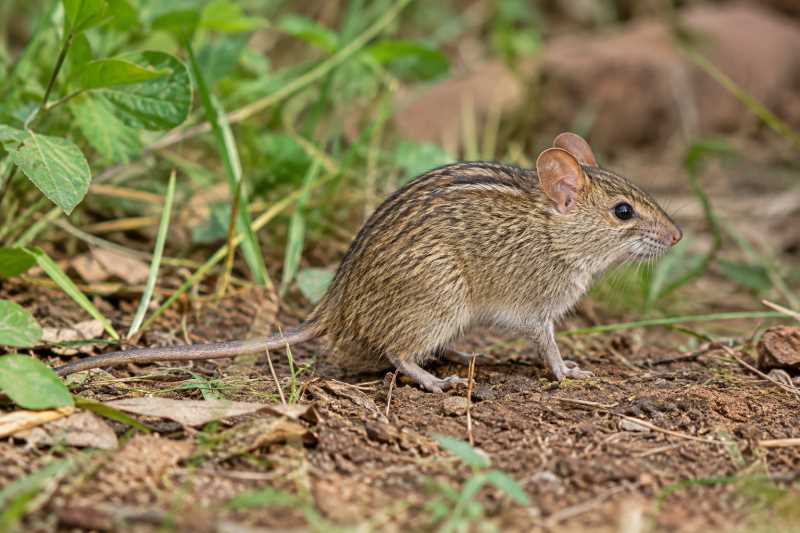
The Single-striped Grass Mouse is a small rodent, with adults typically weighing between 20 to 50 grams and measuring about 10 to 15 centimeters in body length. The tail adds an additional 10 to 15 centimeters, making it approximately equal in length to the body. The most distinctive feature of this species is the single dark stripe that runs along the middle of its back, from the head to the base of the tail. This stripe is accompanied by lighter fur on the sides, which can vary in color from grayish-brown to reddish-brown, depending on the individual.
The ventral side of the Single-striped Grass Mouse is usually lighter, often white or pale gray. Its fur is generally soft and short, providing adequate insulation against temperature fluctuations in its natural habitat. The eyes are relatively large and black, with small, rounded ears that are well-furred. These features, along with long whiskers, aid the mouse in navigating its environment and sensing potential threats.
Range and Habitat
The Single-striped Grass Mouse is widely distributed across sub-Saharan Africa, with its range extending from Senegal in the west to Ethiopia in the east, and south to parts of South Africa. It inhabits a variety of environments, but it shows a strong preference for grasslands, savannas, and open woodlands. This species is particularly abundant in areas with tall grasses, which provide both food and cover from predators.
In addition to grasslands, the Single-striped Grass Mouse can be found in cultivated fields and along the edges of forests. It is highly adaptable, capable of surviving in a range of environmental conditions, from arid regions to more humid areas. Human agricultural practices sometimes create ideal habitats for this species, as they offer plentiful food resources and shelter.
Behavior and Diet
The Single-striped Grass Mouse is primarily diurnal, meaning it is active during the day. This behavior is somewhat unusual for rodents, many of which are nocturnal. Its activity peaks during the early morning and late afternoon, when temperatures are cooler. During the hottest part of the day, the mouse typically retreats to its burrow or a shaded area to avoid overheating.
The diet of the Single-striped Grass Mouse is predominantly herbivorous, consisting mainly of seeds, grasses, and other plant materials. It is known to occasionally consume insects and small invertebrates, which provide additional protein. The mouse uses its sharp incisors to gnaw on tough plant materials, and its cheek pouches allow it to transport food back to its burrow for later consumption.
Socially, the Single-striped Grass Mouse is relatively solitary, although it may be seen in small groups when food is abundant. It communicates with conspecifics through vocalizations, scent markings, and body language. During the breeding season, males may become more aggressive as they compete for mates.
Identification Tips (field recognition cues)
Identifying the Single-striped Grass Mouse in the field can be challenging due to its small size and the presence of similar species in its range. However, there are several key characteristics that can help distinguish it:
- Single Stripe: Look for the distinct single stripe running down the center of the back. This is the most reliable feature for identification.
- Size and Shape: Note the rodent’s small size, with a body length of around 10 to 15 cm and a tail of similar length.
- Coloration: Observe the fur coloration, which typically consists of a darker dorsal stripe with lighter sides and a pale ventral side.
- Behavior: During daylight hours, watch for their active foraging behavior in grassy areas.
- Habitat: Consider the habitat; the presence of tall grasses and open areas is indicative of potential locations for this species.
Conservation Status (with threats and protections)
The Single-striped Grass Mouse is currently classified as a species of Least Concern by the International Union for Conservation of Nature (IUCN). This classification is largely due to its wide distribution and presumed large population size. However, localized threats do exist, including habitat destruction due to agricultural expansion, urban development, and climate change.
While the species has shown adaptability to human-altered landscapes, habitat fragmentation can isolate populations, leading to reduced genetic diversity. Additionally, the use of pesticides in agriculture can pose a direct threat to the species, either through direct poisoning or by reducing its food supply.
Conservation measures for the Single-striped Grass Mouse focus on habitat preservation and sustainable agricultural practices. Protected areas that encompass significant portions of its natural habitat are crucial to ensuring its long-term survival. Education and community engagement are also important, as they promote coexistence between humans and wildlife.
Frequently Asked Questions
1. What do Single-striped Grass Mice eat?
Single-striped Grass Mice primarily consume seeds, grasses, and other plant materials. They also eat insects and small invertebrates occasionally, providing a balanced diet that meets their nutritional needs.
2. How can you identify a Single-striped Grass Mouse?
Look for its distinctive single stripe along the back, small size, and typical coloration of a darker stripe with lighter sides and a pale belly. Their diurnal activity and preference for grassland habitats also aid in identification.
3. Where do Single-striped Grass Mice live?
They are found across sub-Saharan Africa, favoring grasslands, savannas, and open woodlands. They are also adaptable to cultivated fields and forest edges.
4. Are Single-striped Grass Mice endangered?
Currently, they are listed as Least Concern by the IUCN due to their wide range and large population, but they face localized threats from habitat destruction and pesticide use.
5. What is the lifespan of a Single-striped Grass Mouse?
In the wild, Single-striped Grass Mice typically live around 1 to 2 years, although this can vary based on environmental conditions and predation pressure.
Related posts