Introduction
The Mesic Four-striped Grass Rat, scientifically known as Rhabdomys dilectus, is a fascinating small mammal native to the African continent. This species, belonging to the Muridae family, is a significant subject of study due to its adaptability, behavior, and ecological role. Often found in mesic grasslands and savannas, these rodents serve as both prey and seed dispersers, playing a pivotal role in their ecosystems. Despite being relatively unknown compared to larger African mammals, Rhabdomys dilectus offers intriguing insights into the biodiversity and adaptability of African wildlife.
Physical Description
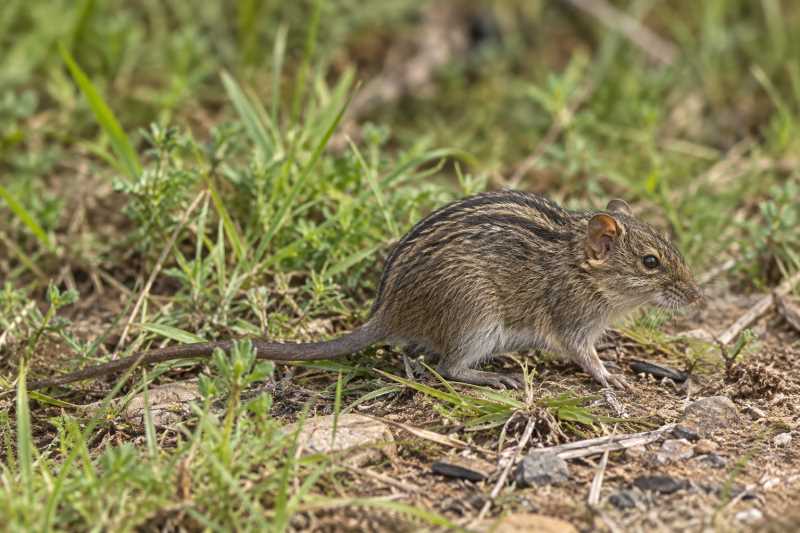
The Mesic Four-striped Grass Rat is small and agile, characterized by its distinctively striped back. Typically, it measures between 10 to 15 centimeters in body length, with a tail that ranges from 8 to 12 centimeters. The pelage is a combination of grayish-brown tones with four distinct black or dark brown stripes running longitudinally along the back. The belly is often a lighter gray or white. This color pattern provides excellent camouflage in its natural habitat, aiding in evasion from predators.
The species displays slight sexual dimorphism, with males generally being larger than females. Their ears are small and rounded, while the eyes are relatively large, aiding in nocturnal activities. Adapted for a life of burrowing and foraging, their limbs are strong with well-developed digits.
Range and Habitat
Rhabdomys dilectus is predominantly found in Southern and Eastern Africa, with its range extending through countries like South Africa, Zimbabwe, Mozambique, and parts of Tanzania. These rodents prefer habitats that offer dense grass cover, which provides both food and protection from predators.
Their preferred habitats are mesic grasslands, savannas, and sometimes agricultural lands, where they can easily access seeds and other plant materials. The presence of water bodies often influences their distribution, as they require a humid environment for optimal survival. The adaptability of Rhabdomys dilectus to various environmental conditions demonstrates their ecological versatility.
Behavior and Diet
The Mesic Four-striped Grass Rat is primarily nocturnal, although it can be active during the cooler parts of the day. These rodents are social creatures, often forming small family groups within their burrows. Communication within these groups is facilitated by a series of vocalizations and scent markings.
In terms of diet, Rhabdomys dilectus is omnivorous. Their primary food sources include seeds, fruits, and green plant material, but they will also consume insects and other small invertebrates when available. This varied diet helps them to thrive in different environments and contributes to their role in seed dispersal within their ecosystems.
Identification Tips (Field Recognition Cues)
Identifying the Mesic Four-striped Grass Rat in the field can be challenging due to its small size and elusive nature. However, there are several key features to look for:
- Distinctive Stripes: Look for the four parallel stripes running along the back. These are a defining characteristic of the species.
- Tail Length: The tail is almost as long as the body and covered in fine hairs.
- Ear Shape: Small, rounded ears are a distinguishing feature.
- Activity Patterns: They are most active at night or during the early morning and late afternoon.
- Habitat Signs: Look for signs such as burrows or trails in grassy areas.
Conservation Status (with Threats and Protections)
Currently, the International Union for Conservation of Nature (IUCN) categorizes the Mesic Four-striped Grass Rat as a species of Least Concern. This classification is due to its wide distribution and presumed large population.
However, like many species, Rhabdomys dilectus faces threats from habitat destruction and fragmentation, primarily due to agricultural expansion and urban development. In some areas, they are also subject to predation by domestic animals.
Conservation efforts for this species are not specifically targeted, but they benefit from broader habitat conservation initiatives. Protected areas and national parks across their range help safeguard their natural habitats.
Frequently Asked Questions
1. What is the primary diet of the Mesic Four-striped Grass Rat?
The Mesic Four-striped Grass Rat primarily feeds on seeds, fruits, and green plant material. They are omnivorous and will also eat insects and small invertebrates when available.
2. Where can the Mesic Four-striped Grass Rat be found?
This species is found in Southern and Eastern Africa, particularly in countries such as South Africa, Zimbabwe, Mozambique, and Tanzania. They thrive in mesic grasslands, savannas, and sometimes agricultural lands.
3. What are the main threats to the Mesic Four-striped Grass Rat?
The main threats include habitat destruction and fragmentation due to agricultural expansion and urban development. Predation by domestic animals also poses a risk in some areas.
4. How do Mesic Four-striped Grass Rats communicate?
These rodents communicate through vocalizations and scent markings. They are social animals and often live in family groups, using these communication methods to maintain social bonds.
5. Are Mesic Four-striped Grass Rats nocturnal?
Yes, they are primarily nocturnal but can also be active during the cooler parts of the day, such as early morning and late afternoon.
Related posts