Introduction
Herbert’s Rock Wallaby, scientifically known as Petrogale herberti, is a fascinating marsupial that belongs to the family Macropodidae. This species is one of the many rock wallabies found in Australia, known for its agility and adaptability to rocky terrains. While not as commonly known as some of its relatives, Herbert’s Rock Wallaby plays a crucial role in the ecosystem, particularly in the regions it inhabits.
Understanding the characteristics and behaviors of Herbert’s Rock Wallaby is essential for appreciating its ecological importance and for promoting conservation efforts. This article delves into various aspects of Petrogale herberti, including its physical description, habitat, behavior, and conservation status.
Physical Description
Herbert’s Rock Wallaby is a small to medium-sized marsupial, with adult individuals typically weighing between 4 to 9 kilograms (9 to 20 pounds). The species exhibits sexual dimorphism, with males generally larger than females. The body length ranges from 50 to 70 centimeters (20 to 28 inches), with a tail that can be as long as the body, aiding in balance and agility.
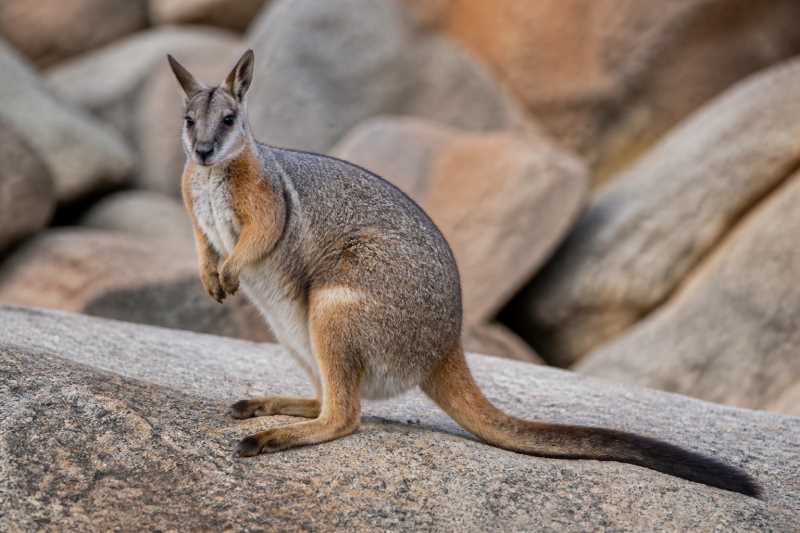
The fur of Herbert’s Rock Wallaby is dense and soft, providing insulation against the varying temperatures of its rocky habitat. The coloration is generally a mix of grey, brown, and reddish hues, allowing it to blend seamlessly with the rocky environments. The underbelly is usually lighter, often a creamy or pale grey color. The ears are relatively large and rounded, equipped with keen hearing to detect predators and other environmental sounds.
One of the distinctive features of Herbert’s Rock Wallaby is its strong hind legs and feet, adapted for leaping and climbing on rocky surfaces. These adaptations not only facilitate movement across rugged terrains but also enable the wallaby to escape predators by accessing areas that are difficult for many other animals to reach.
Range and Habitat
Herbert’s Rock Wallaby is primarily found in Queensland, Australia. Its range includes the rocky outcrops, cliffs, and escarpments of the Great Dividing Range and adjacent areas. The species prefers habitats with abundant rocky crevices and ledges, which provide shelter and protection from predators and harsh weather conditions.
These wallabies are highly adapted to their environment, often found in areas with sparse vegetation, where they feed on the available grasses and shrubs. Their habitat is characterized by a mix of rocky substrates, including sandstone and granite, which offer both refuge and vantage points for spotting threats.
The distribution of Herbert’s Rock Wallaby is not continuous but rather fragmented, with populations isolated by unsuitable habitats or human development. This fragmentation poses challenges for the species’ conservation, as it can limit genetic diversity and increase vulnerability to environmental changes.
Behavior and Diet
Herbert’s Rock Wallaby is primarily crepuscular, meaning it is most active during the early morning and late afternoon. This behavior helps the species avoid the extreme temperatures of midday and reduces the risk of predation. During the day, these wallabies rest in the shade of rocks or within crevices, where they remain alert to potential dangers.
The diet of Herbert’s Rock Wallaby consists mainly of grasses, leaves, and shrubs. They are known to be selective feeders, often choosing plants that provide the highest nutritional value. Their ability to extract moisture from their food enables them to survive in areas with limited water sources.
Socially, Herbert’s Rock Wallaby is known to form small groups, although individuals are often seen alone. These groups, or colonies, are usually centered around the best available food and shelter resources. Communication within the species includes a range of vocalizations and body language, used to warn of predators or maintain social bonds.
Identification Tips
Identifying Herbert’s Rock Wallaby in the field requires attention to several key characteristics:
- Size and Shape: Look for a medium-sized wallaby with a robust body and long, powerful hind legs.
- Coloration: Note the grey to reddish-brown coloration with a lighter underbelly, which helps camouflage the wallaby against rocky backgrounds.
- Tail: The long, bushy tail is often used for balance and is a key identifier.
- Habitat: Check for the presence of rocky outcrops or ledges, as these are preferred habitats.
- Behavior: Observe for crepuscular activity patterns, with movement occurring primarily at dawn and dusk.
Conservation Status
As of the latest assessments, Herbert’s Rock Wallaby is classified as Near Threatened on the IUCN Red List. While not immediately at risk of extinction, the species faces several threats that could impact its long-term survival.
Threats
- Habitat Loss: Urban development, agriculture, and mining activities have led to habitat fragmentation and loss, reducing the available living space for the species.
- Predation: Introduced predators such as foxes and feral cats pose significant threats, particularly to juvenile wallabies.
- Climate Change: Alterations in climate patterns can affect the availability of food and water resources, as well as increase the frequency of extreme weather events.
Protections
Efforts to conserve Herbert’s Rock Wallaby include habitat restoration projects and predator control programs. Protected areas have been established to safeguard critical habitats, and conservationists are working to connect fragmented populations through wildlife corridors.
Public awareness campaigns and research initiatives also play vital roles in ensuring the survival of this unique species.
Frequently Asked Questions
What is the diet of Herbert’s Rock Wallaby?
Herbert’s Rock Wallaby primarily feeds on grasses, leaves, and shrubs. They are selective feeders, choosing plants with high nutritional value and are adapted to extract moisture from their diet, which helps them survive in arid conditions.
How does Herbert’s Rock Wallaby adapt to its rocky habitat?
Herbert’s Rock Wallaby has several adaptations for its rocky habitat, including strong hind legs for jumping and climbing, a long tail for balance, and fur that blends with its surroundings. These adaptations enable it to navigate rugged terrains and escape predators.
What are the main threats to Herbert’s Rock Wallaby?
The main threats include habitat loss due to urbanization and agriculture, predation by introduced species like foxes and feral cats, and the impacts of climate change, which can alter food and water availability and increase extreme weather events.
Where can I see Herbert’s Rock Wallaby in the wild?
Herbert’s Rock Wallaby can be seen in the wild in Queensland, Australia, particularly around the Great Dividing Range. Look for them in rocky outcrops and escarpments, where they are most active during dawn and dusk.
How is Herbert’s Rock Wallaby being protected?
Conservation efforts include habitat restoration, predator control, and the establishment of protected areas. Additionally, wildlife corridors are being developed to connect fragmented populations, and public awareness campaigns aim to promote the species’ conservation.
Related posts