Introduction
The Hairy Saki, scientifically known as Pithecia hirsuta, is a fascinating and lesser-known species of primate that captures the interest of mammalogists and wildlife enthusiasts alike. Belonging to the Pitheciidae family, Hairy Sakis are a type of New World monkey that can be found in the dense, lush rainforests of South America. These primates are characterized by their distinctive appearance and unique behaviors, making them an intriguing subject of study. This article delves into various aspects of the Hairy Saki, from its physical characteristics to its conservation status, providing a comprehensive overview of this remarkable species.
Physical Description
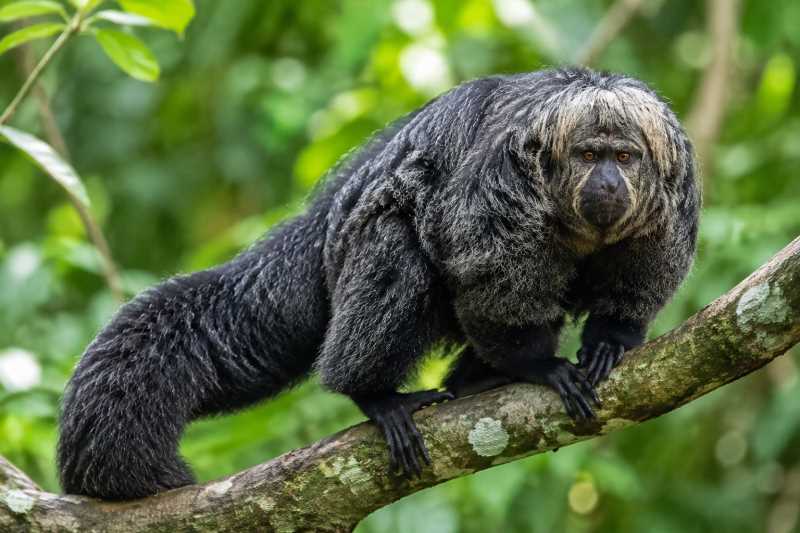
The Hairy Saki is a medium-sized monkey with a robust build, characterized by a somewhat stocky body and a bushy tail. Adult males typically weigh between 2.5 to 3.5 kilograms (5.5 to 7.7 pounds) and measure about 30 to 50 centimeters (12 to 20 inches) in body length, with their tails adding an additional 25 to 40 centimeters (10 to 16 inches). Females are generally smaller than males, following the common sexual dimorphism seen in many primate species.
One of the most striking features of the Hairy Saki is its dense, shaggy fur, which ranges in color from dark brown to black, providing excellent camouflage against the backdrop of its natural habitat. The fur is longer around the head and neck, giving the appearance of a lion-like mane, which is more pronounced in males. Their faces are hairless, with a protruding muzzle and large, expressive eyes that are often a deep shade of brown. The Hairy Saki’s hands and feet are equipped with strong, dexterous fingers, aiding in their arboreal lifestyle.
Range and Habitat
The Hairy Saki is native to the tropical rainforests of South America, with a range that primarily encompasses parts of the Amazon Basin. They are found in countries such as Peru, Brazil, and Colombia. These monkeys are arboreal, spending the majority of their lives in the upper canopy of the forest, which provides them with both food resources and protection from ground predators.
Hairy Sakis prefer undisturbed, primary forests but can also be found in secondary forests that have regrown after human disturbance. They are highly dependent on the forest canopy for their survival, relying on its continuous cover for movement and access to food. The loss of habitat due to deforestation poses a significant threat to their populations, as the fragmentation of forests limits their range and access to resources.
Behavior and Diet
Hairy Sakis are diurnal, spending their active hours foraging for food and socializing with members of their group. They live in small family groups, usually consisting of a monogamous pair and their offspring. These groups are territorial, with each unit maintaining a defined home range that they defend from other groups.
The diet of Hairy Sakis is primarily frugivorous, meaning they mainly consume fruit. However, they are also known to eat seeds, leaves, and occasionally insects. Their strong jaws and specialized teeth are well-adapted for cracking open hard nuts and seeds, which form an essential part of their diet, especially during periods when fruit is scarce.
Social interactions within Hairy Saki groups are complex and involve grooming, vocalizations, and play. Grooming is a vital activity that strengthens social bonds and ensures the health of the group by removing parasites and debris from their dense fur.
Identification Tips (Field Recognition Cues)
Identifying the Hairy Saki in the wild can be challenging due to its elusive nature and the dense forest habitat it occupies. However, there are several key characteristics to look for when attempting to spot and identify this species:
- Fur Texture and Color: Look for their dense, shaggy fur, which is darker on the back and lighter on the underparts. The mane-like fur around the head is a distinctive feature, especially in males.
- Tail: Observe their bushy tails, which they often use for balance while navigating through the treetops.
- Facial Features: Note the hairless face with a protruding muzzle and large, expressive eyes, which can be a giveaway even from a distance.
- Movement: Hairy Sakis are agile climbers and jumpers, moving swiftly through the canopy. Their movement is often accompanied by the rustling of leaves and branches, which can be a good auditory cue.
- Vocalizations: Listen for their vocalizations, which include a range of calls used for communication within the group, from high-pitched whistles to softer coos.
Conservation Status (with Threats and Protections)
The conservation status of the Hairy Saki is currently assessed as Least Concern by the International Union for Conservation of Nature (IUCN). However, this does not imply that the species is free from threats. The primary threat to Hairy Sakis is habitat loss due to deforestation, driven by agricultural expansion, logging, and infrastructure development in the Amazon Basin.
Deforestation leads to habitat fragmentation, which isolates populations and makes it difficult for these monkeys to find food and mates. Additionally, illegal hunting poses a threat, although Hairy Sakis are not typically targeted by hunters due to their small size and elusive nature.
Conservation efforts for the Hairy Saki focus on habitat protection and restoration. Establishing protected areas and promoting sustainable land-use practices are crucial for preserving their natural environment. Additionally, raising awareness about the importance of biodiversity and the role of primates in maintaining healthy ecosystems is vital for garnering public support for conservation initiatives.
Frequently Asked Questions
1. What do Hairy Sakis eat in the wild?
Hairy Sakis have a primarily frugivorous diet, consisting mainly of fruits. They also consume seeds, leaves, and occasionally insects. Their strong jaws and specialized teeth allow them to crack open hard nuts and seeds, which are important food sources during fruit-scarce periods.
2. Where can Hairy Sakis be found in the wild?
Hairy Sakis are native to the tropical rainforests of the Amazon Basin in South America. They are found in countries such as Peru, Brazil, and Colombia, primarily inhabiting undisturbed primary forests and, to a lesser extent, secondary forests.
3. How do Hairy Sakis communicate with each other?
Hairy Sakis communicate through a range of vocalizations, including high-pitched whistles and softer coos. These vocalizations are used for various purposes, such as maintaining group cohesion, signaling alarm, and coordinating activities within the group. Additionally, grooming plays a significant role in communication, helping to strengthen social bonds and maintain group harmony.
4. What are the main threats to Hairy Saki populations?
The main threats to Hairy Saki populations include habitat loss due to deforestation, driven by agriculture, logging, and infrastructure development. Habitat fragmentation isolates populations, making it challenging for them to find food and mates. While illegal hunting is a threat, it is not as significant as habitat loss.
5. Are Hairy Sakis endangered?
Currently, Hairy Sakis are not classified as endangered. They are listed as Least Concern by the IUCN. However, continuous monitoring and conservation efforts are necessary to ensure their populations remain stable, as they face significant threats from habitat loss and fragmentation.
Related posts