Introduction
The Common Cusimanse (Crossarchus obscurus) is a fascinating small mammal that belongs to the mongoose family, Herpestidae. Known for its inquisitive nature and adaptability, this species is native to the tropical forests and savannas of West Africa. As a lesser-known species, the Common Cusimanse offers unique insights into the diversity of the mongoose family and the ecological roles they play.
Physical Description
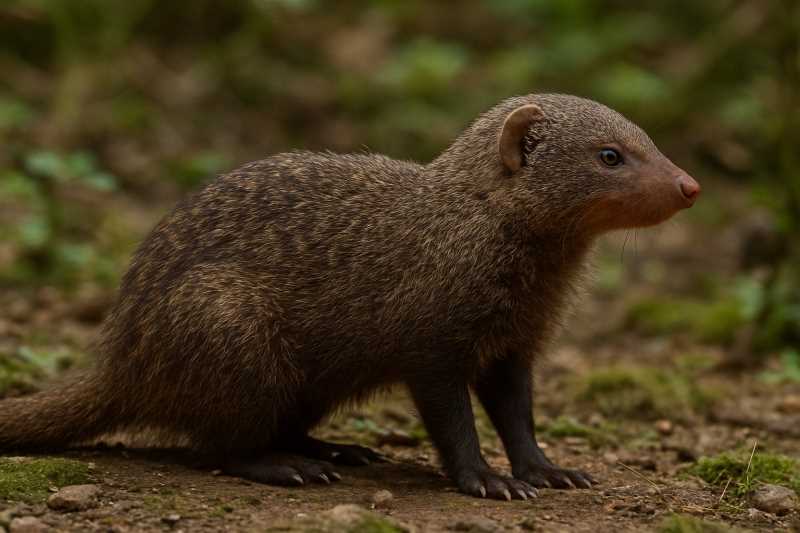
Common Cusimanses are small, agile mammals characterized by their elongated bodies and short legs. They typically measure between 33 to 45 centimeters in body length, with a tail adding an additional 15 to 25 centimeters. Their weight ranges from 0.5 to 1.5 kilograms. The fur of the Common Cusimanse is dense and coarse, ranging in color from dark brown to black, which helps them blend into the forest underbrush. Their heads are somewhat triangular with a pointed muzzle and small, rounded ears, reflecting their adaptation to a life of foraging and burrowing. The eyes are small and set forward, providing binocular vision essential for spotting prey and predators.
Range and Habitat
The Common Cusimanse is found across several West African countries, including Ghana, Sierra Leone, Ivory Coast, and Liberia. They are highly adaptable and occupy a range of habitats from dense tropical rainforests to open savannas and even agricultural areas. Preferring regions with abundant cover, these animals thrive in environments that offer plenty of hiding spots and opportunities for scavenging. Their habitat choice is closely tied to the availability of food and shelter, making them a vital part of the local ecosystem as both predator and prey.
Behavior and Diet
Common Cusimanses are diurnal, meaning they are active during the day. They are social animals, often living in groups ranging from 10 to 20 individuals. These groups are typically composed of related individuals, and they communicate through a series of vocalizations and scent markings. Their social structure is complex, with a hierarchy that dictates grooming, foraging, and breeding behaviors.
Their diet is omnivorous, consisting of insects, small mammals, fruits, and seeds. They have a particular penchant for beetles and other insects, which they skillfully extract from under logs and stones using their strong forelimbs and claws. The Common Cusimanse also consumes small reptiles and amphibians, and they are known to scavenge on carrion when available.
Identification Tips
Field recognition of the Common Cusimanse can be accomplished by observing several key characteristics. Look for their distinctive dark, coarse fur and the elongated body with short limbs. Their active and social behavior can also be a distinguishing factor, as they are often seen foraging in groups. Listen for their vocalizations, which include a range of chirps and growls used to communicate with each other. Tracks may also be observed, typically showing small, clawed footprints indicative of their digging habits.
Conservation Status
As of the latest assessments, the Common Cusimanse is classified as Least Concern by the IUCN Red List. However, like many species in West Africa, they face threats from habitat destruction due to logging, agriculture, and urban expansion. Hunting for bushmeat and the pet trade also pose significant risks. Efforts are underway to mitigate these threats through conservation initiatives that include habitat preservation and community education programs. Protected areas and wildlife reserves play a critical role in safeguarding their habitats from further degradation.
Frequently Asked Questions
1. What adaptations help the Common Cusimanse survive in its environment? The Common Cusimanse has several adaptations that aid its survival, including a keen sense of smell and hearing for detecting prey and predators. Their strong, curved claws are ideal for digging and foraging, and their social structure ensures cooperative defense and resource sharing among group members.
2. How does the Common Cusimanse communicate within its group? Communication among Common Cusimanses is primarily through vocalizations, including a series of chirps and growls. They also use scent marking to establish territory and reinforce social bonds. Visual cues, such as body postures and grooming behaviors, play a role in intra-group interactions.
3. Are Common Cusimanses good pets? While Common Cusimanses are sometimes kept as exotic pets, they are not recommended for most individuals due to their complex social and environmental needs. In captivity, they require large enclosures, social interaction, and enrichment activities that mimic their natural behaviors.
4. What is the lifespan of a Common Cusimanse in the wild? In the wild, Common Cusimanses typically live around 10 years, though this can vary based on environmental conditions and predation pressures. In captivity, with proper care, they may live slightly longer.
5. How does the Common Cusimanse impact its ecosystem? As both predator and prey, Common Cusimanses play a crucial role in their ecosystem. They help control insect and small vertebrate populations and serve as a food source for larger predators. Their foraging behavior also aids in seed dispersal and soil aeration, contributing to ecosystem health.
Related posts