Introduction
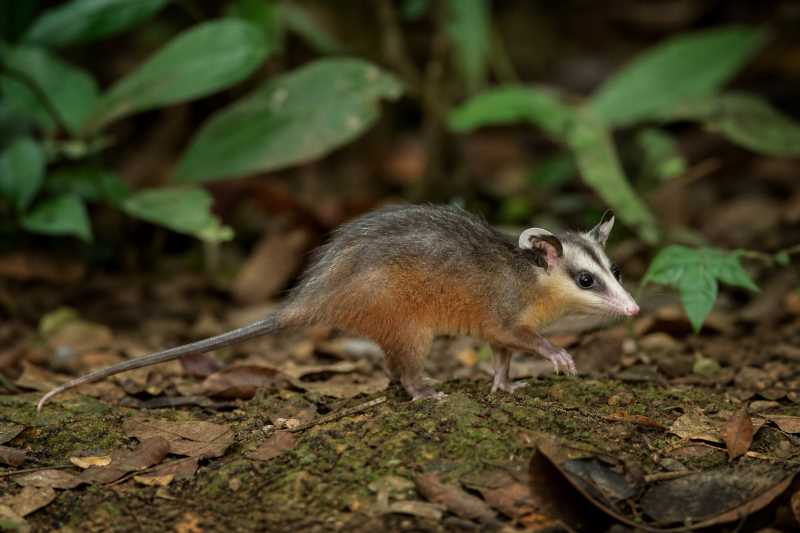
The Amazonian Red-sided Opossum (Monodelphis glirina) is a captivating marsupial native to the dense and biodiverse Amazon rainforest. Known for its bright red sides that contrast strikingly with its otherwise muted fur, this species is a fascinating subject for both researchers and nature enthusiasts. Despite its name, the Amazonian Red-sided Opossum is more closely related to shrews and is part of the larger family of short-tailed opossums. Its elusive nature and nocturnal habits make it a challenge to study, but its role in the ecosystem is of significant interest.
Physical Description
The Amazonian Red-sided Opossum is a small, ground-dwelling marsupial. It weighs between 50 to 100 grams and measures approximately 10 to 14 cm in body length, with a similar length tail. Its fur is predominantly grayish-brown on the back, with vibrant red or orange hues along the sides, giving the species its common name. The underbelly is typically lighter, often a creamy or white color. The opossum’s short, dense fur provides camouflage among the forest floor’s debris, while its long whiskers aid in navigation through the underbrush. Its small, rounded ears and sharp, pointed snout are adapted for detecting prey and maneuvering in its environment.
Range and Habitat
Monodelphis glirina is endemic to the Amazon Basin, spanning across several South American countries including Brazil, Peru, and Bolivia. The species thrives in lowland tropical rainforests, where it favors the dense undergrowth and leaf litter of the forest floor. It is most commonly found in areas with ample cover and food resources, such as fallen logs and thick leaf litter, which provide both shelter from predators and a rich hunting ground for invertebrates and small vertebrates.
Behavior and Diet
The Amazonian Red-sided Opossum is primarily nocturnal, spending its nights foraging for food. Its diet is omnivorous, consisting of insects, small vertebrates, fruits, and seeds. This varied diet helps it to thrive in the resource-rich environment of the Amazon. When hunting, the opossum relies heavily on its keen sense of smell and hearing to locate prey. It is solitary by nature, with individuals only coming together for mating. The breeding season is typically aligned with the wet season when food is most abundant.
Identification Tips (Field Recognition Cues)
Identifying the Amazonian Red-sided Opossum in the wild can be challenging due to its secretive habits and nocturnal lifestyle. However, there are several cues that can aid in recognition:
- Coloration: Look for the distinctive red or orange sides against a grayish-brown back.
- Size: Note the small size compared to other opossums, with a body length of 10 to 14 cm.
- Habitat: Focus on areas with dense undergrowth and leaf litter.
- Behavior: Be alert at night, when the opossum is most active.
Conservation Status (with Threats and Protections)
The conservation status of the Amazonian Red-sided Opossum is currently listed as Least Concern by the International Union for Conservation of Nature (IUCN). However, this does not imply that the species is free from threats. Habitat destruction due to deforestation, agricultural expansion, and infrastructure development pose significant risks to its natural habitat. Conservation efforts focused on preserving the Amazon rainforest are crucial for the survival of this species. Protected areas and national parks within its range offer some level of habitat protection, yet ongoing efforts to curb deforestation and promote sustainable land use practices are essential.
Frequently Asked Questions
What are the primary threats to the Amazonian Red-sided Opossum?
The main threats include habitat destruction due to deforestation and agricultural expansion. Conservation efforts are needed to mitigate these impacts.
How does the Amazonian Red-sided Opossum contribute to its ecosystem?
As an omnivore, it plays a role in pest control by feeding on insects and small animals, and it aids in seed dispersal, contributing to forest regeneration.
How can one spot an Amazonian Red-sided Opossum in the wild?
Spotting this opossum requires patience and a keen eye for its red sides and small size, usually in areas with dense foliage at night.
Are Amazonian Red-sided Opossums social animals?
No, they are solitary creatures, interacting with others primarily during the mating season.
What conservation measures are in place for protecting this species?
Conservation measures include habitat protection through national parks and reserves and efforts to reduce deforestation and promote sustainable practices.
Related posts