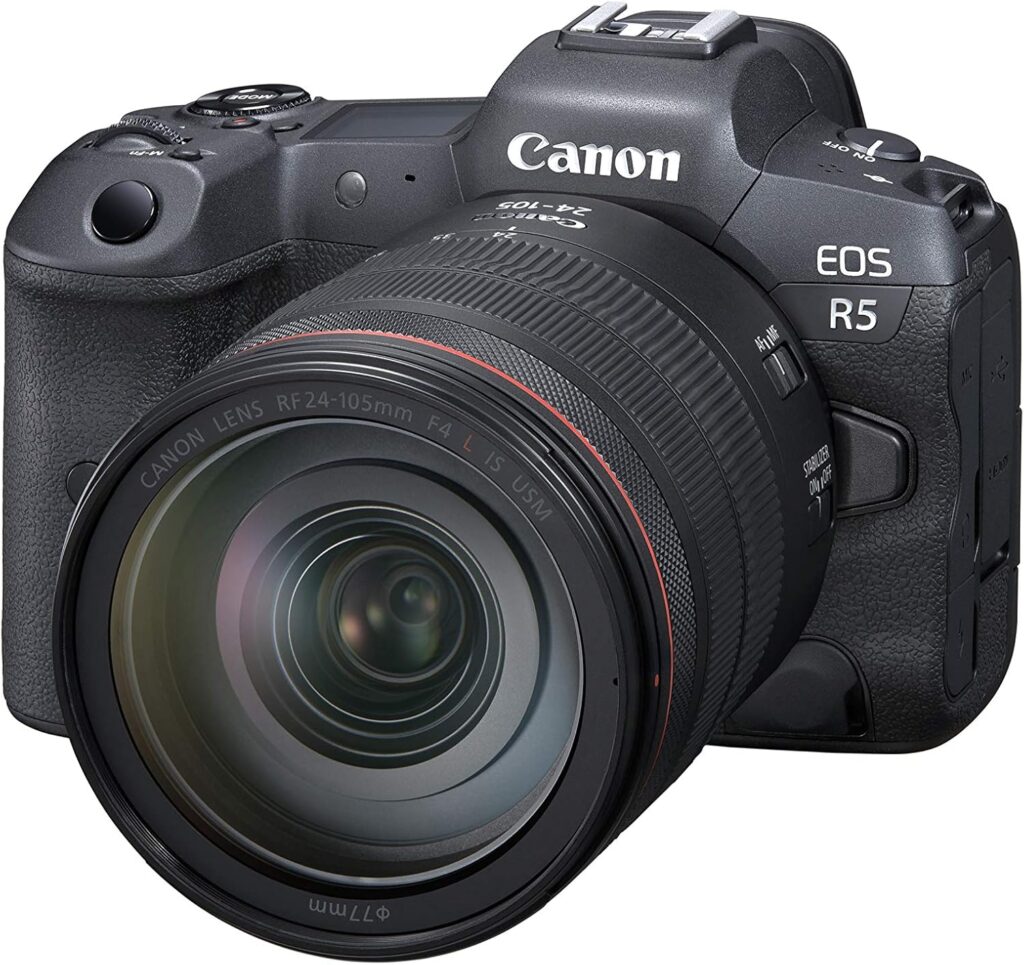
The Canon EOS R5, introduced in mid-2020, marked a significant leap forward in Canon’s mirrorless camera technology. While aimed at professional photographers and videographers, the R5 has gained considerable attention among wildlife and bird photographers for its advanced autofocus, high resolution, and speed. In this detailed review, we’ll assess the Canon EOS R5 from the perspective of bird photography—examining its strengths, limitations, and overall suitability in real-world avian scenarios.
Sensor and Image Quality
At the heart of the Canon EOS R5 is a 45-megapixel full-frame CMOS sensor. For bird photographers, this high resolution provides several important benefits. First, it allows for generous cropping without significant image degradation. When photographing small or distant birds that can’t be approached closely, the ability to crop in post-processing can make the difference between a usable image and a missed opportunity.
The R5’s sensor also delivers outstanding image quality, with excellent dynamic range and low noise performance. Even at moderately high ISOs (ISO 1600–6400), the files remain clean and detailed—ideal for low-light conditions such as dawn and dusk birding sessions. Color rendition is characteristically Canon: vibrant and natural, with excellent skin and feather tone reproduction.
Pros:
- 45MP sensor supports detailed cropping
- Excellent dynamic range and color depth
- Strong performance up to ISO 6400
Cons:
- Large file sizes (RAW and even JPEG) can quickly fill up storage cards and hard drives
- Noise begins to creep in beyond ISO 12800
Autofocus and Subject Tracking
Arguably the most impressive feature of the R5 for bird photography is its autofocus system. The camera uses Canon’s Dual Pixel CMOS AF II with 1,053 AF areas covering nearly 100% of the frame. More importantly, it features advanced deep-learning-based subject tracking, including animal detection and eye tracking for birds and mammals.
In practical terms, the R5 can lock onto a bird’s eye and maintain focus with remarkable tenacity—even when the bird is moving erratically or partially obscured by branches or foliage. This is especially beneficial for small passerines or birds in flight, where traditional focus systems struggle.
Eye detection for birds isn’t perfect, particularly for small or dark-eyed species, but it performs well for larger birds and those with distinct facial features. In flight, the R5’s tracking is among the best in its class, rivaling the Sony Alpha 1 and Nikon Z9.
Pros:
- Accurate and responsive eye-AF for birds
- Fast subject tracking for birds in flight
- Edge-to-edge coverage allows composition flexibility
Cons:
- Eye-AF occasionally fails on small, fast-moving birds
- Custom AF settings can take time to master for optimal results
Speed and Buffer Performance
The Canon EOS R5 is capable of shooting at up to 20 frames per second (fps) with the electronic shutter and 12 fps with the mechanical shutter. This kind of speed is essential for capturing fast wingbeats, takeoffs, and mid-air maneuvers.
The buffer capacity is reasonable but not class-leading. When using CFexpress cards, the camera can shoot approximately 180 RAW images before the buffer fills, or even more when using C-RAW or JPEG formats. However, buffer clearing can slow things down slightly when using high-speed burst mode continuously—especially with large RAW files.
Pros:
- 20 fps burst captures dynamic bird action
- Dual card slots (CFexpress + SD UHS-II) for flexibility and backup
Cons:
- Buffer can fill quickly when shooting in full RAW at 20 fps
- CFexpress cards are expensive and necessary for peak performance
Build Quality and Handling
The EOS R5 boasts a robust magnesium alloy body with weather sealing that matches or exceeds the standards of Canon’s professional DSLRs. For bird photographers who shoot in varied weather—rainforests, wetlands, deserts—this rugged construction is a major advantage.
The camera’s grip is comfortable even with larger telephoto lenses like the RF 100–500mm f/4.5–7.1L IS USM or the EF 500mm f/4L via the RF adapter. The control layout is intuitive, and the fully articulating LCD screen makes it easy to compose shots from low or awkward angles—especially when using a tripod or gimbal.
Pros:
- Solid, weather-sealed construction
- Ergonomic design suitable for long sessions
- Vari-angle LCD useful for low-angle wildlife shots
Cons:
- Body-only weight (738g) is slightly heavy for long handheld sessions
- Rear buttons may be cramped for users with larger hands or gloves
Electronic Viewfinder (EVF) and LCD
The EOS R5 features a 5.76-million-dot OLED EVF with a 120Hz refresh rate. This provides a lifelike viewing experience that’s critical for tracking fast-moving birds. There’s minimal blackout between frames, even during high-speed bursts, which helps maintain subject acquisition during action sequences.
The 3.2” touchscreen LCD is equally sharp and bright, useful for reviewing fine details or navigating menus in the field. The touchscreen interface is responsive and customizable, adding flexibility for photographers who prefer intuitive settings access.
Pros:
- Crisp and responsive EVF for real-time tracking
- High-quality LCD touchscreen with full articulation
Cons:
- EVF battery drain is noticeable during long sessions
- LCD can be reflective in bright sunlight
Battery Life and Power Management
Officially rated at around 320 shots per charge using the EVF, the R5’s battery life is one of its few weak points. In practice, many bird photographers achieve 500–700 shots on a single charge by using battery-saving features and minimizing image review.
For extended birding outings, carrying extra LP-E6NH batteries or using a battery grip is strongly recommended. The R5 also supports USB-C power delivery, which is useful for all-day use when connected to a power bank.
Pros:
- Supports USB-C charging and power delivery
- Battery grip available for extended use
Cons:
- Modest battery life compared to DSLRs
- Power-hungry features (high FPS, EVF) drain battery faster
Lens Ecosystem and Compatibility
One of the standout advantages of the R5 is its compatibility with both native RF lenses and older EF lenses via Canon’s RF-EF adapters. This provides an extensive ecosystem of telephoto and super-telephoto options essential for bird photography.
Popular choices include:
- RF 100–500mm f/4.5–7.1L IS USM: A lightweight, versatile telezoom perfect for mobile birders.
- EF 500mm f/4L IS II/III or EF 600mm f/4L IS II/III: Outstanding optics for long-range birding, fully supported via adapter.
- RF 800mm f/11 IS STM: A budget-friendly super-telephoto option with surprising sharpness in good light.
Autofocus performance remains fast and reliable with adapted lenses, and Canon’s optical stabilization in both lens and body (IBIS) works exceptionally well.
Pros:
- Seamless compatibility with EF super-telephoto lenses
- Expanding RF lens lineup tailored for wildlife
Cons:
- High cost of RF L-series lenses
- f/7.1 and f/11 maximum apertures can limit low-light performance
Video Features for Birding
Though still photography is the main focus here, the EOS R5 also excels in bird videography. It offers uncropped 8K recording, 4K 120p slow motion, and Canon Log profiles for dynamic range. Birders interested in behavior documentation or cinematic field footage will appreciate these capabilities.
However, it’s worth noting that earlier firmware versions had overheating issues during extended 8K recording. Firmware updates and external recording solutions have mitigated this, but videographers should be aware of limits in hot environments.
Conclusion: Is the Canon EOS R5 Ideal for Bird Photography?
The Canon EOS R5 is undoubtedly one of the best mirrorless cameras for bird photography on the market today. It combines resolution, speed, autofocus intelligence, and lens versatility in a weather-sealed, field-ready package. Its ability to detect and track birds’ eyes, combined with 20 fps burst shooting and a powerful sensor, make it a top-tier choice for both stills and video.
However, it’s not without compromise: limited battery life, large file sizes, and the cost of CFexpress cards and premium RF lenses must be factored in. Still, for serious bird photographers—especially those already invested in Canon glass—the EOS R5 represents a nearly perfect balance of performance, flexibility, and quality.
Related posts