The Enigmatic White-mantled Kingfisher: A Jewel of the Biodiversity
Nestled within the lush forests of the western Pacific, the White-mantled Kingfisher (Todiramphus albonotatus) captures the fascination of ornithologists and bird enthusiasts alike. This striking bird, endemic to the Maluku Islands of Indonesia, is a testament to the region’s rich biodiversity and the intricate tapestry of life that thrives in these tropical ecosystems.
A Glimpse at the Kingfisher’s Majesty
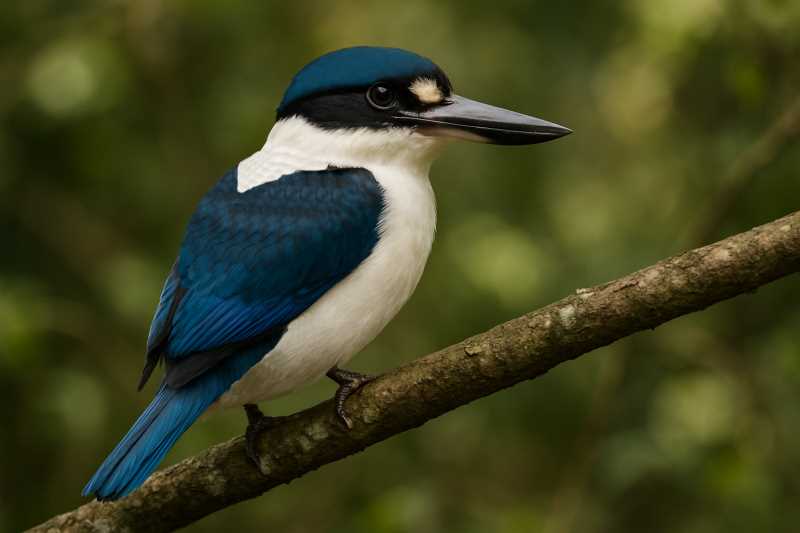
The White-mantled Kingfisher is a medium-sized bird, measuring approximately 26 centimeters in length. It is distinguished by its vibrant plumage, which includes a brilliant white mantle and underparts that contrast sharply with its azure blue wings and tail. The bird’s striking appearance is further accentuated by its dark eye-stripe and a robust, slightly curved bill, ideal for its predatory lifestyle.
While many kingfishers are associated with aquatic habitats, Todiramphus albonotatus is predominantly found in forested areas. Its preference for dense forests, particularly those at higher elevations, makes it a somewhat elusive subject for study. This habitat specialization also underscores the importance of preserving these unique environments.
Ecological Role and Behavior
The White-mantled Kingfisher plays a crucial role in maintaining the ecological balance within its habitat. As a predator, it controls insect populations, feeding primarily on small invertebrates and occasionally small vertebrates. Its diet includes insects, spiders, and small lizards, which it captures with remarkable agility.
The kingfisher’s hunting technique is a display of precision and speed. It often perches silently on a branch, scanning the surroundings for prey before launching a swift and decisive attack. This ambush strategy is facilitated by its keen eyesight and quick reflexes.
The bird is predominantly solitary, although it may be seen in pairs during the breeding season. Its call, a series of sharp, high-pitched notes, echoes through the forest, adding to its mystique. These vocalizations are not only a means of communication but also play a role in territorial defense.
Conservation Status and Challenges
The White-mantled Kingfisher is currently listed as Near Threatened on the IUCN Red List of Threatened Species. Habitat loss, primarily due to deforestation and land conversion for agriculture, poses a significant threat to its survival. The bird’s dependence on forested habitats makes it particularly vulnerable to these changes.
Conservation efforts are essential to safeguard the future of this species. Protecting the remaining tracts of forest in the Maluku Islands is critical. Sustainable land-use practices, along with the establishment of protected areas, can help mitigate the impact of habitat destruction.
Furthermore, raising awareness about the kingfisher’s plight and promoting ecotourism can provide economic incentives for local communities to engage in conservation efforts. Such initiatives not only help preserve biodiversity but also enhance the livelihoods of the people living in these regions.
The Importance of Continued Research
Understanding the ecology and behavior of the White-mantled Kingfisher is essential for developing effective conservation strategies. Ongoing research efforts aim to fill the gaps in knowledge regarding its population dynamics, breeding habits, and habitat requirements.
Advancements in technology, such as satellite tracking and bioacoustic monitoring, offer new avenues for studying these elusive birds. These tools allow scientists to gather data on their movements, habitat use, and responses to environmental changes, providing valuable insights that can inform conservation policies.
Conclusion
The White-mantled Kingfisher is more than just a bird; it is a symbol of the natural beauty and diversity found in the Maluku Islands. Its striking appearance and unique ecological role highlight the intricate connections within its ecosystem.
Preserving the future of Todiramphus albonotatus requires a collaborative effort, involving scientists, conservationists, local communities, and policymakers. By working together, we can ensure that this magnificent bird continues to grace the forests of Indonesia, inspiring awe and wonder for generations to come.
Related posts