The Majestic Sooty Albatross: An Overview of Phoebetria fusca
The Sooty Albatross (Phoebetria fusca) is a captivating seabird known for its graceful flight and striking appearance. Belonging to the family Diomedeidae, this species is one of the smaller albatrosses but is no less fascinating. Its unique coloration, agile flight, and intriguing behaviors make it a subject of interest for ornithologists and bird enthusiasts alike.
Physical Characteristics
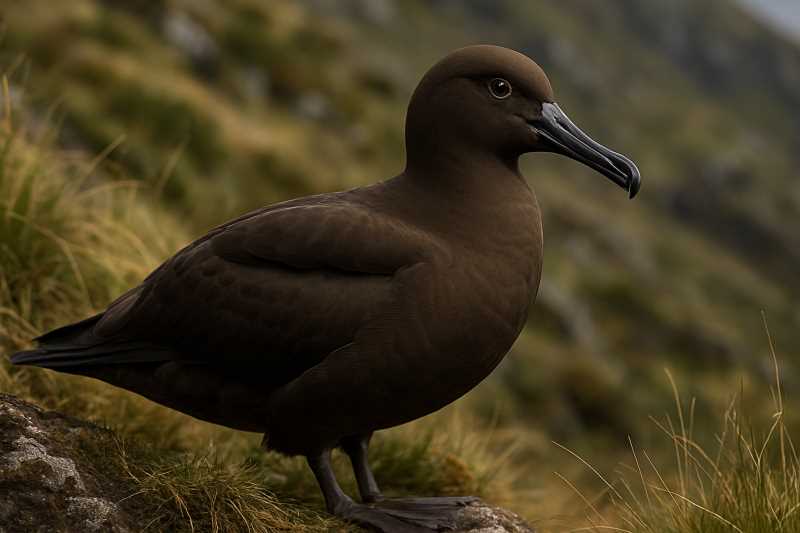
The Sooty Albatross is easily recognizable due to its distinctive sooty-brown plumage. Adult birds typically measure between 85 to 95 cm in length, with a wingspan ranging from 200 to 210 cm. Despite being smaller than some of its albatross relatives, its wingspan is still impressive, allowing it to glide effortlessly over the ocean.
The bird’s plumage is a uniform dark chocolate brown, which can appear almost black in certain lighting. This somber coloration is contrasted by striking white crescents above and below its eyes, giving it a distinctive and somewhat haunting appearance. The bill is dark with a pale yellow stripe along its lower edge, and its legs and feet are a light gray.
Habitat and Distribution
Sooty Albatrosses are pelagic birds, spending most of their life at sea. They are primarily found in the Southern Ocean, favoring the sub-Antarctic region. Their breeding sites are located on remote islands, including the Tristan da Cunha group, the Prince Edward Islands, and the Crozet Islands. These locations are characterized by steep cliffs and rocky terrain, providing ideal nesting environments.
During non-breeding seasons, Sooty Albatrosses are known to wander extensively, covering vast expanses of the ocean. Their range can extend from the southern tips of Africa and South America to the Australian and New Zealand coasts, showing their remarkable ability to traverse large distances.
Behavior and Diet
The Sooty Albatross is renowned for its exceptional flying skills. It employs dynamic soaring techniques, utilizing the wind gradients above the ocean surface to travel long distances without expending much energy. This ability is crucial for covering the great distances between feeding grounds and nesting sites.
Their diet primarily consists of squid, fish, and crustaceans. They are opportunistic feeders, often following ships to scavenge for discarded fish. The albatross’s keen eyesight and excellent sense of smell aid them in locating food over the open sea.
Breeding and Lifecycle
The breeding season for Sooty Albatrosses is a significant period in their lifecycle. These birds are monogamous, often forming pair bonds that last for life. Breeding occurs biennially, with a single egg laid per breeding attempt.
Nesting usually takes place on cliff ledges or rocky outcrops where they construct nests made from grass, moss, and mud. The incubation period lasts around 70 days, with both parents sharing the responsibility of incubating the egg and feeding the chick.
Chicks fledge after approximately 140 to 170 days, but they remain dependent on their parents for food for several months afterward. Young Sooty Albatrosses take several years to reach maturity, typically not breeding until they are about 10 years old.
Conservation Status
The Sooty Albatross is currently classified as Near Threatened by the International Union for Conservation of Nature (IUCN). The primary threats to their survival include bycatch in longline fisheries, habitat degradation, and climate change.
Efforts are underway to mitigate these threats, such as implementing bird-friendly fishing practices and protecting breeding habitats. Conservationists emphasize the importance of international cooperation, given the bird’s extensive range and migratory habits.
Conclusion
The Sooty Albatross is a remarkable bird that embodies the grace and resilience of seabirds. Its ability to traverse the vast oceans and its unique breeding habits make it an intriguing subject for study and conservation. As human activities continue to impact marine environments, understanding and protecting the Sooty Albatross is crucial to ensuring its survival for future generations.
By appreciating and safeguarding these magnificent birds, we contribute to the preservation of the rich biodiversity of our planet’s oceans. The Sooty Albatross stands as a symbol of the beauty and complexity of marine life, deserving our attention and protection.
Related posts