The Spectacular Purple Needletail: An Avian Marvel of Speed and Elegance
The Purple Needletail (Hirundapus celebensis) is a remarkable bird species that captivates bird enthusiasts and ornithologists alike with its impressive flight capabilities and striking appearance. Belonging to the swift family Apodidae, this bird is known for its incredible speed and agility, making it one of the fastest flying birds in the world.
Taxonomy and Distribution
The Purple Needletail is a member of the Apodidae family, which comprises various species of swifts known for their aerial prowess. The scientific name, Hirundapus celebensis, reflects its distribution, being primarily found in parts of Southeast Asia, notably in the islands of Indonesia and the Philippines. Its range includes the tropical and subtropical regions, where it thrives in forested habitats.
The distribution of the Purple Needletail is closely tied to the availability of suitable nesting sites and abundant insect prey. These birds are often seen in mountainous regions, where they can take advantage of the updrafts and thermals that facilitate their high-speed flight.
Physical Characteristics
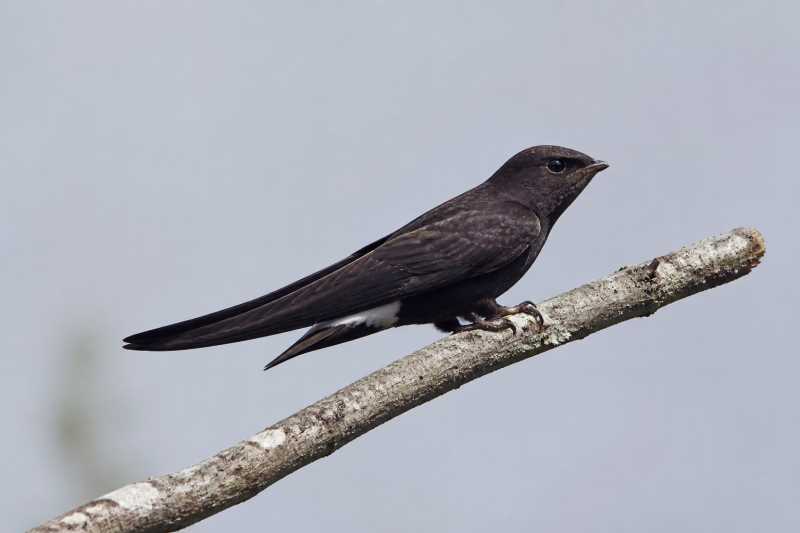
The Purple Needletail is a medium-sized swift, measuring about 20 centimeters in length with a wingspan of approximately 50 centimeters. Its plumage is a glossy purplish-black, which can appear iridescent in sunlight, adding to its striking visual appeal. The bird’s streamlined body and long, pointed wings are perfectly adapted for rapid flight, allowing it to reach speeds of up to 170 kilometers per hour.
One of the distinguishing features of the Purple Needletail is its short, square tail, which contrasts with the longer, forked tails of many other swift species. This unique tail shape, combined with its powerful wings, enables the bird to execute sharp turns and quick maneuvers while in flight, which is essential for catching insects mid-air.
Behavior and Ecology
Purple Needletails are highly social birds, often seen flying in small flocks or family groups. Their flight is characterized by a series of rapid wingbeats followed by short glides, a pattern that allows them to cover vast distances with minimal energy expenditure.
These swifts are insectivorous, feeding primarily on flying insects such as beetles, bees, and ants, which they catch in their wide, gaping mouths while on the wing. The birds’ keen eyesight and agile flight make them highly efficient hunters, capable of capturing prey with precision and speed.
Breeding behavior in the Purple Needletail is somewhat elusive, as they often nest in inaccessible locations such as high cliffs or tall trees. These nests are usually constructed using saliva to glue together plant materials, feathers, and other debris. The species is known for its preference for nesting in colonies, which provides added protection against predators.
Conservation Status
The conservation status of the Purple Needletail is currently assessed as "Least Concern" by the International Union for Conservation of Nature (IUCN). However, like many other bird species, they face threats from habitat destruction and environmental changes. Deforestation and land conversion for agriculture in Southeast Asia pose significant risks to their natural habitats.
Conservation efforts are important to ensure the Purple Needletail’s long-term survival. Protecting forested areas and maintaining insect populations are crucial steps in preserving their habitats and food sources. Additionally, raising awareness about the ecological role of swifts can help garner support for conservation initiatives.
Cultural and Scientific Significance
In addition to their ecological importance, Purple Needletails hold cultural significance in some indigenous communities, where they are often associated with speed and agility. Their impressive flight capabilities have also made them the subject of numerous scientific studies aimed at understanding the biomechanics of flight in birds.
Researchers have been particularly interested in the aerodynamics of the Purple Needletail, studying how its body shape and wing structure contribute to its high-speed flight. Insights gained from these studies have potential applications in aviation technology, where bio-inspired designs can lead to more efficient aircraft.
Conclusion
The Purple Needletail is a testament to the wonders of avian evolution, with its combination of speed, agility, and beauty. As an integral part of the ecosystems they inhabit, these swifts play a crucial role in controlling insect populations and contributing to the biodiversity of their habitats.
Preserving the natural environment that supports the Purple Needletail and other swift species is vital for maintaining ecological balance and ensuring that future generations can continue to marvel at these incredible birds. Through concerted conservation efforts and increased awareness, we can help protect the Purple Needletail and the myriad other species with which we share our planet.
Related posts