The Plain Honeyeater: A Comprehensive Study of Pycnopygius ixoides
Introduction
The Plain Honeyeater, scientifically known as *Pycnopygius ixoides*, is a captivating bird species native to the lush landscapes of Papua New Guinea. As part of the Meliphagidae family, this bird is closely related to other honeyeaters, a group renowned for their specialized feeding habits and ecological significance. This article delves into the characteristics, habitat, behavior, and conservation status of the Plain Honeyeater, offering a detailed insight into its role within the ecosystem.
Taxonomy and Classification
The Plain Honeyeater belongs to the genus *Pycnopygius*, a group comprising three species. The species name *ixoides* highlights its unique features within this genus. These birds are part of the larger Meliphagidae family, a diverse group of passerine birds predominantly found in Australia and New Guinea.
Physical Description
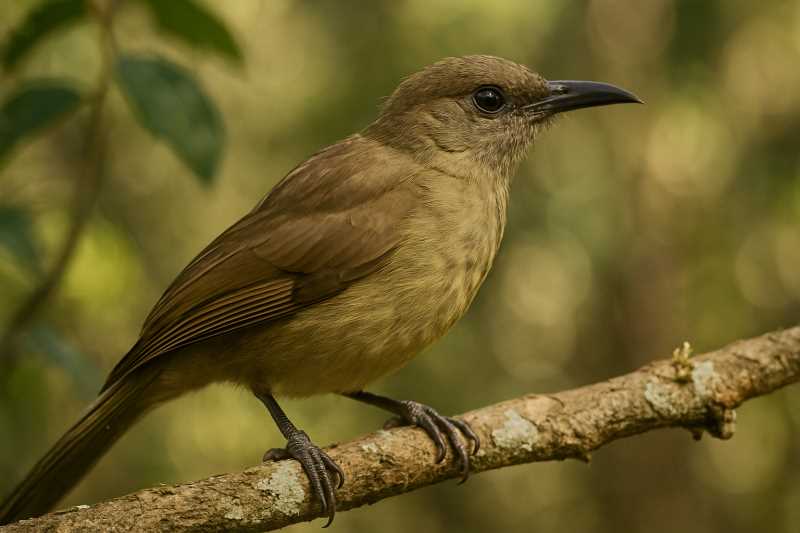
The Plain Honeyeater is aptly named for its relatively modest appearance compared to its more vividly colored relatives. It is a medium-sized bird, approximately 18-20 centimeters in length, with a nondescript plumage that primarily consists of olive and brown hues. Its underparts are lighter, often displaying a whitish or pale yellow tone. The bird’s bill is slender and slightly curved, adapted for feeding on nectar, while its eyes are a striking dark brown.
Habitat and Distribution
This species is endemic to Papua New Guinea, predominantly inhabiting lowland and montane forests. The Plain Honeyeater thrives in subtropical or tropical moist lowland forests and can often be found in secondary growth areas and forest edges. Its preference for dense foliage provides ample opportunities for nesting and feeding, while its adaptability allows it to exploit a range of forest environments.
Diet and Feeding Habits
The Plain Honeyeater’s diet primarily consists of nectar, which it extracts with its specialized brush-tipped tongue. This adaptation is crucial for pollination, as the bird moves from flower to flower in search of food. In addition to nectar, the honeyeater also consumes insects and small arthropods, which provide essential proteins and nutrients. This dietary flexibility helps the Plain Honeyeater to thrive in diverse environments.
Behavior and Social Structure
Plain Honeyeaters are typically solitary or found in pairs, although they may join mixed-species flocks when foraging. Their vocalizations are a series of melodious calls, often used to communicate with mates or warn of potential threats. These birds are highly territorial, defending their feeding and nesting areas vigorously against intruders.
Reproduction and Life Cycle
Breeding in Plain Honeyeaters is often influenced by the availability of food resources. The nesting season varies, but it generally coincides with periods of abundant flowering. The female honeyeater constructs a small, cup-shaped nest from twigs, leaves, and other plant materials. She lays two to three eggs, which are incubated for approximately two weeks. Both parents participate in feeding the chicks, which fledge after about 14-16 days.
Conservation Status
Currently, the Plain Honeyeater is classified as a species of Least Concern by the International Union for Conservation of Nature (IUCN). However, deforestation and habitat degradation pose potential threats to its population. Conservation efforts must focus on preserving the natural habitats of Papua New Guinea to ensure the survival of this and other native bird species.
Ecological Importance
As a pollinator, the Plain Honeyeater plays a vital role in the ecosystem. Its feeding habits contribute to the pollination of various plant species, facilitating genetic diversity and forest regeneration. By controlling insect populations, these birds also help maintain ecological balance.
Conclusion
The Plain Honeyeater, *Pycnopygius ixoides*, is a remarkable example of adaptation and ecological specialization. Its unassuming appearance belies its critical role in maintaining the health and diversity of Papua New Guinea’s forests. Continued research and conservation efforts are essential to protect this species and its habitat, ensuring that it continues to thrive in its natural environment.
References
– BirdLife International. (2021). Pycnopygius ixoides. The IUCN Red List of Threatened Species 2021.
– Coates, B. J. (1990). The Birds of Papua New Guinea, Including the Bismarck Archipelago and Bougainville.
– Higgins, P. J., & Peter, J. M. (Eds.). (2001). Handbook of Australian, New Zealand and Antarctic Birds.
Related posts