Pardusco (Nephelornis oneilli): A Closer Look at a Unique Avian Species
The Pardusco (Nephelornis oneilli) is a captivating bird species that holds a unique position in the avian world. Found exclusively in the montane forests of Peru, this small passerine bird is the sole member of the genus Nephelornis, highlighting its distinct evolutionary path. Named in honor of the American ornithologist John P. O’Neill, the Pardusco is an intriguing subject for ornithologists and bird enthusiasts alike.
Taxonomy and Classification
The Pardusco belongs to the family Thraupidae, which is a large and diverse family of birds commonly referred to as tanagers. Despite the vast number of species within this family, the Pardusco stands out due to its unique characteristics and isolated geographic range. The genus name, Nephelornis, is derived from Greek, where “nephele” means cloud and “ornis” means bird, aptly describing its high-altitude cloud forest habitat.
Physical Characteristics
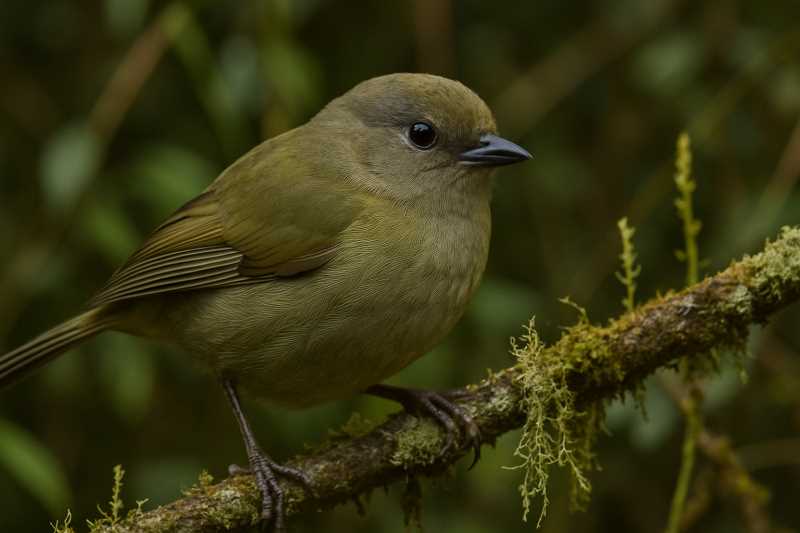
Measuring about 14 centimeters in length, the Pardusco exhibits a subtle yet distinct plumage. Its feathers are primarily olive-green, providing excellent camouflage amidst the dense foliage of its habitat. The bird’s underparts are lighter, often displaying a yellowish hue. One of its most striking features is its relatively stout bill, which is adapted to its feeding habits. The Pardusco’s eyes are dark, which contrasts with its lighter facial feathers, giving it a gentle expression.
Habitat and Range
The Pardusco is endemic to Peru, specifically occupying the eastern slope of the Andes. Its preferred habitat is the humid montane forests, often referred to as cloud forests, which are characterized by high humidity, frequent mist, and abundant vegetation. These forests are typically found at elevations ranging from 2,200 to 3,500 meters above sea level. The region’s unique climatic conditions and rich biodiversity provide an ideal environment for the Pardusco.
Behavior and Ecology
The Pardusco is known for its social behavior, often observed in mixed-species flocks. This cooperative behavior is believed to offer several advantages, such as increased foraging efficiency and enhanced protection against predators. The bird’s diet primarily consists of insects and small arthropods, which it skillfully extracts from foliage and branches. Additionally, it feeds on fruit and nectar, contributing to the pollination and seed dispersal of various plant species within its habitat.
Breeding and Reproduction
Information on the breeding habits of the Pardusco is limited, primarily due to its remote habitat and elusive nature. However, like many birds in the region, it is believed to breed during the rainy season when food resources are abundant. The nest is typically constructed in a concealed location, often high in the forest canopy, providing safety for the eggs and chicks. Clutch sizes are generally small, consisting of two to three eggs, which is typical for many passerine birds in high-altitude environments.
Conservation Status
The International Union for Conservation of Nature (IUCN) currently lists the Pardusco as a species of Least Concern. However, this status does not imply that the bird is free from threats. Habitat destruction due to agriculture expansion, logging, and infrastructure development poses significant risks to its montane forest environment. Conservation efforts are crucial to ensure the preservation of these unique habitats and the myriad of species they support, including the Pardusco.
The Importance of Conservation
Preserving the Pardusco and its habitat is essential not only for maintaining biodiversity but also for supporting the ecological balance of the region. Cloud forests play a critical role in water regulation and carbon storage, making them vital for both local and global environmental health. Conservation initiatives must focus on sustainable land use practices, forest protection, and raising awareness about the importance of these ecosystems.
Research and Exploration
Ongoing research is vital to deepen our understanding of the Pardusco and its ecological niche. Field studies focusing on its behavior, diet, and breeding habits will provide valuable insights into its life history and conservation needs. Moreover, the exploration of its genetic diversity could offer clues about its evolutionary history and adaptability to environmental changes.
Conclusion
The Pardusco is a remarkable example of avian specialization and adaptation to a unique ecological niche. Its presence in the Andean cloud forests symbolizes the intricate web of life that thrives in these biodiverse habitats. As with many specialized species, the Pardusco’s future is closely tied to the health of its environment, underscoring the importance of conservation efforts. By safeguarding its habitat, we not only protect the Pardusco but also preserve the ecological integrity of one of the world’s most unique natural landscapes.
Related posts