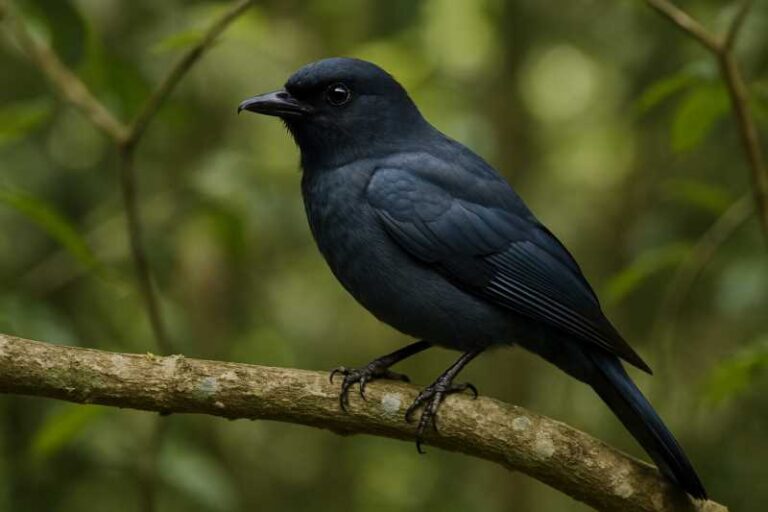
The Orange-crowned Fairywren (Clytomyias insignis) is a little-known yet captivating species endemic to the montane forests of New Guinea. Distinguished by its vibrant crown and unique position within the fairywren family (Maluridae), this bird offers a fascinating glimpse into avian evolution in one of the world’s most biodiverse regions. Unlike its more widely known Australian relatives, the Orange-crowned Fairywren remains largely a mystery, with its remote habitat and discreet behavior limiting both scientific observation and public awareness.
Taxonomy and Classification
The Orange-crowned Fairywren is the sole member of the genus Clytomyias, a unique branch of the fairywren family. While closely related to the Malurus and Chenorhamphus genera, it diverges significantly in morphology and behavior. The species was first described in the 19th century and has remained monotypic—meaning it contains no subspecies.
Its distinctiveness, particularly in terms of anatomy and plumage, has warranted its separation into its own genus. This isolated taxonomic position suggests a long evolutionary history shaped by the mountainous terrain of New Guinea.
Physical Description
True to its name, the Orange-crowned Fairywren features a prominent orange crown that contrasts beautifully with its rich rufous-brown plumage. The crown coloration is slightly brighter in males but is not dramatically sexually dimorphic, unlike many Australian fairywrens. The back, wings, and tail are more subdued reddish-brown, blending seamlessly with the undergrowth of its forest home. The underparts are paler, often buff to light grey.
The species has a rounded body, short wings, and a long, expressive tail—a characteristic shared with other members of the Maluridae family. The bill is relatively short and slender, ideal for gleaning small insects from foliage.
Distribution and Habitat
The Orange-crowned Fairywren is found exclusively in the montane and submontane forests of central and eastern New Guinea, typically between elevations of 1,200 and 2,500 meters. Its range includes parts of both Papua New Guinea and the Indonesian province of Papua, often in isolated forest patches due to the rugged terrain.
It inhabits dense undergrowth within mossy, humid forests, frequently in areas with thick vine tangles, bamboo stands, and secondary growth along forest edges. This preference for thick cover contributes to its elusive nature, making field observations rare and challenging.
Behavior and Ecology
Unlike its Australian counterparts, the Orange-crowned Fairywren does not exhibit the vivid blue plumage or pronounced courtship behaviors often associated with fairywrens. Its lifestyle is quieter, more cryptic, and less studied. Pairs or small family groups forage low to the ground, moving through the undergrowth with quick, agile hops and flicks of their tails.
Diet consists mainly of small insects and other invertebrates, which are gleaned from leaves, stems, and the forest floor. The species is thought to be monogamous, though cooperative breeding—a hallmark of many other fairywrens—has not been documented.
Its vocalizations are soft and infrequent, typically high-pitched chirps or brief trills used to maintain contact within a pair or group. Due to its remote habitat, much of its social behavior and breeding ecology remains undocumented.
Breeding and Nesting
Breeding biology is poorly understood, but nesting likely occurs during the wet season when insect abundance is at its peak. Nests are presumed to be dome-shaped structures placed low in dense vegetation, similar to other fairywrens, but there are few confirmed records.
Eggs, clutch size, incubation periods, and chick development remain unknown, underscoring the need for further field research.
Conservation Status
The Orange-crowned Fairywren is currently listed as Least Concern by the IUCN due to its wide distribution and the relative inaccessibility of its montane forest habitat. However, the species is considered uncommon and highly localized. Ongoing deforestation, mining activity, and habitat fragmentation pose potential threats, particularly at lower elevations.
Because it lives in highland areas that are difficult to access and often spared from large-scale logging, the species has so far avoided the declines experienced by more lowland forest birds. Nonetheless, continued environmental monitoring is essential, especially in light of increasing development pressures in Papua New Guinea.
Significance and Research Potential
The Orange-crowned Fairywren represents an important evolutionary outlier within the fairywren family. Its isolated distribution and distinct morphology offer valuable insight into speciation, adaptation, and the impact of geography on avian diversity in the Australo-Papuan region.
For birders and ornithologists, it remains a prized observation, not only for its rarity but for its quiet charm and enigmatic presence in the moss-laden mountain forests of New Guinea. As access to these regions improves, it is hoped that more comprehensive studies will reveal the secrets of this overlooked gem.
Related posts