Introduction
The Olive Bee-eater, scientifically known as *Merops superciliosus*, is a captivating bird species renowned for its vibrant plumage and intriguing behavior. As a member of the Meropidae family, the Olive Bee-eater exemplifies both natural beauty and ecological significance. This article delves into the characteristics, habitat, behavior, and conservation status of this remarkable bird.
Physical Characteristics
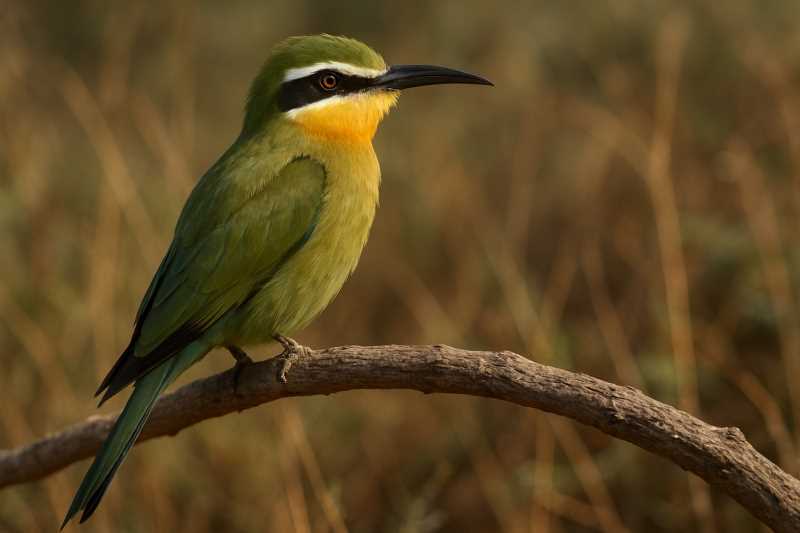
The Olive Bee-eater is a medium-sized bird, measuring approximately 25 to 30 centimeters in length, with a wingspan extending up to 40 centimeters. Its striking plumage is a blend of vivid olive-green hues with a distinctive blue rump and a contrasting chestnut throat. The bird’s elongated central tail feathers, which extend beyond the rest of the tail, add a touch of elegance to its appearance.
One of the most eye-catching features of the Olive Bee-eater is its prominent eye stripe, often referred to as a ‘supercilium,’ which gives the bird its scientific name. This stripe, along with the bird’s slender, decurved bill, is adapted for its specialized feeding habits.
Habitat and Distribution
The Olive Bee-eater is predominantly found across sub-Saharan Africa and parts of the Arabian Peninsula. Its geographical range extends from Senegal in the west to Ethiopia in the east, and down to South Africa. The species thrives in a variety of habitats, including savannas, open woodlands, and riverine forests, but it is often seen near water bodies where insect prey is abundant.
These birds are migratory in some regions, moving to more favorable areas during different seasons. Their adaptability to diverse habitats is a testament to their resilience and ecological versatility.
Diet and Feeding Behavior
As their name suggests, Olive Bee-eaters primarily feed on bees and other flying insects. Their diet includes honeybees, wasps, dragonflies, and beetles. The birds are adept at catching prey mid-flight using their agile flying skills.
Interestingly, Olive Bee-eaters have developed a unique method to handle stinging insects. Before consumption, they often remove the sting by repeatedly rubbing the insect against a hard surface, a behavior known as ‘bee-washing.’ This ensures that they can safely consume their prey without the risk of being stung.
Social Behavior and Breeding
Olive Bee-eaters are highly social birds, often seen in flocks ranging from small family groups to larger congregations. They communicate through a series of melodious calls, which serve as both social interactions and warnings of potential threats.
During the breeding season, these birds exhibit fascinating courtship displays. Males perform aerial acrobatics and offer food to females as part of their courtship rituals. The Olive Bee-eater is a cavity nester, typically choosing sandy banks or flat ground to excavate their nesting burrows. Both parents participate in incubating the eggs and feeding the chicks, demonstrating a strong bond and cooperative breeding behavior.
Conservation Status
Currently, the Olive Bee-eater is classified as ‘Least Concern’ by the International Union for Conservation of Nature (IUCN). Despite this, certain factors pose threats to their populations. Habitat destruction, pesticide use, and climate change are potential challenges that could impact their future numbers.
Conservation efforts are crucial to ensure the continued survival of this species. Protecting their natural habitats and promoting sustainable agricultural practices are vital steps toward safeguarding their populations.
Conclusion
The Olive Bee-eater is a remarkable avian species that captivates birdwatchers and ornithologists alike. Its vibrant plumage, intricate behaviors, and ecological role highlight the importance of preserving biodiversity. By understanding and appreciating the Olive Bee-eater, we can contribute to the conservation of these beautiful birds and their natural environments.
References
– Fry, C. H. (1984). The Bee-eaters. T & AD Poyser.
– del Hoyo, J., Elliott, A., & Sargatal, J. (1997). Handbook of the Birds of the World. Vol. 4. Lynx Edicions.
– IUCN Red List of Threatened Species. (2021). *Merops superciliosus*.
Further Reading
– More about the role of Bee-eaters in ecosystems
– Impact of climate change on migratory birds in Africa
– Conservation strategies for avian species in sub-Saharan Africa
Related posts