Northern Tropical Pewee: A Detailed Overview of Contopus bogotensis
The Northern Tropical Pewee, scientifically known as Contopus bogotensis, is a small passerine bird belonging to the Tyrannidae family. This species has intrigued ornithologists and bird enthusiasts alike due to its distinctive behaviors and ecological significance. Found predominantly in the neotropical regions, the Northern Tropical Pewee plays a critical role in the biodiversity of the habitats it occupies.
Taxonomy and Classification
Contopus bogotensis belongs to the order Passeriformes, which is the largest order of birds and is characterized by their perching habits and vocal abilities. Within the order, it belongs to the family Tyrannidae, also known as the tyrant flycatchers, which is one of the largest families of birds in the Americas. The genus Contopus includes several species of pewees, known for their simple yet melodious calls.
The Northern Tropical Pewee is sometimes confused with its close relatives due to its similar morphology and behavior. However, it can be distinguished by its subtle plumage differences and vocalizations.
Physical Description
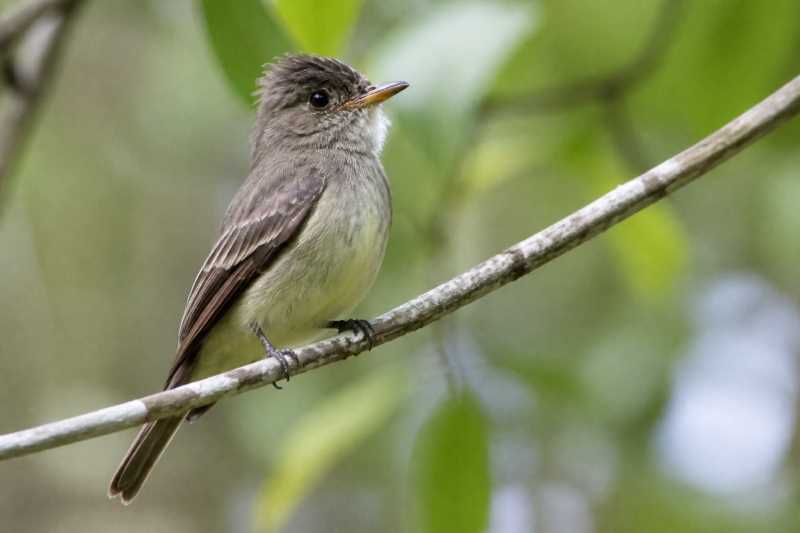
The Northern Tropical Pewee is a small bird, typically measuring around 13-15 cm in length and weighing between 12-16 grams. Its plumage is predominantly grayish-olive on the upper parts, with a lighter gray or whitish belly. The wings and tail are darker, providing a contrasting effect. One of the most distinctive features is its relatively large head and short, broad bill, which is typical of flycatchers.
The eyes are dark and alert, surrounded by a faint, pale eye-ring that can be challenging to notice from a distance. The legs are short and dark, adapted for perching on branches and twigs.
Habitat and Distribution
The Northern Tropical Pewee is native to the northern parts of South America, with its range extending from Venezuela and Colombia down to Ecuador and Peru. It inhabits tropical and subtropical forests, often found at elevations ranging from 500 to 2,400 meters. These birds prefer the forest edge and clearings where they can easily spot and capture insects.
Due to their preference for dense, humid forests, Northern Tropical Pewees are often found in cloud forests and montane regions, where they contribute significantly to the ecosystem’s health by controlling insect populations.
Behavior and Diet
As insectivores, Northern Tropical Pewees primarily feed on a diet of flying insects, which they catch in mid-air using their agile flight skills. They are known for their "sit-and-wait" hunting strategy, where they perch patiently on a branch before launching into the air to snatch a passing insect.
These birds are solitary and territorial, often seen alone or in pairs defending their feeding grounds. The Northern Tropical Pewee is also known for its melodious whistling song, which plays a crucial role in territory establishment and mate attraction.
Breeding and Nesting
The breeding season for the Northern Tropical Pewee varies depending on the region but generally aligns with the wet season when food is abundant. The species is monogamous, with pairs working together to raise their young.
The nest is typically a small, cup-shaped structure made from twigs, moss, and other plant materials, strategically placed on a tree branch to provide shelter and camouflage. The female usually lays two eggs, which she incubates for about two weeks. Both parents participate in feeding the chicks, which fledge after approximately 16-18 days.
Conservation Status
Currently, the Northern Tropical Pewee is classified as Least Concern by the International Union for Conservation of Nature (IUCN). Despite facing habitat loss due to deforestation and human encroachment, their population remains stable across their range.
Conservation efforts are crucial to ensuring the continued survival of the Northern Tropical Pewee, especially as their forest habitats face ongoing threats. Preserving natural habitats and promoting sustainable land-use practices are vital for maintaining the biodiversity of these regions.
Conclusion
The Northern Tropical Pewee is a fascinating example of a neotropical bird species that plays a significant role in its ecosystem. With its distinctive behaviors and ecological importance, Contopus bogotensis continues to be a subject of interest for researchers and bird lovers around the world. Understanding and conserving this species and its habitat are essential steps in preserving the rich biodiversity of the tropical regions it inhabits.
In summary, the Northern Tropical Pewee is not only an intriguing subject for ornithologists but also a vital component of the natural world, highlighting the interconnectedness of species and the importance of global conservation efforts.
Related posts