The Enigmatic Metallic-winged Sunbird: A Jewel of the Philippines
In the lush, verdant forests of the Philippines, a shimmering avian jewel flits through the canopy, drawing the eye with its dazzling metallic hues. This is the Metallic-winged Sunbird (Aethopyga pulcherrima), a testament to nature’s artistry and a vital component of its ecosystem. Revered for its vibrant plumage and ecological role, the Metallic-winged Sunbird is a subject of interest for ornithologists and bird enthusiasts alike.
Taxonomy and Physical Description
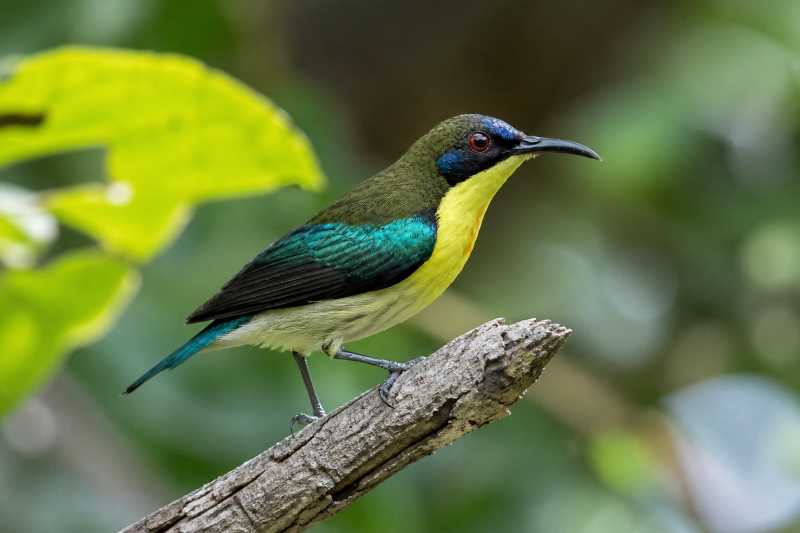
The Metallic-winged Sunbird belongs to the family Nectariniidae, a group known for their small, nectar-feeding birds that are often compared to the hummingbirds of the Americas. First described by ornithologist Gustav Hartlaub in 1845, Aethopyga pulcherrima is recognized for its striking appearance. The species is sexually dimorphic, with males exhibiting more vivid colors than females.
Males boast an iridescent green crown and back, with metallic blue wings that catch the sunlight. Their underparts are a vibrant yellow, often blending into a fiery orange on the chest and belly. Females, though less flamboyant, possess a subtle beauty with olive-green upperparts and yellowish underparts. Both sexes have a slender, down-curved bill, adapted for extracting nectar from flowers, which constitutes the bulk of their diet.
Habitat and Distribution
Endemic to the island nation of the Philippines, the Metallic-winged Sunbird is primarily found in lowland and montane forests. These birds thrive in a variety of forest types, from primary forests to degraded and secondary growth areas, displaying a degree of adaptability to habitat changes.
The species is distributed across several islands including Luzon, Mindanao, Leyte, Samar, and Dinagat. While they are generally found at elevations ranging from 200 to 1,500 meters, they have been observed at higher altitudes in some locations. This adaptability to different altitudinal ranges is vital for their survival, as it allows them to exploit various ecological niches.
Behavior and Ecology
Metallic-winged Sunbirds are primarily nectarivorous, feeding on the nectar of a wide array of flowering plants. Their role as pollinators is crucial in maintaining the health of their ecosystem. By visiting flowers to feed, they inadvertently transfer pollen, facilitating plant reproduction. This mutualistic relationship underscores the integral role they play in the ecological balance of their habitats.
In addition to nectar, these sunbirds occasionally consume insects and spiders, especially during the breeding season when the demand for protein-rich food increases. Observations suggest that they forage alone or in pairs, occasionally joining mixed-species flocks, which can be a strategy to reduce predation risk while increasing foraging efficiency.
Reproductive Biology
The breeding season of the Metallic-winged Sunbird coincides with the availability of food resources, often peaking during the times of abundant flowering. They are known for their delicate, cup-shaped nests, which are typically suspended from the undersides of leaves or branches, providing camouflage and protection from predators.
Females are primarily responsible for nest building and incubation, though males may assist in feeding the chicks once hatched. Clutch size generally consists of two to three eggs, with an incubation period of approximately 14 to 16 days. The fledging phase lasts about 15 to 20 days, during which both parents contribute to feeding and protecting the young.
Conservation Status and Threats
Currently, the Metallic-winged Sunbird is classified as a species of Least Concern by the International Union for Conservation of Nature (IUCN). Despite this relatively secure status, they are not immune to the threats that plague many avian species in the region. Habitat destruction due to logging, agriculture, and urban expansion poses significant challenges, as these activities lead to the fragmentation and degradation of their natural habitats.
Climate change also presents a looming threat, with potential impacts on the distribution and abundance of the flowering plants they rely on for food. Conservation efforts aimed at preserving forest habitats and promoting sustainable land use are essential to ensure the long-term survival of this and many other endemic species.
Conclusion
The Metallic-winged Sunbird, with its breathtaking beauty and ecological importance, serves as a reminder of the incredible biodiversity found within the Philippines. As stewards of the environment, it is imperative to continue research and conservation efforts to protect these avian treasures and their habitats. Through education and sustainable practices, we can help ensure that future generations will also have the opportunity to marvel at the dazzling spectacle of the Metallic-winged Sunbird.
In conclusion, the Metallic-winged Sunbird is not only a symbol of natural beauty but also an essential component of its ecosystem. By understanding and addressing the challenges they face, we can contribute to the conservation of this remarkable species and the rich biodiversity of the Philippines.
Related posts