The Lesser Adjutant (Leptoptilos javanicus): A Majestic Yet Overlooked Giant of the Wetlands
The Lesser Adjutant, scientifically known as Leptoptilos javanicus, is a fascinating yet often overlooked member of the stork family. With its imposing stature, distinct features, and vital ecological role, this bird is a subject of great interest among ornithologists and conservationists alike. This article delves into the unique characteristics, habitat, and conservation status of the Lesser Adjutant, highlighting its significance in the natural world.
Physical Characteristics
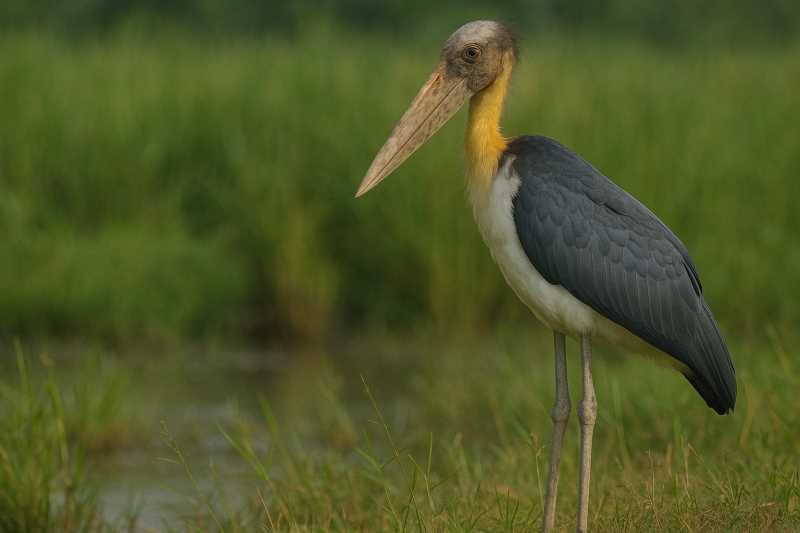
The Lesser Adjutant is a large bird, standing about 110 to 120 centimeters tall, with a wingspan reaching up to 210 centimeters. It is characterized by its bald head and neck, which are adaptation features that help in thermoregulation and maintaining hygiene while scavenging. Its plumage is predominantly dark, with a distinctive yellowish neck and a massive, heavy bill ideal for its feeding habits. Despite its name, the Lesser Adjutant is not significantly smaller than its relative, the Greater Adjutant, but the ‘lesser’ in its name refers more to its slightly smaller size and less prominent status.
Habitat and Distribution
The Lesser Adjutant is primarily found in South and Southeast Asia, with significant populations in countries such as India, Nepal, Bangladesh, Myanmar, Thailand, Vietnam, and Cambodia. These birds predominantly inhabit wetlands, swamps, rice paddies, and mangroves, where they can find ample food and nesting sites. Their preference for such habitats underscores the importance of wetlands not only for their survival but also for the biodiversity they support.
The bird’s distribution is influenced by the availability of suitable nesting and feeding sites. They typically nest in tall trees, often in colonies, which provides them with protection from ground predators. The maintenance of these habitats is crucial for the sustenance of their populations, making habitat conservation a priority for ensuring their survival.
Diet and Behavior
As opportunistic feeders, Lesser Adjutants have a varied diet that includes fish, frogs, reptiles, small mammals, and carrion. Their role as scavengers is essential, as they help in cleaning up the environment by consuming dead animals, thus preventing the spread of diseases.
Lesser Adjutants are solitary or found in small groups, particularly outside the breeding season. During the breeding season, which varies across its range but generally falls between November and February, these birds congregate in large colonies. They are known for their elaborate courtship displays, which involve bill-clattering and other vocalizations to attract mates.
Conservation Status and Threats
The Lesser Adjutant is classified as Vulnerable on the IUCN Red List due to declining population trends. The major threats facing this species include habitat destruction, especially the drainage of wetlands for agriculture and urban development. Additionally, pollution, hunting, and egg collection pose significant threats to their survival.
Conservation efforts are critical to protecting these birds and their habitats. Initiatives focusing on wetland conservation, legal protection, and awareness campaigns are essential components of the strategy to preserve the Lesser Adjutant. Organizations working on the ground are also involved in habitat restoration projects and community engagement to ensure sustainable coexistence between humans and these majestic birds.
The Role of Lesser Adjutants in Ecosystems
Lesser Adjutants play a crucial role in their ecosystems as both predators and scavengers. Their presence indicates a healthy wetland environment, rich in biodiversity. By controlling the population of certain prey species and cleaning up carcasses, they help maintain ecological balance.
Moreover, their nesting sites often become biodiversity hotspots, supporting a variety of other bird species that share the same habitat. This interdependence highlights the importance of conserving not just individual species but entire ecosystems.
Conclusion
The Lesser Adjutant is a remarkable species that encapsulates the beauty and complexity of wetland ecosystems. Despite facing numerous challenges, there is hope for their conservation through concerted efforts by governments, NGOs, and local communities. By understanding and appreciating the ecological role of the Lesser Adjutant, we can better advocate for the protection of these magnificent birds and the habitats they call home.
In conclusion, the Lesser Adjutant’s story is a testament to the intricate connections within nature and the vital importance of conservation. As we continue to navigate the challenges of environmental protection, the Lesser Adjutant serves as a reminder of the richness of life that thrives in the world’s wetlands and the responsibility we bear to safeguard it for future generations.
This is one of the species covered in one of the books in our Kings Birds of the world series, Storks Of The World.

Related posts