Japanese Green Woodpecker: A Fascinating Avian Master of the Forest
The Japanese Green Woodpecker, scientifically known as *Picus awokera*, stands as one of Japan’s most captivating avian residents. Revered for its vibrant plumage and distinctive behavior, this bird is a subject of admiration among ornithologists and birdwatchers alike. As a species endemic to Japan, it holds a special place in the country’s rich biodiversity.
Habitat and Distribution
The Japanese Green Woodpecker is predominantly found in the forests of Honshu, Shikoku, and Kyushu. These regions offer the ideal habitat comprising deciduous and evergreen woodlands, where these birds can thrive. The woodpecker demonstrates a clear preference for mature forests with a rich abundance of old trees, which provide ample nesting sites and foraging opportunities. This affinity for older forests underscores the importance of woodland conservation in Japan, as it directly impacts the species’ survival.
Physical Characteristics
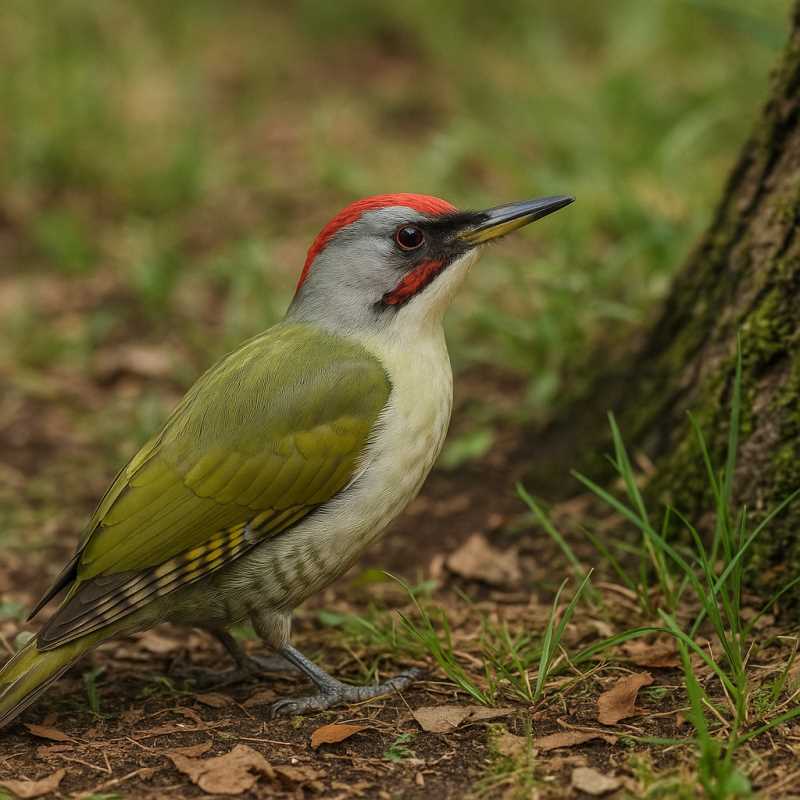
With a striking appearance, the Japanese Green Woodpecker is relatively easy to identify. It measures approximately 30 cm in length, with a wingspan of about 45 cm. The bird’s plumage is predominantly green, which provides excellent camouflage against the leafy backdrop of its forest home. One of its most distinguishing features is the bright red crown and nape found on males, while females typically have a more subdued coloration, with a primarily green crown and a hint of red only on the nape.
The woodpecker’s sturdy bill is perfectly adapted for its foraging habits. Equipped with a chisel-like tip, it can efficiently excavate tree bark to uncover insects hidden beneath. This adaptation is not only essential for feeding but also plays a crucial role in creating nesting cavities.
Behavior and Diet
Primarily known for its distinctive drumming, the Japanese Green Woodpecker uses this behavior as a means of communication. The drumming serves multiple purposes, including territory establishment and attracting mates. Unlike many other woodpeckers that drum on resonant surfaces, the Japanese Green Woodpecker often drums on softer, more subdued surfaces, producing a unique sound that stands out in the forest.
The diet of the Japanese Green Woodpecker is diverse, although it primarily consists of ants and their larvae. This particular dietary preference has earned it the nickname “ant specialist.” The bird will often forage on the ground, using its strong bill to dig into ant nests. In addition to ants, it also feeds on various other insects, seeds, and fruits, making it an integral part of the forest ecosystem as both predator and seed disperser.
Reproduction and Lifespan
Reproduction occurs in the spring, with courtship displays that include both visual and auditory signals. Once a pair has formed, they work together to excavate a nesting cavity within a suitable tree. The female typically lays between 4 to 7 eggs, which both parents incubate over a period of about two weeks. After hatching, the chicks remain in the nest for approximately three weeks, during which time they are diligently cared for and fed by both parents.
In terms of lifespan, the Japanese Green Woodpecker can live up to a decade or more in the wild, although this is highly contingent upon environmental conditions and predation pressures.
Conservation Status
Currently, the Japanese Green Woodpecker is classified as a species of “Least Concern” by the International Union for Conservation of Nature (IUCN). This status reflects its relatively stable population numbers across its natural range. However, the growing threats of habitat loss due to deforestation and urbanization pose significant risks to its long-term survival. Conservation efforts aimed at preserving and restoring natural forest habitats are essential to safeguard this unique species for future generations.
Cultural Significance
In Japanese culture, the Japanese Green Woodpecker is often seen as a symbol of persistence and resilience, traits that are embodied by its relentless drumming and enduring presence in Japan’s ancient forests. It also figures in local folklore, where its vivid plumage and behaviors are frequently depicted in traditional art and literature.
Conclusion
The Japanese Green Woodpecker is a remarkable bird that contributes significantly to the ecological balance of Japan’s forests. Its presence is a testament to the richness of the country’s natural heritage. By understanding and appreciating the intricate details of its life, we can better appreciate the value of protecting such a vibrant and vital component of our world’s biodiversity.
As we continue to study and admire the Japanese Green Woodpecker, it remains a poignant reminder of the delicate interplay between wildlife and habitat, urging us to uphold the responsibility of conservation in the face of modern challenges.
Related posts