The Majestic Great Blue Heron: A Comprehensive Overview
The Great Blue Heron (Ardea herodias) is one of North America’s most recognizable and admired avian species. With its striking appearance and graceful demeanor, this bird captivates birdwatchers and nature enthusiasts alike. Found throughout much of North America, the Great Blue Heron is an integral part of the continent’s wetland ecosystems.
Physical Characteristics
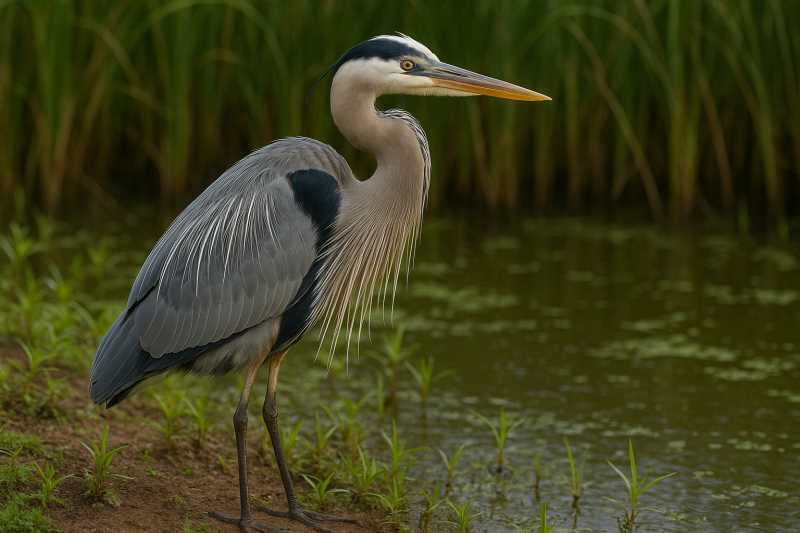
The Great Blue Heron is the largest heron in North America, standing approximately 3 to 4.5 feet tall with a wingspan that can reach up to 6.5 feet. Its plumage is predominantly blue-gray, with a distinctive black stripe running above its eye to the back of the head. The bird’s neck is long and sinuous, often coiled into an S-shape, and its bill is sharp and dagger-like, perfectly adapted for catching fish. During the breeding season, adults display additional plumes on their head, chest, and back, adding to their regal appearance.
Habitat and Distribution
Great Blue Herons are highly adaptable and can be found in a variety of wetland habitats, including freshwater and saltwater marshes, rivers, lakes, and coastal regions. They are distributed widely across North America, from Alaska and Canada in the north, down to the Caribbean and parts of Central America. These birds are migratory, with northern populations moving south during the winter months to avoid the harsh cold.
Feeding Behavior
These herons are opportunistic feeders with a diet primarily consisting of fish. However, they are known to consume a wide range of prey, including amphibians, reptiles, small mammals, insects, and even other birds. They employ a patient hunting strategy, often standing still for extended periods before making a swift strike with their bill to capture unsuspecting prey. This method of hunting is highly efficient and makes the Great Blue Heron a formidable predator in its aquatic environment.
Breeding and Nesting
Great Blue Herons typically breed in colonies known as rookeries, which can consist of a few to several hundred pairs. These colonies are often situated in secluded areas, such as islands or dense forests near water bodies. The breeding season varies by region but generally occurs between March and May. Males are responsible for gathering nesting materials, while females construct the nest, which is made of sticks and lined with softer vegetation. The female lays between three to seven eggs, which both parents incubate for about 25-30 days. Once hatched, the chicks are fed regurgitated food by both parents and fledge after approximately 60 days.
Conservation Status and Threats
The Great Blue Heron is currently listed as a species of least concern by the International Union for Conservation of Nature (IUCN). However, they face several threats, primarily due to habitat destruction, pollution, and human disturbance. Wetland drainage and development have reduced the availability of suitable nesting and feeding sites, while pollution from agricultural runoff and industrial waste can contaminate their habitats. Conservation efforts aimed at protecting wetland areas and reducing pollution are crucial to ensuring the long-term survival of this iconic species.
Conclusion
The Great Blue Heron is a magnificent bird that plays a vital role in its ecosystem. Its presence in wetlands across North America is not only a testament to its adaptability but also a reminder of the importance of preserving natural habitats. By understanding and appreciating the ecological significance of the Great Blue Heron, we can contribute to the conservation of this and many other species that depend on healthy, functioning ecosystems.
In summary, the Great Blue Heron is a symbol of grace and adaptability, whose survival hinges on our commitment to environmental stewardship. As we continue to explore and learn about these remarkable birds, we must also strive to protect the diverse and delicate ecosystems they call home.
Related posts