The Grasshopper Sparrow: A Subtle Songster of the Grasslands
The Grasshopper Sparrow (Ammodramus savannarum) is a small, inconspicuous bird that inhabits the grasslands and prairies of North America. Despite its understated appearance, this sparrow plays a significant role in the ecosystems it inhabits and is an indicator of grassland health. As grasslands face increasing threats from agriculture and urban development, understanding and conserving the Grasshopper Sparrow is more crucial than ever.
Identification and Behavior
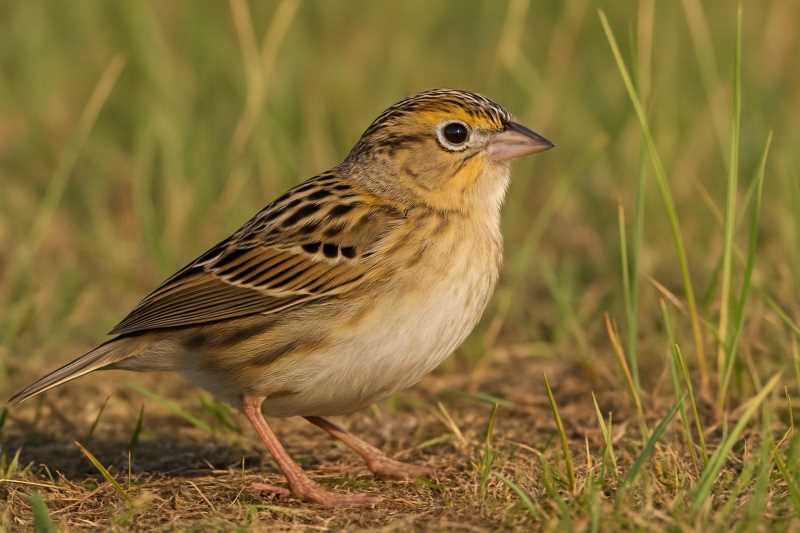
The Grasshopper Sparrow is named for its insect-like song, which resembles the sound of a grasshopper. This song is a key identifying feature, often heard before the bird is seen. Measuring around 4.5 to 5 inches in length, the sparrow is small, with a round head and a short tail. Its plumage is a blend of browns and yellows, providing excellent camouflage against the grassy habitats it prefers.
Unlike many sparrows, the Grasshopper Sparrow is more often spotted on the ground than in trees. It is ground-nesting, building its nest in a well-concealed spot amid tufts of grass. The bird’s diet consists mainly of insects and seeds, with a preference for grasshoppers, which are abundant in its habitat. During the breeding season, males are territorial and will fiercely defend their chosen area, performing flight displays and singing to ward off rivals and attract mates.
Habitat and Distribution
Grasshopper Sparrows are found primarily in open grasslands, prairies, and fields across North America. Their range extends from southern Canada through much of the United States and into parts of Central America. However, the bird’s habitat preferences make it especially vulnerable to habitat loss. Conversion of grasslands to agriculture, urban sprawl, and the suppression of natural fires have all contributed to a reduction in suitable habitats for the species.
The sparrow’s preference for native grasslands, with a mix of tall grasses and forbs, highlights the need for conservation efforts that focus on preserving these ecosystems. Grassland management practices, such as rotational grazing, controlled burns, and the restoration of native plant species, can help maintain the habitats that Grasshopper Sparrows and other grassland species rely on.
Conservation Status and Efforts
The Grasshopper Sparrow is currently listed as a species of Least Concern by the International Union for Conservation of Nature (IUCN). However, regional populations have experienced significant declines, particularly in the eastern United States. These declines are primarily due to habitat loss and degradation. In some areas, such as New York and New England, the sparrow is listed as a species of special concern.
Conservation efforts are underway to address these challenges. Programs aimed at preserving large tracts of grassland and restoring degraded habitats are critical. These initiatives often involve collaboration between government agencies, non-profit organizations, and private landowners. Education and outreach efforts also play a vital role in raising awareness about the importance of grassland ecosystems and the species that depend on them.
The Role of Citizen Science
Citizen science initiatives have become an essential tool in monitoring and conserving the Grasshopper Sparrow. Projects like eBird and the North American Breeding Bird Survey encourage birdwatchers and enthusiasts to report sightings and breeding data. This information helps scientists track population trends and habitat use, providing valuable data for conservation planning.
By participating in these projects, individuals can contribute to the preservation of the Grasshopper Sparrow and its habitat, ensuring that this subtle songster continues to enrich North America’s grasslands.
Conclusion
The Grasshopper Sparrow, with its distinctive song and grassland dependency, symbolizes the broader challenges faced by grassland ecosystems. As these ecosystems continue to decline, the need for effective conservation strategies becomes more pressing. Protecting the Grasshopper Sparrow requires a commitment to preserving its natural habitat, fostering collaborations across sectors, and engaging the public through citizen science. By doing so, we can help secure a future where both the sparrow and its grassland home thrive.
Related posts