The Enigmatic Fulvous Owl: An In-depth Look at Strix fulvescens
The Fulvous Owl, known scientifically as Strix fulvescens, is a captivating avian species that thrives in the dense, humid forests of Central America. It is a bird of mystery and allure, often shrouded in the shadows of its habitat, yet it plays a crucial role in the ecological tapestry of its environment. In this article, we delve into the biology, habitat, and conservation status of this remarkable owl species.
Taxonomy and Description
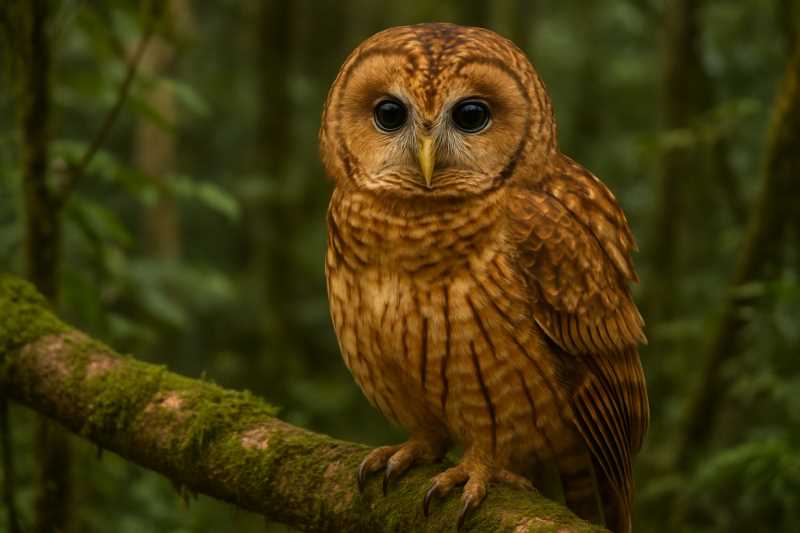
The Fulvous Owl belongs to the family Strigidae, commonly known as the true owls. Its genus, Strix, encompasses a variety of medium to large-sized owls, many of which share similar morphological traits. The Fulvous Owl is notable for its striking plumage, which exhibits a rich, tawny hue with intricate barring patterns that provide excellent camouflage within its forested home.
Measuring approximately 38–43 centimeters in length, the Fulvous Owl is a medium-sized owl, with females typically larger than males, a common trait among raptors. Its large, round head is adorned with dark brown eyes that are adapted for nocturnal vision, allowing it to hunt with precision during the night. The absence of ear tufts, which are prominent in some owl species, gives the Fulvous Owl a distinct, rounded facial disk that aids in sound localization.
Habitat and Distribution
The Fulvous Owl is endemic to the montane forests of Central America, with its range primarily spanning southern Mexico, Guatemala, Honduras, and El Salvador. It favors cloud forests and pine-oak woodlands, where it can find ample cover and prey. These ecosystems, characterized by high humidity and dense vegetation, provide the ideal environment for the owl’s hunting and nesting habits.
The owl’s distribution is largely influenced by the availability of suitable habitat, which has been increasingly threatened by deforestation and habitat fragmentation. As human activities encroach upon its natural habitat, the Fulvous Owl faces challenges that could impact its population stability in the future.
Behavior and Diet
The Fulvous Owl is a nocturnal predator, relying on its acute senses to locate and capture prey. Its diet primarily consists of small mammals, such as rodents and shrews, but it will also consume birds, insects, and reptiles when available. The owl employs a sit-and-wait hunting strategy, perching silently before swooping down on unsuspecting prey with impressive speed and accuracy.
Vocalizations play a significant role in the Fulvous Owl’s behavior, particularly during the breeding season. Its call, a series of deep, resonant hoots, can often be heard echoing through the forest at night. These calls serve both as territorial markers and as a means of communication between mates.
Breeding and Lifespan
The breeding season for the Fulvous Owl generally occurs from February to July. During this time, pairs will establish territories and engage in courtship behaviors, which include mutual preening and vocal exchanges. The female typically lays 2-3 eggs in a tree cavity or an abandoned nest, where she will incubate them for approximately 28-30 days.
Once hatched, the owlets are cared for by both parents, with the male primarily responsible for hunting and providing food. The young owls fledge after about 30-35 days but remain dependent on their parents for several months as they learn essential survival skills.
In the wild, the Fulvous Owl can live up to 15 years, although this lifespan may be reduced due to environmental pressures and predation.
Conservation Status
The Fulvous Owl is currently listed as a species of Least Concern by the International Union for Conservation of Nature (IUCN). However, its population is believed to be decreasing due to habitat loss and degradation. The primary threat to this species is deforestation, driven by agricultural expansion, logging, and infrastructure development.
Efforts to conserve the Fulvous Owl and its habitat are crucial for ensuring its long-term survival. Conservation measures include protecting critical habitats, promoting sustainable land-use practices, and conducting research to better understand the species’ ecology and population dynamics.
Conclusion
The Fulvous Owl is a fascinating species that plays a vital role in the ecosystems of Central American forests. As both predator and prey, it contributes to the balance of its environment, underscoring the importance of preserving its natural habitat. Through concerted conservation efforts and increased awareness, we can help safeguard the future of the Fulvous Owl and the rich biodiversity of the regions it inhabits.
Related posts