The Enigmatic Everett’s Scops Owl: A Jewel of the Philippines
In the lush, vibrant ecosystems of the Philippines, a small, enigmatic bird quietly thrives, largely hidden from the eyes of the world. The Everett’s Scops Owl (Otus everetti) is a remarkable species that embodies the delicate balance of its habitat. First described by British zoologist Richard Bowdler Sharpe in 1892, this owl has captured the interest of ornithologists and bird enthusiasts alike due to its intriguing characteristics and conservation status.
Physical Characteristics
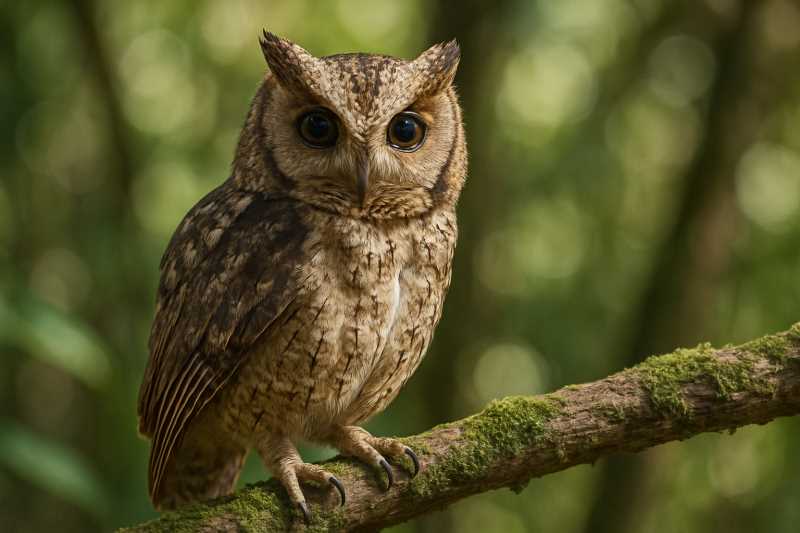
Everett’s Scops Owl is a small owl, measuring about 19 to 23 centimeters in length. Its plumage is predominantly a mix of brown and gray, providing excellent camouflage against the bark of trees. The intricate pattern of feathers is not only visually arresting but also serves as an effective disguise against predators. Its large, forward-facing eyes are adapted for night vision, a crucial trait for its nocturnal lifestyle.
One of the distinctive features of Otus everetti is its ear tufts, which are often raised when the bird is alert or agitated. These tufts give the owl its characteristic “scops” appearance, a term derived from its genus. The species is also known for its melodious call, a series of soft hoots that can often be heard echoing through the Philippine forests at night.
Habitat and Distribution
The Everett’s Scops Owl is endemic to the Philippines, meaning it is found nowhere else in the world. Its primary habitats are subtropical or tropical moist lowland forests and montane forests, where it prefers dense foliage that provides both cover and hunting grounds. The owl is known to inhabit several of the Philippine islands, including Luzon, Mindanao, and Leyte.
These habitats are critical to the owl’s survival, offering abundant prey such as insects, small mammals, and reptiles. Unfortunately, these environments are under constant threat from human activities, including deforestation, agriculture, and urban development, which pose significant risks to the species’ continued existence.
Behavior and Ecology
As a nocturnal predator, the Everett’s Scops Owl is primarily active at night, using its keen senses to hunt. Its diet primarily consists of insects, which it captures with precision thanks to its silent flight and acute hearing. This owl is also known to consume small vertebrates, showcasing its adaptability as a hunter.
Breeding for the Everett’s Scops Owl typically occurs once a year, with the female laying a clutch of 2 to 4 eggs. Nesting usually takes place in tree cavities, which offer protection from the elements and predators. The parents share responsibilities, with the male often hunting and providing food while the female incubates the eggs.
Conservation Status
Everett’s Scops Owl is currently listed as “Near Threatened” on the IUCN Red List of Threatened Species. The primary threat to its survival is habitat loss due to deforestation and land conversion for agriculture. The owl’s dependence on forest habitats makes it particularly vulnerable to these changes.
Conservation efforts are crucial to ensure the survival of this species. Protecting and restoring its natural habitats through sustainable practices and conservation programs is essential. Additionally, raising awareness about the owl and its ecological importance can help garner support for conservation initiatives.
The Importance of Conservation
The Everett’s Scops Owl is not just an enchanting species in its own right; it is also an integral part of the ecosystem. As a predator, it helps control insect populations, contributing to the ecological balance of its habitat. Protecting this owl means preserving the biodiversity of the Philippine forests, which are some of the most diverse and ecologically significant in the world.
Efforts to conserve the Everett’s Scops Owl also offer broader benefits, including the preservation of forests that are home to countless other species. These forests are vital carbon sinks, playing a crucial role in mitigating climate change. Thus, conserving the owl indirectly supports global environmental health.
Conclusion
The Everett’s Scops Owl stands as a symbol of the unique biodiversity of the Philippines. Its survival hinges on our ability to protect and sustain its natural habitats. Through concerted conservation efforts, we can ensure that this remarkable species continues to thrive, enchanting future generations with its mysterious presence and lilting calls. By safeguarding the Everett’s Scops Owl, we uphold our responsibility to protect the natural world and maintain the delicate balance upon which all life depends.
Related posts