Introduction
The Common Cuckoo, Cuculus canorus, is a medium-sized migratory bird best known for its distinctive two-note call and its unusual breeding strategy. It is an obligate brood parasite, meaning that it lays its eggs in the nests of other bird species and relies on them to incubate the egg and raise the chick. Its arrival in spring has influenced folklore, music and literature across much of its range.
Physical Description
The Common Cuckoo is approximately 32–36 centimetres long, with a wingspan of about 54–60 centimetres. It has a slim, streamlined body, pointed wings and a long, graduated tail.
Adult males usually have slate-grey upperparts, a pale grey head and breast, and white underparts marked with fine dark barring. The tail is dark, often with conspicuous white spots or edges. The bill is relatively short and slightly downcurved, with a yellowish base, while the legs and feet are yellow.
Females may resemble males but commonly occur in two colour forms. The grey form is similar to the male, whereas the less common rufous form has warm reddish-brown upperparts and stronger overall barring. Juveniles are generally browner, with pale feather edges and more extensive barring than adults.
The barred underparts and long tail can give a flying cuckoo a superficial resemblance to a Eurasian Sparrowhawk, a resemblance that may help the bird approach host nests without immediately being recognised.
Range and Habitat
The Common Cuckoo has a broad breeding distribution across Europe and much of temperate and northern Asia, extending eastwards to Japan. It is a long-distance migrant. Birds breeding in Europe generally migrate to sub-Saharan Africa, while many Asian populations winter in southern or South-East Asia.
During the breeding season, it occupies a wide range of semi-open habitats, including woodland edges, heathland, moorland, marshes, reedbeds, river valleys, rough grassland and forest clearings. It is particularly associated with landscapes that support suitable host species and abundant insect prey.
The species is usually present in temperate and boreal regions from spring to late summer. Timing varies geographically, but European birds commonly arrive from April onwards and begin southward migration from mid to late summer. Geographic variation occurs in plumage, migration routes, host preferences and the appearance of female eggs.
Where to See This Species
Hook Common, Hampshire, England
The Hampshire and Isle of Wight Wildlife Trust regularly records Common Cuckoos at Hook Common, where heathland, scrub, woodland and open areas provide suitable breeding-season habitat. Listen for the male’s call from spring onwards, particularly around heathland edges and open woodland.
Nearby accommodation: Hook and nearby Basingstoke provide hotels, guest houses and other accommodation suitable for visits to the reserve.
Bartley Heath Nature Reserve, Hampshire, England
Bartley Heath is another Hampshire and Isle of Wight Wildlife Trust site where Common Cuckoos are regularly recorded. Its heathland, scrub and wet habitats are suitable for the species during the spring and summer breeding season. The cuckoos may be easier to hear than see, as they often remain concealed in vegetation.
Nearby accommodation: The village of Hook and the larger town of Basingstoke offer hotels, guest houses and self-catering accommodation.
Blashford Lakes Nature Reserve, Hampshire, England
Common Cuckoos are regularly recorded at Blashford Lakes Nature Reserve, managed by the Hampshire and Isle of Wight Wildlife Trust. The reserve’s combination of lakes, woodland, scrub, grassland and wetland margins provides suitable habitat for cuckoos and their potential host species. Spring and early summer are the most useful periods to look and listen.
Nearby accommodation: Ringwood is the nearest practical gateway town, with hotels, guest houses, campsites and self-catering accommodation in the surrounding New Forest area.
Behaviour and Diet
Common Cuckoos are generally solitary outside the breeding season. Males defend territories and are best known for their repeated “cu-coo” call. Females produce a distinctive bubbling or gurgling call, particularly when searching for suitable host nests.
The species feeds mainly on invertebrates, especially caterpillars, including hairy species that many other birds avoid. Beetles, grasshoppers and other insects may also be taken. Cuckoos usually forage from perches or vegetation and may feed on the ground or in shrubs and trees.
The female does not build a nest or incubate her own eggs. Instead, she watches potential host nests and lays an egg when the host pair is absent. She may remove one host egg before laying her own, often completing the operation very quickly. More than 100 bird species have been recorded as hosts in Europe, although individual female cuckoos commonly specialise in particular host species.
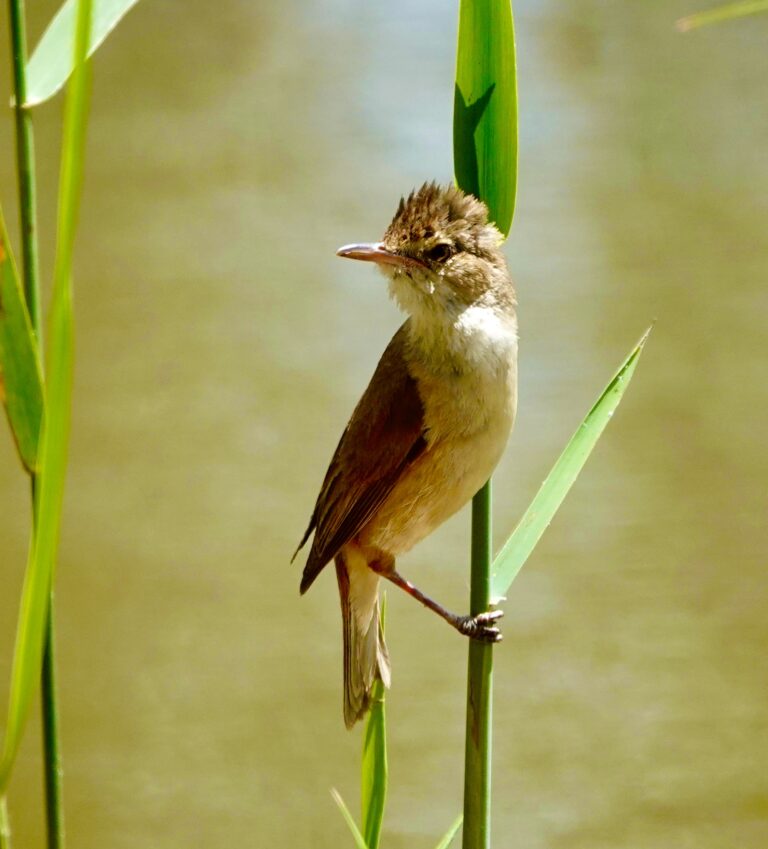
Common European hosts include Reed Warblers, Meadow Pipits and Dunnocks. Cuckoo eggs often resemble those of the host, with different female lineages producing eggs of different colours and patterns. This host-specific resemblance forms part of an evolutionary arms race, with some host species evolving improved abilities to recognise and reject foreign eggs.
The cuckoo chick usually hatches earlier than the host’s young. It commonly pushes the host’s eggs or newly hatched chicks out of the nest, gaining exclusive access to the foster parents’ food. The young cuckoo grows rapidly and may become much larger than the adults that feed it. After fledging, it migrates independently rather than being taught the route by its biological parents.
Identification Tips
- Listen for the unmistakable repeated “cu-coo” song, especially from April to early summer in Europe.
- Look for a slim, long-tailed bird with pointed wings, grey upperparts and finely barred white underparts.
- In flight, the long tail, rapid wingbeats and barred underside may create a superficial resemblance to a Eurasian Sparrowhawk, but the cuckoo has a more slender profile and does not show the same broad, powerful wings.
- Females may be grey or rufous-brown, while juveniles are browner and more heavily marked.
- Cuckoos are often heard from woodland edges, reedbeds, heathland and open scrub before they are seen.
Conservation Status
The Common Cuckoo is classified as Least Concern on the IUCN Red List. This global assessment reflects its very large range and substantial overall population, but it does not mean that all regional populations are stable.
Declines have been recorded in parts of Europe, including the United Kingdom, where the species is affected by changes in land use, loss or deterioration of suitable habitat, reductions in insect prey and changes affecting host species. Long-distance migration also exposes cuckoos to drought, severe weather, habitat loss and other hazards along their routes.
Conservation measures include protecting heathland, wetlands, woodland edges and other breeding habitats, maintaining healthy populations of host species, safeguarding important stopover sites and reducing wider declines in insect abundance. Continued monitoring is important because population trends vary between regions and migration routes.
Frequently Asked Questions
Where does the Common Cuckoo live?
The species breeds across much of Europe and temperate and northern Asia. European birds usually migrate to sub-Saharan Africa, while many Asian birds winter in southern or South-East Asia.
Why does the Common Cuckoo lay its eggs in other birds’ nests?
The Common Cuckoo is an obligate brood parasite. It has evolved to avoid building a nest and raising its own young, instead placing its eggs in the nests of suitable host species.
What do Common Cuckoos eat?
They mainly eat invertebrates, particularly caterpillars. Beetles, grasshoppers and other insects are also taken.
How can a Common Cuckoo be identified?
Look for a slim, long-tailed bird with pointed wings, grey upperparts and finely barred white underparts. Its repeated “cu-coo” call is often the easiest way to locate it.
Do female Common Cuckoos look different from males?
Sometimes. Many females resemble males in the grey colour form, while others are rufous-brown with stronger barring. Juveniles are browner and more heavily marked than adults.
Is the Common Cuckoo endangered?
The species is globally classified as Least Concern, but some regional populations are declining. In parts of Europe, conservation concerns include habitat change, reduced insect prey, pressures on host species and hazards during migration.
References
- IUCN Red List of Threatened Species
- British Trust for Ornithology
- Oxford University Museum of Natural History
Related posts