The Captivating World of the Collared Crescentchest: An Avian Gem of South America
Among the rich tapestry of avian life in South America, the Collared Crescentchest (Melanopareia torquata) stands out as a remarkable species, captivating bird enthusiasts and ornithologists alike. This stunning bird, with its distinctive coloration and unique vocalizations, offers a fascinating glimpse into the biodiversity of its native habitats. In this article, we delve into the life and characteristics of the Collared Crescentchest, exploring its habitat, behavior, and conservation status.
Habitat and Distribution
The Collared Crescentchest is primarily found in the central and eastern regions of South America, with its range spanning across countries such as Brazil, Bolivia, and Paraguay. It inhabits dry forests, savannas, and shrublands, typically preferring areas with dense undergrowth where it can forage and nest. These birds are especially adapted to the Cerrado biome, a vast tropical savanna ecoregion of Brazil, characterized by its unique flora and fauna.
The habitat of the Collared Crescentchest is critical to its survival, as it relies heavily on the cover provided by thick vegetation. This preference for dense foliage not only offers protection from predators but also facilitates its feeding habits, as the bird primarily forages on the ground in search of insects and other small invertebrates.
Physical Characteristics
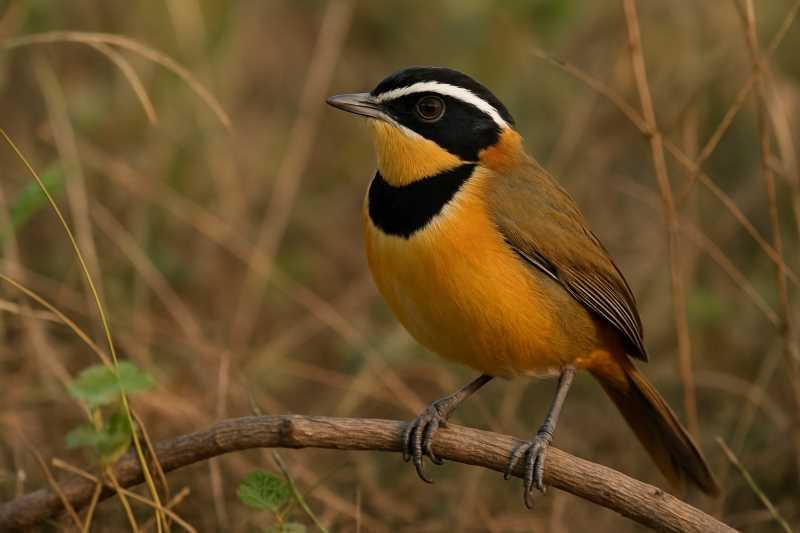
The Collared Crescentchest is a small bird, measuring approximately 15 centimeters in length. It is easily recognizable by its striking plumage. The bird’s head and upperparts are predominantly olive-brown, providing excellent camouflage against the forest floor. However, the most striking feature is its black collar, which contrasts sharply with the white throat and chest, giving the bird its name. This collar forms a crescent shape, adding to the bird’s distinctive appearance.
The underparts of the Collared Crescentchest are a warm, rusty-orange color, while its wings and tail display a mixture of brown and black markings. This combination of colors not only aids in identification but also plays a role in courtship displays and territorial defense.
Behavior and Vocalizations
Collared Crescentchests are primarily insectivorous, feeding on a variety of insects and other small invertebrates found within the leaf litter and low vegetation. They are known for their methodical foraging behavior, often seen hopping along the forest floor as they search for prey.
These birds are also noted for their vocal abilities. The song of the Collared Crescentchest is a series of melodious whistles and trills, which can be heard echoing through its habitat. These vocalizations play a crucial role in communication, particularly during the breeding season when males use their songs to attract females and establish territories.
Breeding typically occurs during the wet season when food resources are abundant. The Collared Crescentchest is a monogamous species, with pairs often engaging in elaborate courtship displays that include synchronized singing and wing-fluttering. Nests are usually built close to the ground, hidden amongst dense vegetation to protect against predators.
Conservation Status and Threats
The Collared Crescentchest is currently classified as a species of Least Concern by the International Union for Conservation of Nature (IUCN). However, like many species that inhabit the Cerrado, it faces threats from habitat destruction and fragmentation. The expansion of agriculture, urbanization, and cattle ranching in the region has led to significant loss of suitable habitat, posing a potential threat to its populations.
Conservation efforts are essential to ensure the survival of the Collared Crescentchest and the preservation of its habitat. Protecting large areas of the Cerrado and implementing sustainable land-use practices are crucial steps in safeguarding this unique ecosystem and its avian inhabitants.
Conclusion
The Collared Crescentchest is a testament to the incredible diversity of birdlife in South America. Its striking appearance, captivating vocalizations, and specialized habitat requirements make it a species of interest for birdwatchers and researchers alike. While it currently enjoys a stable population status, ongoing conservation efforts are necessary to address the challenges posed by habitat loss and ensure that future generations can continue to marvel at this fascinating bird.
In appreciating the Collared Crescentchest, we are reminded of the intricate balance of ecosystems and the importance of preserving the natural world for the myriad species that call it home.
Related posts