The Enigmatic Buffy Fish Owl: A Glimpse into the Life of Ketupa ketupu
The Buffy Fish Owl, scientifically known as Ketupa ketupu, is a captivating species that thrives in the lush forests and wetlands of Southeast Asia. With its distinctive appearance and fascinating behavior, this owl has intrigued ornithologists and bird enthusiasts alike. This article delves into the habitat, physical characteristics, diet, and conservation status of this remarkable bird.
Habitat and Distribution
The Buffy Fish Owl is predominantly found in the tropical regions of Southeast Asia, including Malaysia, Thailand, Indonesia, and parts of the Philippines. These birds prefer habitats near water bodies such as rivers, lakes, and mangroves, making them well-adapted to wetland environments. Their preference for dense forests and swamps provides them with ample cover and a rich supply of prey.
These owls are typically found at low elevations, although they can occasionally be spotted in mountainous areas. Their distribution across various islands and regions highlights their adaptability to different ecological zones within Southeast Asia.
Physical Characteristics
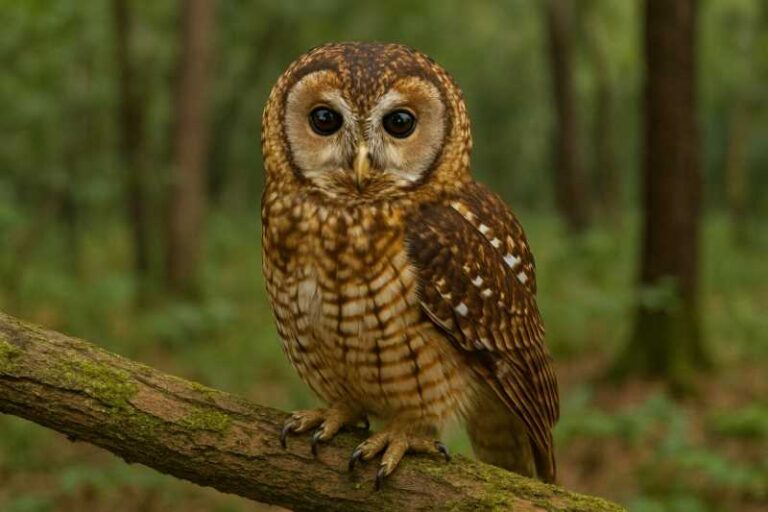
The Buffy Fish Owl is easily recognizable due to its striking appearance. It has a robust body, measuring approximately 40 to 48 centimeters in length, with a wingspan reaching up to 120 centimeters. The owl’s plumage is primarily buff-colored, with darker streaks that provide excellent camouflage against the forest backdrop.
One of the most distinctive features of the Buffy Fish Owl is its prominent ear tufts, which are not actually ears but feathers that enhance its facial expression. The owl’s large, round eyes are a brilliant yellow, allowing it to spot prey in low-light conditions. Its powerful, hooked beak and sharp talons make it an adept hunter, capable of catching a variety of prey.
Diet and Hunting Behavior
As its name suggests, the Buffy Fish Owl has a particular affinity for fish, which constitutes a significant portion of its diet. The owl is an expert fisherman, using its keen eyesight and sharp talons to snatch fish from the water’s surface. It often perches quietly near water bodies, waiting patiently for the slightest ripple that indicates the presence of potential prey.
In addition to fish, the Buffy Fish Owl’s diet includes small mammals, birds, amphibians, and insects. This varied diet reflects its opportunistic feeding habits, which are essential for survival in the diverse ecosystems it inhabits.
Reproduction and Lifespan
The breeding season for the Buffy Fish Owl varies depending on its geographic location, but it generally occurs during the dry months when food is more abundant. These owls are known to be monogamous, often forming long-term pair bonds.
The female typically lays two to three eggs in a nest located in a tree cavity or on a sheltered cliff ledge. Both parents share the responsibility of incubating the eggs and feeding the chicks once they hatch. The owlets fledge after about 50 days, but they remain dependent on their parents for several months before becoming fully independent.
Conservation Status and Threats
The International Union for Conservation of Nature (IUCN) currently lists the Buffy Fish Owl as a species of Least Concern. However, like many wildlife species, it faces threats from habitat destruction and human activities. Deforestation, wetland drainage, and pollution pose significant risks to the owl’s natural habitat.
Conservation efforts are essential to ensure the survival of the Buffy Fish Owl and its habitat. Protecting wetlands and forested areas, implementing sustainable land-use practices, and raising awareness about the importance of biodiversity are crucial steps in safeguarding this species for future generations.
Conclusion
The Buffy Fish Owl is a remarkable bird that embodies the enchanting diversity of Southeast Asia’s avian life. Its unique adaptations, striking appearance, and ecological role make it a subject of endless fascination. By understanding and protecting the habitats of the Buffy Fish Owl, we contribute to the conservation of a species that plays a vital role in the ecosystems it inhabits.
As we continue to study and admire the Buffy Fish Owl, it is imperative to remember the broader context of environmental conservation. Ensuring the survival of such species is not only a matter of preserving biodiversity but also of maintaining the delicate balance of our natural world.
Related posts