########################################################################################################################################################## The Enigmatic Blue-breasted Kingfisher: A Jewel of the African Forests
The avian world is adorned with a myriad of colors and forms, and among its most striking members is the Blue-breasted Kingfisher (Halcyon malimbica). This remarkable bird, native to the tropical forests of West and Central Africa, is a fascinating subject for ornithologists and bird enthusiasts alike. In this article, we delve into the characteristics, habitat, behavior, and conservation status of this captivating species.
Physical Characteristics
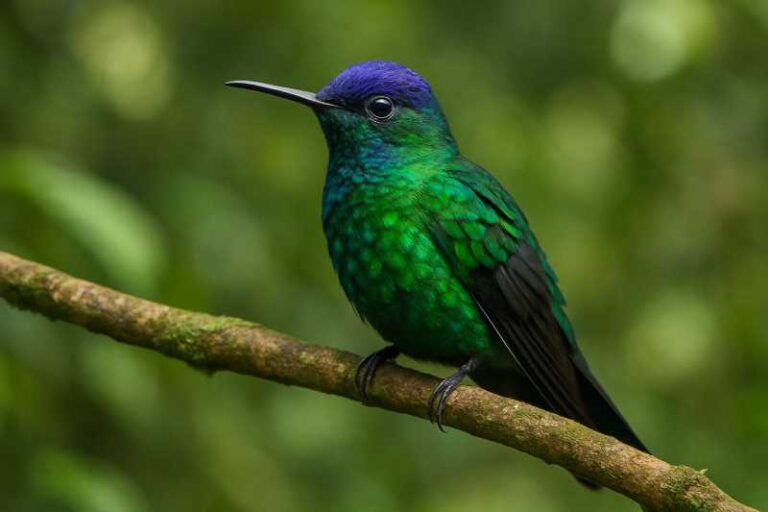
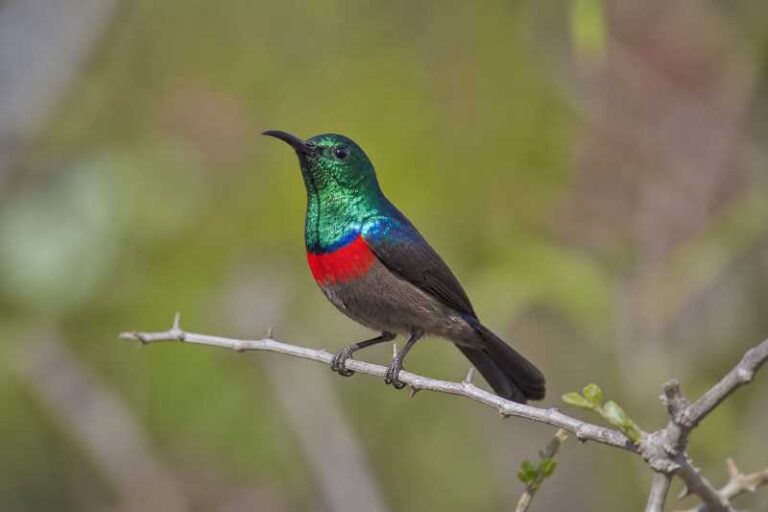
The Blue-breasted Kingfisher is a medium-sized bird, measuring approximately 25 centimeters in length. Its most distinctive feature, as its name suggests, is its vibrant blue breast, which contrasts strikingly with its white underparts. The upper parts of its body are adorned with a rich combination of greens and blues, creating a dazzling mosaic of colors. The bird’s head is marked by a black eye stripe that extends from the bill to the nape, accentuating its bright red bill. The wings and tail are similarly vivid, with shades of blue and black, making this kingfisher a true spectacle in flight.
Habitat and Distribution
The Blue-breasted Kingfisher is predominantly found in the dense, humid forests of West and Central Africa, ranging from Senegal and Gambia in the west to Uganda and the Democratic Republic of the Congo in the east. It favors lowland forests, mangroves, and swampy areas, often residing near water bodies such as rivers, lakes, and streams. These habitats provide the kingfisher with ample hunting grounds and nesting sites.
Remarkably adaptable, the Blue-breasted Kingfisher can also be found in secondary forests and plantations, demonstrating its resilience to a certain degree of habitat modification. However, its reliance on forested areas makes it susceptible to the impacts of deforestation and habitat degradation.
Behavior and Diet
The Blue-breasted Kingfisher is primarily a solitary bird, known for its secretive nature. It is most active during dawn and dusk, often heard rather than seen, as it emits its characteristic loud, harsh calls. These vocalizations are an essential part of its behavior, used for communication during courtship and territorial defense.
This kingfisher is an adept hunter, feeding mainly on insects, small fish, and amphibians. Its hunting strategy involves perching silently on a branch overlooking a water body, from where it swoops down with precision to catch its prey with its sharp bill. This technique, combined with its keen eyesight, makes it an efficient predator.
Breeding and Nesting
Breeding season for the Blue-breasted Kingfisher typically occurs during the rainy season, which varies across its range. The species is monogamous, with pairs forming long-term bonds. Courtship involves elaborate displays and vocalizations, reflecting the bird’s vibrant personality.
The nest is usually excavated in a termite mound or a riverbank, where the female lays a clutch of 2 to 4 eggs. Both parents participate in incubating the eggs and feeding the chicks. The young fledge after about three weeks, but remain dependent on their parents for some time thereafter, learning essential skills for survival.
Conservation Status
The Blue-breasted Kingfisher is currently classified as ‘Least Concern’ by the International Union for Conservation of Nature (IUCN). However, it faces threats from habitat destruction due to logging, agricultural expansion, and infrastructure development. Conservation efforts are crucial in ensuring the survival of this species, with emphasis on protecting its natural habitats and monitoring population trends.
Organizations and researchers are working to raise awareness about the importance of conserving forest ecosystems, which support not only the Blue-breasted Kingfisher but countless other species. Sustainable forestry practices and the establishment of protected areas are essential strategies in mitigating the impacts of habitat loss.
Conclusion
The Blue-breasted Kingfisher stands as a testament to the beauty and diversity of Africa’s avian fauna. Its striking appearance and intriguing behaviors make it a subject of admiration and study. As we continue to explore and understand the natural world, the preservation of species like Halcyon malimbica becomes increasingly important. Through concerted conservation efforts, we can ensure that future generations will have the opportunity to witness the splendor of the Blue-breasted Kingfisher in its natural habitat.
In conclusion, the Blue-breasted Kingfisher is not just a bird; it is an integral part of the ecosystem, a symbol of the intricate web of life that binds us all. Protecting its future is a shared responsibility, one that calls for awareness, education, and action.
Related posts