The Blue-and-yellow Macaw (Ara ararauna) is one of the most iconic and vibrant members of the parrot family, known for its striking appearance and engaging personality. Native to South America, this species is found in a variety of habitats ranging from tropical rainforests to savannas, where it plays a crucial role in the ecosystem as both a seed disperser and a member of the intricate web of life.
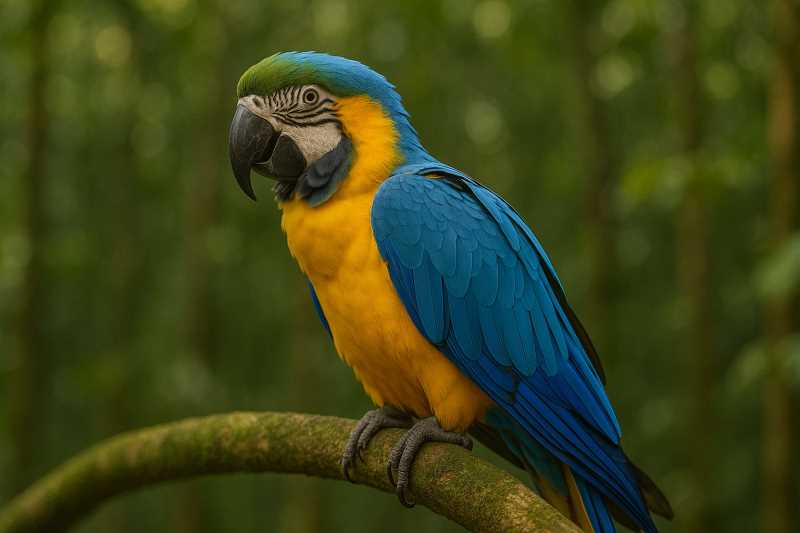
These macaws are instantly recognizable by their vivid blue upper parts and bright yellow underparts, with a green forehead and a striking white face accented by black lines. Adult macaws can reach lengths of up to 86 cm (34 inches) and have wingspans that can exceed 100 cm (39 inches), making them one of the larger members of the parrot family. Despite their size, they are agile fliers, capable of covering large distances in search of food.
Blue-and-yellow Macaws are highly social birds, often seen in pairs or small flocks. Their social structure is complex, with strong pair bonds formed between mates that can last for life. These bonds are essential not only for reproduction but also for mutual grooming and companionship, which strengthens their relational ties. In the wild, these macaws communicate with each other through a series of loud calls, squawks, and screams, which help them coordinate movements and alert each other to potential dangers.
Diet plays a significant role in the life of the Blue-and-yellow Macaw. These birds are primarily frugivorous, feeding on a wide array of fruits, nuts, and seeds. Their strong, hooked beaks are perfectly adapted for cracking open tough-shelled nuts, allowing them to access high-energy foods that are vital for their active lifestyle. In some regions, they are also known to consume clay from riverbanks, a behavior believed to help neutralize toxins found in some of the seeds and unripe fruits they eat.
The reproduction cycle of the Blue-and-yellow Macaw is equally fascinating. Breeding season varies depending on the region, but typically occurs during the wetter months when food is most abundant. Females lay two to three eggs in tree cavities, and both parents share the responsibility of incubating the eggs and feeding the chicks once they hatch. Young macaws fledge the nest after about three months, although they often remain with their parents for an extended period as they learn essential survival skills.
Despite their beauty and significance in the wild, Blue-and-yellow Macaws face numerous threats that have led to a decline in their populations. Habitat destruction, particularly deforestation for agriculture and urban development, poses a significant risk to their natural habitats. Additionally, the illegal pet trade has targeted these birds due to their striking appearance and ability to mimic human speech, further exacerbating their decline in certain areas.
Conservation efforts are underway to protect the Blue-and-yellow Macaw and its habitat. Protected areas and national parks play a crucial role in preserving their natural environment, while breeding programs and wildlife corridors help maintain genetic diversity and connect fragmented populations. Moreover, public awareness and education campaigns are essential in highlighting the importance of these birds and the threats they face, encouraging responsible behavior and support for conservation initiatives.
In conclusion, the Blue-and-yellow Macaw is not only a marvel of nature due to its stunning appearance and intelligence but also an integral part of the ecosystems it inhabits. Protecting these magnificent birds requires concerted efforts from governments, conservationists, and local communities. By understanding and addressing the challenges they face, we can ensure that future generations will continue to enjoy the sight of these colorful creatures soaring through the skies.
Related posts