The Elusive Beauty of the Black-faced Sandgrouse: A Comprehensive Overview
The Black-faced Sandgrouse, scientifically known as Pterocles decoratus, stands as a testament to the diversity and complexity of avian life in the arid regions of Eastern Africa. This captivating bird, belonging to the family Pteroclidae, is not only remarkable for its distinctive appearance but also for its unique behavioral adaptations that allow it to thrive in some of the harshest environments on the planet.
Taxonomy and Distribution
The Black-faced Sandgrouse is one of the 16 species that comprise the sandgrouse family. It is primarily found across the dry savannas, scrublands, and semi-deserts of Eastern Africa, particularly in countries such as Kenya, Tanzania, and Somalia. This species is adapted to life in regions where water is scarce, and temperatures can be extreme.
Physical Characteristics
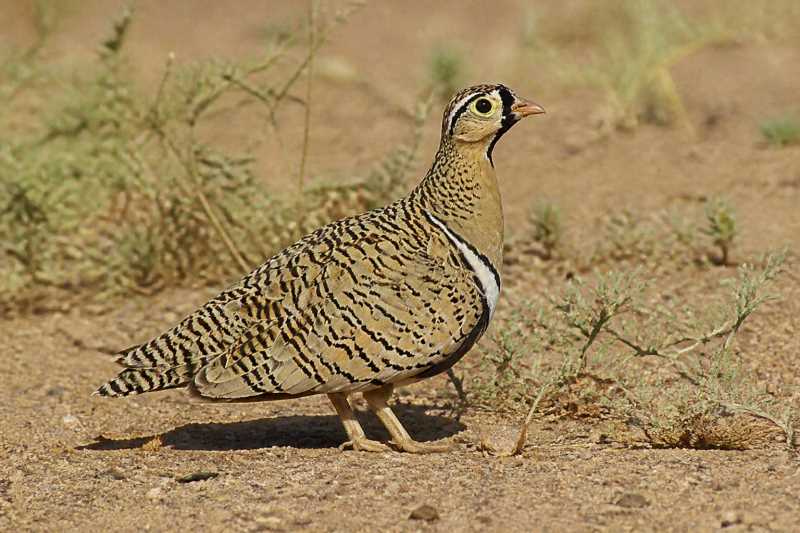
One of the most striking features of the Black-faced Sandgrouse is its distinctive facial markings. As its name suggests, this bird is characterized by a prominent black mask that contrasts sharply with its otherwise sandy-colored plumage, which provides excellent camouflage against the desert terrain. Adult males and females can be distinguished by subtle differences in their plumage, with males exhibiting more vivid coloring and distinct patterns.
The body length of the Black-faced Sandgrouse ranges from 22 to 25 centimeters, with a wingspan of approximately 45 to 50 centimeters. The bird’s physique is robust, with a streamlined body and relatively long wings that facilitate efficient and agile flight.
Behavior and Ecology
The Black-faced Sandgrouse is known for its crepuscular habits, being most active during the early morning and late afternoon when temperatures are cooler. These birds are ground-dwellers, often seen foraging for seeds, which constitute the majority of their diet. They also consume small insects and other invertebrates, supplementing their diet with essential proteins.
One of the most fascinating aspects of the Black-faced Sandgrouse is its water-collecting behavior. In arid landscapes, where water is a precious commodity, these birds have developed a unique method to transport water back to their young. Male sandgrouse soak their belly feathers in water, which they then carry back to the nest, allowing their chicks to drink by sucking the moisture from the feathers.
Reproduction and Lifespan
Breeding for the Black-faced Sandgrouse is typically aligned with the rainy season when food resources are more abundant. The species is monogamous, with pairs forming strong bonds that often last for life. The female lays a clutch of 2 to 3 eggs, which are laid directly on the ground in a simple scrape without any formal nest structure.
Both parents take turns incubating the eggs, which hatch after about 22 to 25 days. The chicks are precocial, meaning they are relatively mature and mobile shortly after hatching. This allows them to follow their parents in search of food almost immediately.
The lifespan of the Black-faced Sandgrouse in the wild is not well-documented but is estimated to be around 5 to 10 years, depending on environmental conditions and predation pressures.
Conservation Status
Currently, the Black-faced Sandgrouse is classified as a species of Least Concern by the International Union for Conservation of Nature (IUCN). Although the population is stable, the bird’s habitat is increasingly threatened by human activities such as agriculture, overgrazing by livestock, and climate change, which are altering the delicate ecosystems they depend upon.
Conservation efforts are essential to ensure that these birds continue to thrive. Protecting their natural habitat, along with implementing sustainable land-use practices, is crucial for their continued survival.
Cultural Significance and Human Interaction
The Black-faced Sandgrouse, like many other bird species, holds cultural significance for the indigenous communities of Eastern Africa. These birds are often featured in local folklore and are admired for their resilience and adaptability.
In recent years, birdwatching has emerged as a popular activity in Africa, drawing enthusiasts from around the world. The Black-faced Sandgrouse, with its unique appearance and intriguing behavior, is a sought-after sighting for many birdwatchers visiting the region.
Conclusion
The Black-faced Sandgrouse is a remarkable example of nature’s adaptability and ingenuity. Its ability to survive in extreme conditions and its unique behaviors make it a subject of interest for ornithologists and bird enthusiasts alike. As we continue to study and learn from these incredible creatures, it is vital to prioritize their conservation, ensuring that they remain a part of our world’s rich biodiversity for generations to come.
In summary, the Black-faced Sandgrouse represents the beauty and complexity of life in arid landscapes, symbolizing resilience and adaptability. Through continued research and conservation efforts, we can help preserve this species and its habitat, contributing to the broader goal of maintaining ecological balance and diversity.
Related posts