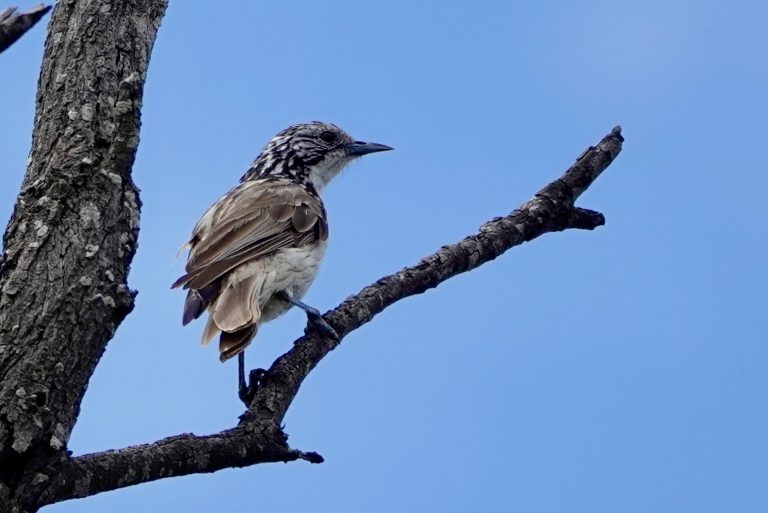
The Bismarck Kingfisher: A Jewel in the Avian World
The Bismarck Kingfisher (Ceyx websteri) is a captivating bird that has intrigued ornithologists and bird enthusiasts alike. Endemic to the Bismarck Archipelago in Papua New Guinea, this species is a perfect illustration of nature’s exquisite artistry, combining vibrant colors with a unique ecological niche.
Taxonomy and Classification
The Bismarck Kingfisher belongs to the Alcedinidae family, a group known for their striking plumage and exceptional hunting skills. The species was first described by Hartert in 1894 and is often confused with other members of the Ceyx genus due to its similar size and coloration. However, the Bismarck Kingfisher is distinguished by its distinct geographical distribution and subtle morphological traits.
Physical Description
This small kingfisher measures about 12 cm in length and is renowned for its vivid coloration. The Bismarck Kingfisher boasts a brilliant azure-blue upper body, with a stark contrast of orange underparts. The head is adorned with a dazzling blue crown and a white throat, making it a breathtaking sight in its natural habitat. Its robust bill is adapted for catching prey, while its short wings and tail are typical of forest-dwelling kingfishers.
Habitat and Distribution
The Bismarck Kingfisher is restricted to the Bismarck Archipelago, including the islands of New Britain and New Ireland. It thrives in lowland rainforests and mangrove swamps, where it finds abundant food sources. The species has adapted well to the dense forest environment, where it perches silently on branches, waiting to dart down and catch unsuspecting prey.
Diet and Feeding Behavior
Ceyx websteri is primarily insectivorous, feeding on a diet consisting of insects, small crustaceans, and occasionally small fish. Its hunting strategy is a marvel of precision and speed. The bird remains motionless on a perch, scanning the surroundings for movement. Once prey is detected, it dives swiftly, snatching the target with its sharp beak before returning to its perch.
Breeding and Nesting
The breeding season of the Bismarck Kingfisher coincides with the rainy season, which provides ample food supply for the growing chicks. The species is known to nest in burrows excavated in riverbanks or termite mounds. Both parents share the responsibility of incubating the eggs and feeding the chicks. The young fledge within a month, although little is known about their post-fledging development.
Conservation Status
The Bismarck Kingfisher is currently listed as Near Threatened by the International Union for Conservation of Nature (IUCN). Habitat destruction due to logging and agricultural expansion poses a significant threat to its population. Conservation efforts are crucial to preserving the delicate ecosystems of the Bismarck Archipelago and, by extension, the survival of this beautiful species.
The Importance of Conservation
Protecting the Bismarck Kingfisher requires a multifaceted approach, including habitat conservation, legal protection, and community engagement. Local communities play a vital role in conservation efforts, as they can help monitor and protect key habitats. Raising awareness about the ecological significance of the Bismarck Kingfisher can also foster a sense of stewardship among local populations.
Conclusion
The Bismarck Kingfisher, with its dazzling colors and specialized ecological role, is a testament to the biodiversity of the Bismarck Archipelago. Its survival hinges on our ability to balance human development with environmental preservation. Through concerted conservation efforts, we can ensure that future generations will continue to marvel at this avian gem.
In summary, the Bismarck Kingfisher is more than just a bird; it is an emblem of the natural world’s beauty and complexity. As we strive to protect this remarkable species, we are reminded of our shared responsibility to safeguard the delicate balance of life on Earth.
Related posts