The Arabian Green Bee-eater: A Jewel of the Skies
The Arabian Green Bee-eater (Merops cyanophrys) is a vibrant and graceful bird that captures the attention of ornithologists and bird enthusiasts alike. This captivating species is celebrated not just for its dazzling plumage but also for its agile flight and fascinating behavioral patterns. Found predominantly in the arid landscapes of the Middle East, the Arabian Green Bee-eater is a testament to nature’s ingenuity in adapting to diverse environments.
Taxonomy and Distribution
Belonging to the family Meropidae, the Arabian Green Bee-eater shares its lineage with approximately 27 other species of bee-eaters. This species is widely distributed across the Arabian Peninsula, including countries such as Saudi Arabia, Oman, Yemen, and parts of the Levant. These birds thrive in arid to semi-arid regions, often inhabiting wadis, open woodlands, and savannas.
Distinctive Physical Characteristics
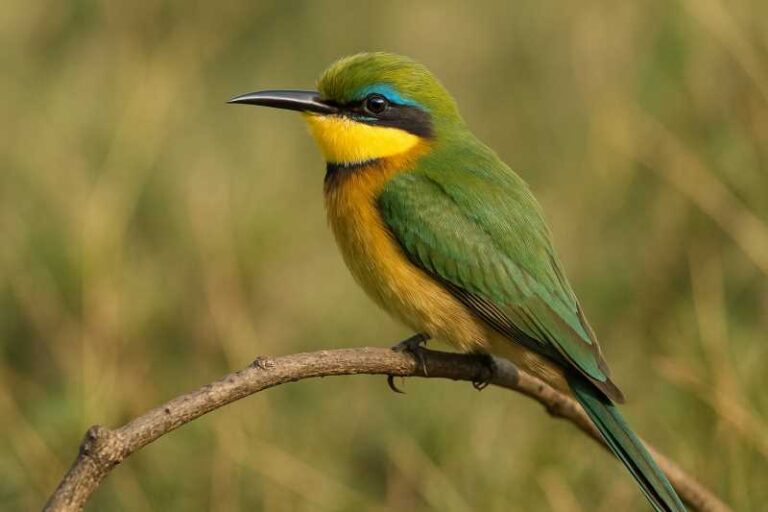
The Arabian Green Bee-eater is a small to medium-sized bird, measuring around 23-25 cm in length, with a wingspan of approximately 36-42 cm. Its plumage is a brilliant emerald green, with a distinctive black eye stripe that extends from the beak to beyond the eyes, enhancing its striking appearance. The underparts are lighter, often tinged with a subtle blue, especially noticeable on the throat and chin. The wings and tail feathers exhibit hints of blue and gold, adding to their iridescence.
A noteworthy feature is the elongated central tail feathers that taper elegantly, a characteristic trait of bee-eaters which aids in their agile flight maneuvers. The bill is slightly curved and pointed, ideal for capturing their primary food source — bees and other flying insects.
Behavior and Diet
As their name suggests, bee-eaters predominantly feed on bees and wasps, along with a variety of other insects. They employ a remarkable hunting technique, wherein they catch their prey mid-flight with incredible precision. Once a bee is caught, the bee-eater returns to a perch and repeatedly beats the insect against the branch to remove the stinger and venom before consumption. This behavior not only showcases their adaptability but also their intelligence in handling potentially dangerous prey.
Socially, Arabian Green Bee-eaters are known for their gregarious nature. They often form small flocks, especially during migration or when roosting. Their calls are a series of pleasant, high-pitched trills and whistles, which serve both as communication within the flock and as a warning mechanism against predators.
Breeding and Nesting Habits
The breeding season for the Arabian Green Bee-eater typically occurs between March and June. These birds are known for their communal nesting behaviors, often forming colonies that can range from a few pairs to several dozen. They prefer to nest in sandy banks or soft ground, where they excavate burrows that can be up to a meter long.
Both male and female participate in nest excavation, and the pair takes turns incubating the eggs and feeding the young. A typical clutch consists of 4-7 eggs, which are glossy white. The incubation period lasts about 20-23 days, after which both parents continue to care for the fledglings until they are independent.
Conservation Status and Threats
Currently, the Arabian Green Bee-eater is listed as a species of Least Concern by the International Union for Conservation of Nature (IUCN). However, like many wildlife species, they face threats from habitat destruction, particularly due to urbanization and agricultural expansion. Additionally, the use of pesticides can significantly impact their food supply, posing a risk to their population stability.
Conservation efforts are crucial to preserving their habitats and ensuring that these dazzling birds continue to thrive. Initiatives that promote sustainable land use and reduce pesticide usage can have a positive impact on their conservation.
Conclusion
The Arabian Green Bee-eater is more than just an avian spectacle; it is an integral part of the ecosystem, contributing to insect population control and enhancing biodiversity. Their vibrant presence in the Middle Eastern skies is a reminder of the delicate balance of nature, where every species plays a pivotal role. As we continue to study and appreciate these magnificent birds, it is essential that conservation efforts are prioritized to ensure that future generations can also witness their beauty.
For bird lovers and wildlife enthusiasts, the Arabian Green Bee-eater stands as a symbol of the natural beauty of the Arabian Peninsula, its emerald hues a constant reminder of the wonders that lie within our natural world.
Related posts