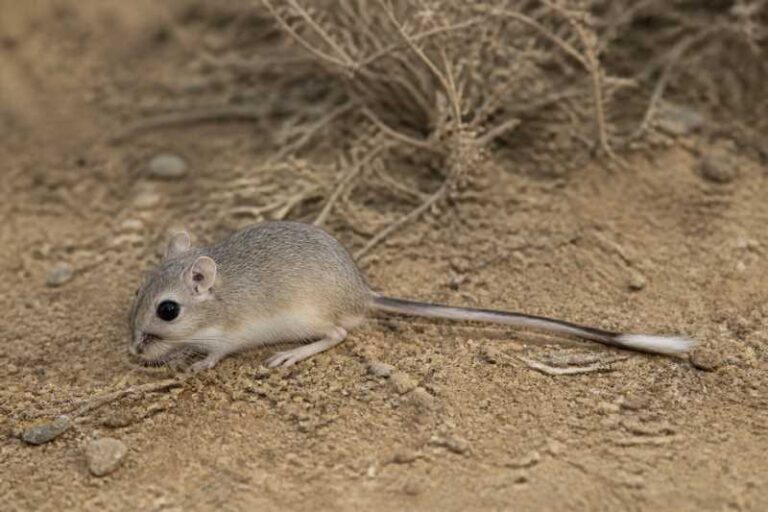
Earless New Guinea Water Rat (Crossomys moncktoni): A Comprehensive Guide
Introduction
The Earless New Guinea Water Rat, scientifically known as Crossomys moncktoni, is a fascinating but often overlooked species endemic to the highland regions of New Guinea. Despite its elusive nature, this aquatic mammal plays a crucial role in its ecosystem. This article delves into the various aspects of the Earless New Guinea Water Rat, exploring its physical characteristics, habitat, behavior, and conservation needs.
Physical Description
The Earless New Guinea Water Rat is a unique rodent, notable for its adaptations to a semi-aquatic lifestyle. It has a streamlined body, which is typically dark brown with a lighter underbelly, aiding camouflage in its natural habitat. This species is characterized by its lack of external ear flaps, which is an adaptation to its aquatic environment, reducing drag while swimming. Adult rats typically measure about 25-30 cm in body length, with tails that are slightly shorter than their bodies. Their webbed feet are another significant adaptation, allowing for efficient swimming.
Range and Habitat
The Earless New Guinea Water Rat is endemic to New Guinea, primarily inhabiting the highland regions. It thrives in montane streams and rivers, where it builds nests in the dense vegetation along the banks. These habitats provide the necessary resources for feeding and breeding. The rat is typically found at elevations ranging from 1,000 to 3,000 meters, where the cool, moist conditions are ideal for its survival.
Behavior and Diet
Primarily nocturnal, the Earless New Guinea Water Rat is most active during the night. It exhibits a solitary lifestyle, although little is known about its specific social structures due to its elusive nature. Its diet mainly consists of aquatic invertebrates, including insects, small crustaceans, and mollusks, which it skillfully forages from the riverbeds and under rocks. Occasionally, it may also consume small fish and amphibians.
Identification Tips (Field Recognition Cues)
Identifying the Earless New Guinea Water Rat in the field can be challenging due to its secretive behavior and the remote locations it inhabits. However, there are several cues that can aid in its identification:
- Body Shape and Size: Look for a medium-sized rodent with a streamlined body, approximately 25-30 cm in length.
- Tail: The tail is slightly shorter than the body, aiding in balance and agility while swimming.
- Webbed Feet: These are a distinctive feature, adapted for swimming.
- Coloration: Dark brown fur with a lighter underbelly, providing camouflage in aquatic environments.
- Habitat: Found near montane streams and rivers in the highlands of New Guinea.
Conservation Status (with threats and protections)
The conservation status of the Earless New Guinea Water Rat is currently listed as "Data Deficient" by the International Union for Conservation of Nature (IUCN). This classification highlights the limited knowledge about its population size, distribution, and trends. However, several potential threats have been identified, including habitat destruction due to logging, agriculture, and mining activities. Climate change also poses a significant risk, potentially altering the hydrological systems of its habitat.
Efforts to protect this species are hampered by the lack of comprehensive data. Conservation strategies need to focus on habitat protection and further research to assess the population and ecological requirements of the species.
Frequently Asked Questions
1. What is the Earless New Guinea Water Rat’s scientific name?
The scientific name of the Earless New Guinea Water Rat is Crossomys moncktoni.
2. Where can the Earless New Guinea Water Rat be found?
This species is endemic to New Guinea, primarily found in the highland regions near montane streams and rivers.
3. What does the Earless New Guinea Water Rat eat?
Its diet mainly consists of aquatic invertebrates, including insects, crustaceans, and mollusks, along with small fish and amphibians.
4. Why is the Earless New Guinea Water Rat considered "Data Deficient"?
The "Data Deficient" status indicates that there is insufficient information available to assess its risk of extinction fully. More research is needed to determine its population size and trends.
5. How does the Earless New Guinea Water Rat adapt to its aquatic environment?
Adaptations include its lack of external ear flaps, streamlined body, webbed feet, and coloration that provides camouflage in aquatic environments.
Related posts