The Torotoroka Scops Owl: Madagascar’s Enigmatic Nocturnal Sentinel
Among the rich biodiversity of Madagascar, the Torotoroka Scops Owl (Otus madagascariensis) stands out as one of the island’s most fascinating avian species. This small, nocturnal bird of prey is a testament to Madagascar’s unique evolutionary history and the critical need for conservation efforts on the island.
A Distinctive Appearance
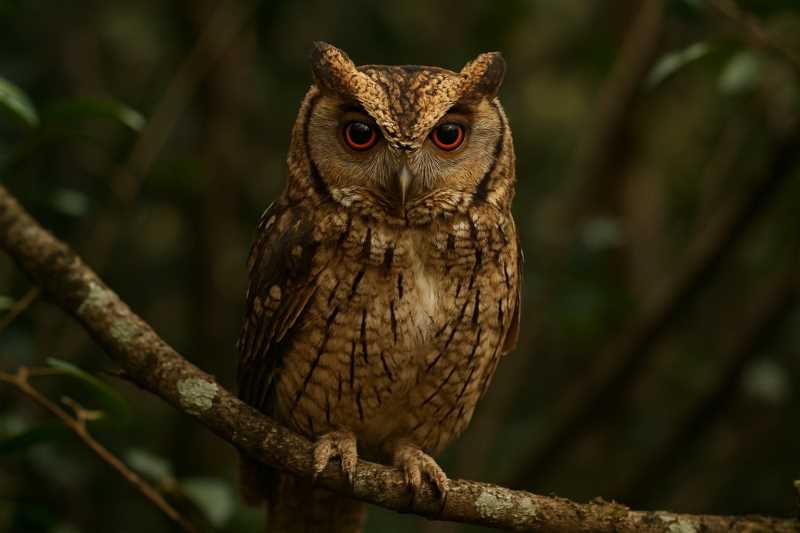
The Torotoroka Scops Owl is relatively small, measuring about 22 to 25 cm in length. It exhibits a beautiful array of colors, primarily brown with a mottled pattern that provides excellent camouflage against the forest backdrop. The owl’s facial disk is pale with a distinctive outline, and its eyes are a striking yellow, which contribute to its keen nocturnal vision.
One of the most notable features of this owl is its ear tufts, which are not actually ears but feather structures that can be raised or lowered. These tufts are thought to play a role in communication and camouflage, adding to the bird’s enigmatic appearance.
Habitat and Range
The Torotoroka Scops Owl is endemic to Madagascar, meaning it is found nowhere else in the world. It primarily inhabits the dry deciduous forests of the western and southwestern regions of the island. These forests, with their seasonal climate and diverse flora, provide a rich environment for the owl to hunt and breed.
This species is adapted to a variety of forest habitats, ranging from lowland deciduous forests to montane rainforests. Its adaptability has allowed it to survive in fragmented habitats, although deforestation and habitat degradation continue to pose significant threats.
Behavior and Diet
As a nocturnal predator, the Torotoroka Scops Owl is most active during the night. It is a solitary bird, relying on its acute sense of hearing and sight to hunt small mammals, insects, and other invertebrates. The owl’s hunting strategy involves perching quietly on branches and swooping down on unsuspecting prey.
Its call, a series of soft hoots, is often heard as the sun sets, marking its presence in the forest. This vocalization plays a crucial role in territorial defense and communication between mates.
Reproduction and Lifespan
The breeding season for the Torotoroka Scops Owl typically coincides with the rainy season, when food is more abundant. The female lays a clutch of 2 to 4 eggs in a tree cavity or abandoned nest, and both parents take turns incubating the eggs and feeding the chicks.
Chicks fledge after about a month but will remain dependent on their parents for several weeks as they learn to hunt and navigate the forest. In the wild, these owls can live up to 10 years, although life expectancy can be significantly reduced by habitat loss and predation.
Conservation Status
The International Union for Conservation of Nature (IUCN) currently lists the Torotoroka Scops Owl as “Least Concern” due to its relatively wide range and stable population. However, the ongoing deforestation in Madagascar remains a pressing concern, as it leads to habitat fragmentation and loss.
Conservation efforts are underway to preserve Madagascar’s unique ecosystems, with several national parks and reserves established to protect the island’s flora and fauna. These protected areas are crucial for the survival of the Torotoroka Scops Owl and other endemic species.
Human Interaction and Cultural Significance
While the Torotoroka Scops Owl is not as iconic as some of Madagascar’s other wildlife, it plays a vital role in the island’s ecosystem as a predator and indicator of environmental health. Its presence in a forest can signal a balanced ecosystem, making it an important species for ecological studies.
In Malagasy culture, owls are often associated with mystery and are sometimes viewed with superstition. However, they are also seen as symbols of wisdom and guardianship, reflecting their role as nocturnal sentinels of the forest.
The Future of the Torotoroka Scops Owl
The future of the Torotoroka Scops Owl is closely tied to the fate of Madagascar’s forests. Continued efforts to combat deforestation, promote sustainable land use, and engage local communities in conservation will be essential to ensuring this enigmatic bird remains a symbol of Madagascar’s unparalleled biodiversity.
As researchers continue to study this species, there is hope that increased awareness and understanding will lead to more effective conservation strategies, safeguarding the Torotoroka Scops Owl for future generations to admire and study.
Related posts