The Chatham Albatross: Guardian of the Southern Skies
The Chatham Albatross (Thalassarche eremita), an emblematic species of the seabird community, captivates with its elegance and enigmatic life at sea. Endemic to the Chatham Islands of New Zealand, this albatross is a remarkable representative of the Thalassarche genus, demonstrating the ecological uniqueness and challenges faced by island species.
Habitat and Distribution
The Chatham Albatross is primarily found on the Pyramid, a steep, rocky islet in the Chatham Islands. This remote and isolated breeding ground underscores the species’ vulnerability. During the breeding season, the entire global population congregates on this single islet, making it a focal point for conservation efforts.
Outside the breeding season, Chatham Albatrosses embark on extensive pelagic journeys across the South Pacific Ocean. Their range extends to the waters off the coasts of South America, Australia, and the broader Pacific, showcasing their impressive navigational skills and adaptability to the open ocean environment.
Physical Characteristics and Behavior
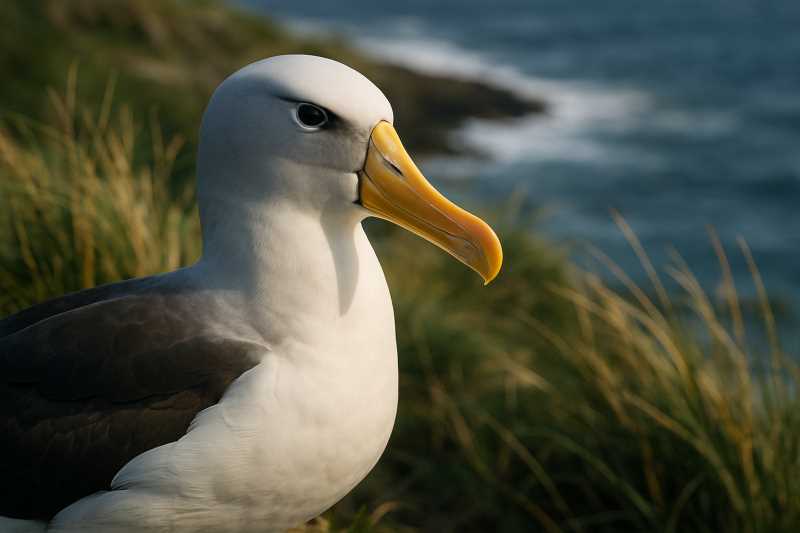
The Chatham Albatross is a medium-sized albatross, with an average wingspan of about 2.2 meters (7.2 feet). It is characterized by its distinctive yellow bill with a dark tip and a light grey face contrasting against a white head and body. This striking appearance aids in identification and adds to the bird’s appeal.
In flight, the Chatham Albatross is a master of the skies, utilizing dynamic soaring techniques to travel vast distances with minimal energy expenditure. This skill is crucial for their survival in the resource-scarce expanse of the ocean.
Their diet primarily consists of squid, fish, and crustaceans, reflecting their opportunistic feeding strategies. They are known to follow fishing vessels to feed on discards, which, while beneficial in the short term, also exposes them to risks such as bycatch in fishing gear.
Breeding and Lifecycle
Breeding occurs once a year, with pairs forming long-term monogamous bonds. The breeding season begins in August, with egg-laying occurring in September. A single egg is laid and incubated for about 70 days by both parents, showcasing their shared parental investment.
Chicks fledge around March, and the young albatrosses are left to fend for themselves in the vast ocean. The first few years of life are crucial for their development, as they must learn to navigate and forage efficiently to survive.
Conservation Status and Threats
The Chatham Albatross is classified as Vulnerable by the International Union for Conservation of Nature (IUCN). The limited breeding range, confined to a single islet, makes the species particularly susceptible to environmental changes and catastrophic events such as storms or disease outbreaks.
Human activities pose significant threats, including bycatch in longline fisheries and habitat disturbance. Conservation measures are in place to mitigate these risks, such as the implementation of bycatch reduction techniques and habitat protection initiatives.
Climate change presents another looming challenge, as alterations in ocean temperature and currents could affect food availability and breeding success. Continued monitoring and adaptive management strategies are necessary to ensure the long-term survival of the Chatham Albatross.
Conservation Efforts and Future Outlook
Efforts to conserve the Chatham Albatross are spearheaded by organizations like the Department of Conservation in New Zealand and various international bird conservation groups. These efforts include habitat protection, monitoring programs, and international collaborations to address bycatch issues.
Public awareness and education are also crucial components of conservation strategies. By fostering an understanding of the Chatham Albatross’s ecological role and the challenges it faces, conservationists hope to garner support for protective measures.
The future of the Chatham Albatross depends on our ability to balance human activities with the needs of this unique species. Continued research and international cooperation will be vital in ensuring that these majestic birds continue to soar across the southern skies for generations to come.
In conclusion, the Chatham Albatross is not merely a bird of the sea but a symbol of the delicate balance within our ecosystems. Protecting this species requires a concerted effort from all sectors of society, emphasizing the interconnectedness of global biodiversity conservation.
Related posts