The Bare-throated Tiger Heron: A Marvel of Central American Wetlands
The Bare-throated Tiger Heron (Tigrisoma mexicanum) is a striking bird species that captivates both amateur birdwatchers and ornithologists alike. Known for its distinctive appearance and characteristic behavior, this bird species is native to Central American regions, including Mexico, Belize, Guatemala, Honduras, and Nicaragua. This article explores the unique aspects of the Bare-throated Tiger Heron, delving into its habitat, behavior, diet, and conservation status.
Habitat and Distribution
The Bare-throated Tiger Heron predominantly inhabits tropical and subtropical wetlands. These areas include mangroves, marshes, and riverbanks, where the availability of water plays a crucial role in their daily activities and survival. The bird’s range extends primarily across the Pacific and Atlantic coastal lowlands, favoring regions where the water is shallow enough to wade through while searching for food.
This species is typically found at altitudes ranging from sea level to 1,500 meters. Its presence is an indicator of a healthy wetland environment, as the bird relies heavily on the rich biodiversity these areas support. The heron’s adaptability to different wetland environments is a testament to its evolutionary success and resilience in the face of changing habitats.
Physical Characteristics
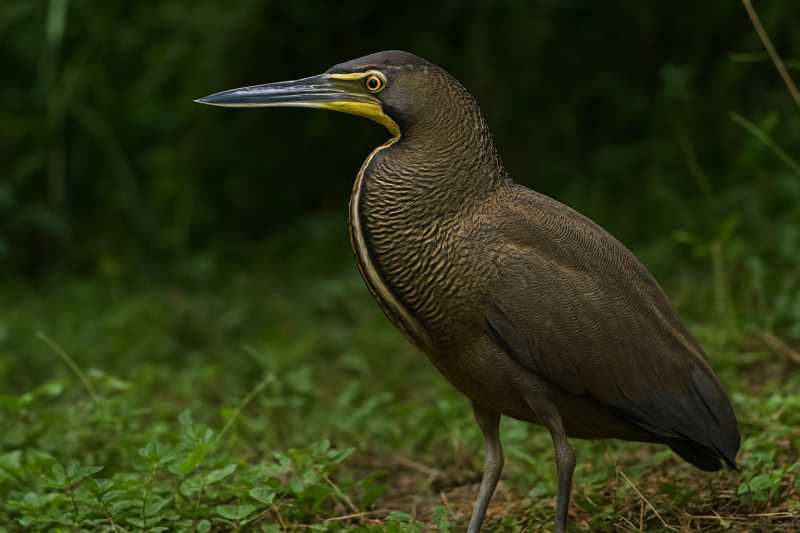
The Bare-throated Tiger Heron is easily recognizable by its striking plumage and distinctive bare throat, which is a unique trait among herons. Adult birds display a combination of grey, black, and brown feathers with intricate patterns that provide excellent camouflage among the reeds and vegetation. This cryptic coloring helps them remain unnoticed by both prey and potential predators.
True to its name, the heron possesses a bare patch of skin on its throat, which is especially noticeable during the breeding season when it takes on a more vibrant hue. This feature is used in courtship displays and territorial defense. The bird’s long neck and legs are characteristic of the heron family, allowing it to wade through water with ease.
Behavior and Diet
Bare-throated Tiger Herons are solitary creatures, often seen alone or in pairs rather than in large flocks. They are known for their patience and stealth when hunting. Their primary diet consists of fish, crustaceans, and insects, which they skillfully catch with rapid strikes of their sharp beaks. The herons often remain motionless for extended periods, waiting for the perfect moment to snatch up unsuspecting prey.
Aside from their hunting prowess, these herons are also known for their distinctive vocalizations. Their calls, often described as a series of low, resonant roars, can be heard echoing through the wetlands, especially during the breeding season. These vocalizations play a vital role in communication, helping to establish territories and attract mates.
Breeding and Lifecycle
The breeding season for the Bare-throated Tiger Heron varies depending on the region, but it generally aligns with the rainy season when food is abundant. During this time, males perform elaborate courtship displays, showcasing their colorful throats and engaging in synchronized movements to attract females.
Once a pair bonds, they construct a nest in a secluded location, often in dense vegetation near water. The nest is typically a platform made of sticks, where the female lays a clutch of two to four eggs. Both parents share the responsibility of incubating the eggs and feeding the chicks once they hatch. The young herons grow rapidly and are ready to fledge within a few months.
Conservation Status
The International Union for Conservation of Nature (IUCN) currently lists the Bare-throated Tiger Heron as a species of Least Concern. However, like many wetland-dependent species, it faces threats from habitat loss and degradation. Urbanization, agriculture, and climate change are significant factors leading to the destruction of wetland habitats, which can impact heron populations.
Conservation efforts are crucial to ensure the survival of the Bare-throated Tiger Heron. Protecting and restoring wetland areas are vital strategies in preserving not only this species but also the myriad of other organisms that depend on these habitats. Public education and awareness programs can also play an essential role in highlighting the importance of wetland conservation.
Conclusion
The Bare-throated Tiger Heron is a remarkable species that epitomizes the beauty and complexity of Central American wetlands. Its striking appearance, unique behavior, and adaptability make it a fascinating subject for study and observation. As stewards of the environment, it is our responsibility to protect the delicate ecosystems that sustain such incredible wildlife.
By understanding and appreciating the role that species like the Bare-throated Tiger Heron play in their ecosystems, we can better advocate for the conservation of the natural world. Through concerted efforts, we can ensure that future generations will continue to marvel at this splendid bird and the vibrant ecosystems it inhabits.
Related posts