The Enigmatic Spix’s Guan: A Deep Dive into the Life of Penelope jacquacu
In the vast expanses of South America’s verdant rainforests, an elusive bird known as Spix’s Guan (Penelope jacquacu) thrives amidst the dense canopy. Often overshadowed by the vibrant colors and conspicuous behaviors of its avian neighbors, Spix’s Guan is a captivating subject for ornithologists and bird enthusiasts alike, offering a glimpse into the intricate dynamics of tropical ecosystems.
Taxonomy and Distribution
Spix’s Guan belongs to the family Cracidae, which includes other guans, chachalacas, and curassows. Named in honor of the German naturalist Johann Baptist von Spix, this species is primarily found across the Amazon Basin, inhabiting countries such as Brazil, Peru, Bolivia, and Ecuador. Their preference for lowland tropical forests and subtropical regions underscores their reliance on dense forest cover for survival.
Physical Characteristics
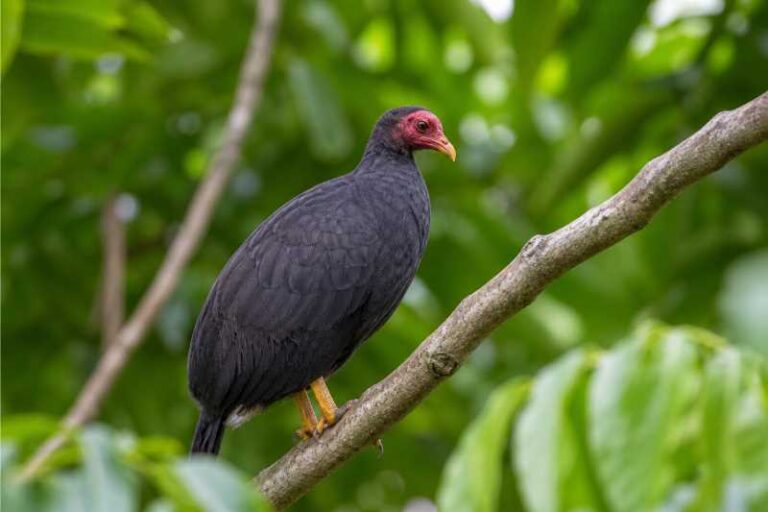
Measuring approximately 66-76 cm in length and weighing between 1.3 to 1.8 kg, Spix’s Guan is a medium-sized bird characterized by its slender build and distinctive long tail. Its plumage is predominantly dark, with a glossy greenish-black hue that provides effective camouflage within the forest understory. The bird’s head and neck are adorned with fine, pale markings, while the red eye-ring and wattles add a splash of color, making them easier to identify upon closer inspection.
Ecology and Behavior
Spix’s Guan is predominantly arboreal, spending a significant portion of its life in trees. Its diet consists mainly of fruits, seeds, and leaves, playing a crucial role in seed dispersal, which contributes to forest regeneration. The guan’s feeding habits make it a vital component of its ecosystem, influencing both plant diversity and forest structure.
Socially, Spix’s Guan is often observed in small family groups or pairs, exhibiting a shy and wary demeanor. During the breeding season, which typically coincides with the onset of the rainy season, males engage in vocal displays to attract females. These vocalizations, a series of deep, resonant calls, are crucial for maintaining territory and facilitating mate selection.
Conservation Status
Currently, the International Union for Conservation of Nature (IUCN) classifies Spix’s Guan as a species of Least Concern. However, like many other forest-dependent species, it faces threats from habitat degradation, deforestation, and hunting. The continuing expansion of agriculture and infrastructure poses significant challenges to the preservation of its natural habitat. Conservation efforts are vital to ensure the sustainability of its population.
Research and Conservation Efforts
Efforts to conserve Spix’s Guan emphasize habitat protection and the establishment of protected areas. Initiatives aimed at sustainable land use practices are crucial in mitigating the impacts of human encroachment. Furthermore, education and community involvement are key components in fostering a conservation ethos among local populations who coexist with these birds.
Research plays a pivotal role in understanding the ecological needs and behaviors of Spix’s Guan. Ongoing studies focus on the species’ role in seed dispersal, its response to habitat fragmentation, and its adaptability to changing environmental conditions. The data obtained from such research is invaluable for developing targeted conservation strategies.
The Importance of Spix’s Guan in Biodiversity
The presence of Spix’s Guan in a forest ecosystem is indicative of a healthy, biodiverse environment. As a frugivore, it contributes to the proliferation of various plant species, which in turn supports a wide range of other wildlife. The guan’s interactions with its environment exemplify the interconnectedness of forest ecosystems, highlighting the importance of preserving even the less conspicuous inhabitants of these habitats.
Conclusion
Spix’s Guan is more than just a bird; it is a symbol of the rich biodiversity found within South America’s rainforests. As we continue to understand its role and the challenges it faces, it becomes increasingly clear that preserving this species is integral to maintaining the health and diversity of its ecosystem. Through concerted conservation efforts and a deeper appreciation of its ecological significance, we can ensure that future generations will have the opportunity to encounter the enigmatic Spix’s Guan in its natural habitat.
Related posts